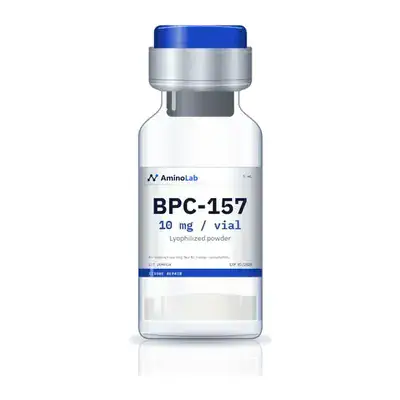
BPC-157
10 mg vial, 60 capsules
From $69
Walk into any Australian pharmacy and you will find peptides for skin on half the shelves, yet the word covers two products that have almost nothing in common. On one side sits the finished cosmetic, a peptide serum, an eye cream or a moisturiser in which a couple of named peptides are blended into a base of water, oils and preservatives. On the other side sits the research peptide, one isolated compound supplied as freeze-dried powder, backed by a certificate for its lot. AminoLab deals only in the research kind. This page decodes the cosmetic kind first, so a carton makes sense, and then lists the compounds skin biology labs order from us.
Put simply, what are peptides for skin, and what are peptides in skin care? Short chains of amino acids. Inside a cream they serve as messengers, metal carriers or blockers of a nerve signal, and on a lab bench they serve as a single, well defined test substance. Talk of peptides for the skin, skin peptides, a skin peptide, a peptide for skin or peptides on skin always leads back to the same first question, which of those two categories is the product in front of you.
Chemically, a peptide is a run of amino acids linked by peptide bonds, generally fewer than about 50 of them. Collagen, elastin and keratin are proteins, assembled from far longer chains. Peptide skin care borrows from that biology. A formulator who puts peptides in skin care is betting that a short fragment can carry a signal, ferry a trace metal or block one particular protein, while staying stable in a jar at a low dose.
Formulators generally group skin care peptides into four families.
Few skin care products with peptides stick to a single family. A standard night cream will often team a signal peptide with one of the neurotransmitter type, so anyone comparing peptide products for skin, or two jars of peptide products skin care brands sell side by side, is usually comparing those combinations. Other skin products with peptides, cleansers and toners for example, are rinsed off or evaporate in minutes, so most of the peptide spend goes into leave-on serums and creams.
Our peptide glossary explains the vocabulary behind these names, including how a peptide differs from a polypeptide and from a protein.
No single answer applies, because the result hinges on which peptide is used, how much of it, and whether it ever reaches living cells. The outer layer of the epidermis keeps out most peptides, since they are too big and too water-loving to pass through freely. That is the reason formulators bolt on a fatty acid tail, signalled by the palmitoyl prefix, or wrap the peptide in liposomes. The controlled trials available tend to be small and brief, and the ingredient supplier often funds them. Their usual measures are wrinkle depth from imaging, elasticity from a suction instrument called a cutometer, and dermal density from ultrasound.
Most online lists that try to explain what peptides do for the skin, and what does peptide do to skin in the singular, pad out their peptides for skin benefits with three ingredients, cell culture data, small industry-funded cosmetic trials and plain advertising. Measurement is involved in the first two only. Under Australian cosmetic rules, carton wording such as peptides for skin tightening, skin rejuvenation peptides or peptides for skin health has no set definition. A product that says it repairs or regenerates tissue is making a therapeutic claim, and that moves it out of the cosmetics framework and under the TGA.
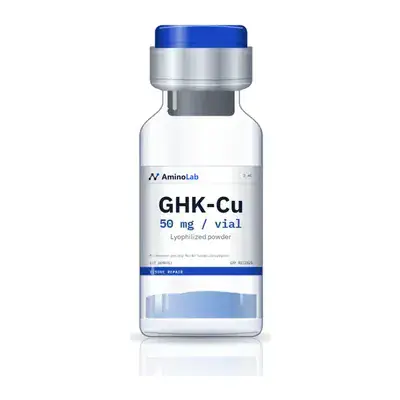
Of all skin peptides, GHK-Cu has the largest body of lab research, running from 1980s work on collagen production in fibroblasts through to much later gene expression studies. That history explains why it turns up both in a copper peptide serum and on a research bench. See what GHK-Cu is for a full profile. The trial numbers themselves are summarised in our copper peptide before and after studies page.
Collagen peptides for skin care are another product type entirely. They are hydrolysed collagen, a powder meant for stirring into a drink, made up of countless fragments of mixed lengths instead of one named sequence. Palmitoyl pentapeptide-4, used on the skin, is the opposite case, one exact molecule at a tiny concentration. For more on powders, read our guide to Vital Proteins collagen peptides and other collagen powders, which also compares them with research peptides.
Collagen applied to the face is different again. Hydrolysed or soluble collagen in a collagen cream with peptides, or in a collagen peptide serum, mostly stays at the surface as a film former and moisture binder, and any signal peptide appears as its own line on the INCI list. The same goes for any tub sold as collagen peptides cream. Naming gets looser with Korean ampoules, and the deep collagen silk peptide intensive ampoule is a good case, as it names both collagen and a silk-derived peptide on the front, and the ingredient panel is the only place to see where each really sits. None of these is something we sell. For lab studies of collagen synthesis, the defined reagent we offer is GHK-Cu copper tripeptide.
A peptide serum is a runny, water-based cosmetic whose job is to deliver one or several of the four peptide families. A multi peptide serum layers several of them, typically a signal peptide, a neurotransmitter-type peptide and hyaluronic acid together. Serums with peptides are made at every price point, from budget lines such as The Ordinary, whose multi-peptide range covers the face, the eye area and the lashes and includes copper versions, right up to clinic-only brands. Copper peptide serums name copper tripeptide-1 on the pack, and they get a full treatment in our GHK-Cu serum guide. The same goes for imported blends like the P Tiox peptide serum, where the peptide names sit in the INCI panel rather than on the front.
The names on the shelf vary as much as the formulas. A peptide serum for face, a face peptides serum, a peptide face serum and a serum peptide are four labels for one leave-on facial product, while a peptide serum for skin is the general term and serum peptides or peptides serum are the same idea written another way. Put an appearance claim on the bottle and you have an anti aging peptide serum. A multi peptide HA serum relies on hyaluronic acid to hold moisture, and a retinol and peptide serum brings a vitamin A derivative into the mix, meaning the pH and antioxidants have to work for both actives. A label promising peptide serum botanicals is just pairing peptides with plant extracts. Copper products are named backwards as often as forwards, peptides copper serum on one pack and copper serum peptide on another, and in both cases the INCI entry to find is copper tripeptide-1.
A Korean peptide serum uses the same chemistry, with extra ingredients that are fashionable in that market. Careful label reading pays off with the Medicube PDRN pink peptide serum. Its PDRN is polydeoxyribonucleotide, salmon-derived DNA fragments, so it is not a peptide at all. In any pink peptide serum or PDRN peptide serum like it, the actual peptides are listed separately further down. A PDRN pink peptide eye cream, or any pink peptide eye cream, combines the same two ingredients in a heavier base for the eye area. Korean serums are often runnier than Western ones and made to sit under a cream, so judge any best Korean peptide serum claim as one layer of a routine, not a whole routine.
Anyone weighing up The Ordinary, Medik8 Liquid Peptides or the COSRX 6 peptide skin booster is comparing finished cosmetics, not single compounds. Below, the familiar names are sorted into product types. Full ingredient lists are deliberately left out, because formulas change between production runs and countries, and only the carton in your hand is reliable.
| Product name | Product category | Worth checking on the pack |
|---|---|---|
| The Ordinary Multi-Peptide + HA Serum (sold earlier as Buffet) | Water-based facial serum, peptide blend with hyaluronic acid | Confirm it is not the separately named copper version |
| The Ordinary Multi-Peptide Eye Serum | Thin serum made for the eye contour | Which peptides are named, and any caffeine next to them |
| The Ordinary Multi-Peptide Lash and Brow Serum | Lash and brow conditioner applied with a brush | The named conditioning peptide |
| Medik8 Liquid Peptides | Multi-peptide facial serum, UK clinic label | How many peptides appear and how early |
| Olay Regenerist Collagen Peptide 24 | Serum and moisturiser range branded around a collagen-derived peptide | The INCI name sitting behind the brand name |
| COSRX The 6 Peptide Skin Booster Serum | Booster serum titled for its six peptides | Each of the six INCI names, and the preservative system |
| Medicube PDRN Pink Peptide Serum | Korean serum pairing PDRN with peptides | PDRN is DNA based, so look for the peptides elsewhere on the list |
| Naturium Multi-Peptide Serum | Multi-peptide serum, US label | Whether peptides appear before or after fragrance and preservatives |
Shop listings give one bottle many names. One product may appear as peptide serum the ordinary, ordinary peptide serum, serum multi peptides or peptides serum, and olay collagen peptide or olay super collagen peptide refer to items in a single Olay range. When a listing says medik8 peptides or the medik8 peptide serum, it nearly always means Liquid Peptides. Higher up the price ladder, Allies of Skin peptides products follow the same idea.
There is no best peptide serum for every purpose, and AminoLab does not rank cosmetics. Whatever the brand, the same four tests apply.
A best peptide moisturiser is judged the same way, being mostly a thicker base wrapped around similar actives. Picking the best moisturizer with peptides and ceramides (the American spelling is the common one) brings in one more factor, since ceramides are lipids that belong to the skin barrier, so the occlusive base counts for as much as the peptide. Branded products get the same treatment. A peptides 10 lifting serum tells you how many peptides it contains but not how much of each, while the name of the revitalift laser tri peptides age correcting serum mentions three peptides in its name without giving their levels, a pattern shared by any tri peptides age correcting serum.
Move the same concept into a richer base, adapt it for the thin skin around the eyes, and test it for irritation, and you have a peptide eye cream or a peptide eye serum. Signal peptides and acetyl hexapeptide-8 are frequent choices, often with caffeine or niacinamide alongside. A multi peptide eye serum from a mainstream brand is a cosmetic, as is a hydrogel patch soaked in peptides and collagen. Nothing in the AminoLab range is an eye product, and no research vial from us belongs anywhere near an eye or a person.
Texture is the only real gap between an eye serum with peptides, a peptides eye cream and an eye cream with peptides. To learn the actual peptides, turn the pack over. As for a peptide collagen eye patch, it is a gel sheet steeped in a similar liquid that sits under the eye for a few minutes before removal.
Similar names crowd the eye aisle. The Ordinary multi-peptide eye serum, the COSRX Advanced Snail Peptide Eye Cream and the JSHealth illuminating peptide eye serum and Revox multi peptide eye products are all sold in Australia, and every one is a formulated cosmetic. To know what a given multi peptide eye serum really contains, you need its INCI list. The advanced snail peptide eye cream name, likewise, tells you nothing about amounts.
Neither the rhode lip peptide treatment nor the mcobeauty peptide lip treatment is a serum, both are balms, with the peptide held in waxes and oils designed to stay on the lips, so the dose and the job differ from a face serum. As with any lip product, the tube's ingredient list, not its name, shows which peptide you are getting.
The Ordinary Multi-Peptide Serum for Hair Density ranks among the most popular skincare buys in Australia. A hair serum like this combines plant extracts with peptide complexes and is sold as a scalp cosmetic. For lashes, a peptide lash serum normally leans on myristoyl pentapeptide-17 as its conditioning peptide, while copper versions of a peptide hair serum use copper tripeptide-1.
Product names in this aisle are untidy. A hair peptide serum, a peptide serum for hair and a multi peptide serum for hair density all point to the same type of product, and when the name is copied without spaces it can appear as densitymulti peptide serum for hair density. Shoppers wanting the first version rather than a reformulation tend to ask for the original multi peptide hair serum. Its smaller sibling, the multi peptide lash and brow serum, goes on along the lash line with a fine brush.
Customer reviews of any multi peptide hair serum, the ordinary multi peptide hair serum included, are mostly posted by individual customers after a few weeks, with photos shot under changing light and at varying hair lengths. They tell you a fair amount about texture, smell and how the dropper works, and very little about follicles. A controlled study counts hairs inside a fixed, tattooed patch of scalp under consistent lighting, and no review can replicate that. So read reviews of the ordinary peptide hair serum, or of a copper peptide hair product, as accounts of experience rather than data.
In research, GHK-Cu and thymosin beta-4 have both been examined in dermal papilla cells, isolated hair follicles and mouse hair cycle models. That work, and the compounds involved, appears throughout our skin and hair peptides category. Labs that study peptides for skin and hair together, asking how peptides skin and follicle cells respond to, frequently begin with GHK-Cu, as it features in both bodies of research.
Clinics and social media, rather than published trials, are the source of most claims about peptide injections for skin tightening or injectable peptides for skin. AminoLab answers every question about peptides injections for skin, or peptides for skin injection, the same way. We supply nothing for injection and publish no human protocol. No peptide sold as a research chemical, GHK-Cu included, is registered with the TGA for injection to improve skin. We sell sealed lyophilised vials for in vitro and laboratory research and refuse any order that suggests personal use. For the current evidence on injected use, known and unknown, see the GHK-Cu side effects page.
A lab investigating peptides and skin wants a defined compound of known purity, not a finished cosmetic. These skin research peptides are in stock, and each lot is tested.
Research on elasticity and skin tightening mostly runs on fibroblast cultures that track collagen and elastin, the setting in which GHK-Cu has been tested longest.
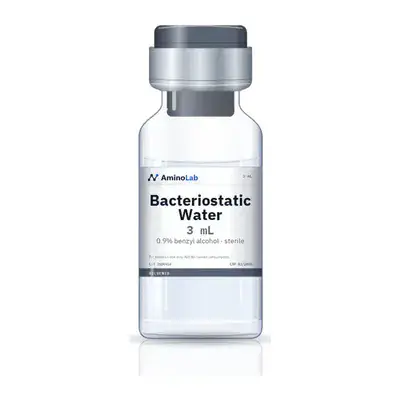
The right place to buy peptides for skin depends on the type you want. A cosmetic peptide serum, including any peptide serum Australia pharmacies carry, comes from a chemist, department store or brand site. A research peptide comes from a supplier that publishes a certificate of analysis for each lot, which we do through our COA library. Our lab tested peptides page explains what those certificates include, and the peptides for sale in Australia page compares the full catalogue by research area. The GHK-Cu starter kit is the simplest starting point, as the vial arrives with its reconstitution supplies, and the whole skin and hair peptides range is a click away. Shop online from stock held here in Australia. Prefer a lone vial to the kit? Then include bacteriostatic water at 3 mL or 10 mL in that order. Everything AminoLab sells is for laboratory research use only, sold to adults 18 and over, and nothing is TGA approved.
There is also no such thing as a reta peptide serum in cosmetics. Retatrutide belongs to metabolic research and has nothing to do with skin care, which leaves skin serums depending on signal, carrier and neurotransmitter-type peptides.
Dermal fibroblasts, which produce collagen and elastin, carry most of the published work, followed by keratinocytes from the outer layer. Past single cell types, researchers rely on reconstructed skin grown in culture, donated skin samples kept alive in a dish, and rodent wound models. Each model can only answer a far tighter question than the one a cosmetic implies.
Labels name the peptide and rank it, yet almost never state how much is present, and even less of it gets through the outer skin to living cells. Culture work runs in reverse, with a measured concentration of a pure compound placed directly on the cells. Because of that gap, an impressive cell result says little about a finished cosmetic that contains the same peptide.
Until use, the blue GHK-Cu cake belongs in a minus 20 °C freezer. Bacteriostatic water turns it into a clear blue stock, which then lives at 2 to 8 °C in the dark for no more than 28 days while the culture dilutions are drawn from it. The GHK-Cu calculator gives the stock concentration for either vial size.
Serums, eye creams and hair products are outside our range entirely, and nothing we stock is made to be applied to a person. Skin biology labs get freeze-dried single compounds and blends from us, with an identity and purity certificate behind every lot.
A peptide in skin care products is a brief amino acid chain mixed into a serum or cream at a low level. Formulators use four main kinds. Palmitoyl pentapeptide-4 is a signal peptide, copper tripeptide-1 a carrier, acetyl hexapeptide-8 a neurotransmitter blocker, and plant-protein fragments act as enzyme inhibitors.
No. AminoLab supplies research peptides only, such as GHK-Cu and KPV, as freeze-dried powder in sealed vials for laboratory work. We carry no serums, eye creams, hair products or cosmetics of any kind, and no vial we sell is for use on a person.
It does not. Polydeoxyribonucleotide, its full name, describes DNA pieces most often extracted from salmon. A PDRN peptide serum contains it next to separate peptide ingredients, and those peptides are listed under their own INCI names.
AminoLab keeps GHK-Cu, KPV and glutathione, as well as both the GLOW and KLOW blends, on Australian shelves. Most skin biology labs start with GHK-Cu. You can view each lot's independent identity and purity certificate before ordering, and every vial is sold for lab research only, never as a cosmetic.
The Ordinary sells finished face cosmetics, each combining a handful of peptides with hyaluronic acid, preservatives and more. Research peptides are one defined compound per vial such as GHK-Cu, supplied as lyophilised powder with an identity and purity certificate, for laboratory use only and never on people.
No. Collagen peptides are hydrolysed collagen powders, sold as food, containing many protein fragments of different lengths. Skin care peptides are individual named sequences, acetyl hexapeptide-8 for instance, used in small amounts in creams. Both are built from amino acids, but they are not comparable in size, purity or purpose.
10 mg vial, 60 capsules
50 mg vial, 100 mg vial
10 mg vial
3 mL, 3 mL + 1 syringe, 10 mL, 10 mL + 1 syringe, 30 mL, 30 mL + 1 syringe
Research use onlyAminoLab supplies research compounds for laboratory and in-vitro use, not for human or animal consumption. By continuing you confirm you are 18 or older and buying for research.
Leave