BPC-157
10 mg vial, 60 capsules
From $69
If you want to know how to read a COA for a peptide, start with three checks, in this order. First, make sure the batch number on the report is exactly the same as the one on your vial. Second, look at the mass spectrometry result, where the measured mass should match the expected weight of the peptide, which proves you have the right molecule. Third, read the HPLC purity, which shows what share of the sample is the main peptide, and a good report will print the trace beside that number. Should one of the three be absent, the document cannot vouch for your vial. The remaining entries, such as appearance and method, only back up these core results.
A certificate of analysis is the test record for one production batch. It names each test, the pass mark set for it and what the batch scored. Since it speaks for that single batch, it tells you nothing about the batch before or after it, which is why a general "product COA" with no batch code is close to useless. Layouts vary between laboratories, but a good report includes the following items.
In HPLC a dissolved sample is driven through a tightly packed column, most often C18, by a solvent that gradually shifts from mostly water to mostly acetonitrile. Different substances emerge at different times. A detector reading ultraviolet light in the low 200s of nanometres, the range peptide bonds absorb, turns each one into a peak on the graph. Divide the main peak's area by the combined area of every peak and you have the purity, so 98.7% tells you that almost all of the light-absorbing material was your peptide.
Purity is a proportion, not a weight. Moisture, salt and the acetate or TFA ions bound to the peptide are nearly invisible to the detector, so they never drag the number down. Net peptide content, the share of the powder's weight that is actually peptide, needs its own assay, and plenty of reports skip it. Nor can HPLC alone confirm what the peptide is, since the wrong compound in a pure state looks just as tidy on the trace.
This technique gives the molecules an electric charge and then sorts them by the ratio of mass to charge, written m/z. Set the measured figure against the weight calculated for the sequence. With short peptides, being within roughly one dalton is fine. Three things often confuse new readers.
Use these average values to sense-check the identity part of a report.
| Peptide | Size | Average weight |
|---|---|---|
| KPV | 3 residues | 342.4 |
| Epitalon | 4 residues | 390.4 |
| SS-31 | 4 residues, amide end | 639.8 |
| Ipamorelin | 5 residues, amide end | 711.9 |
| Selank | 7 residues | 751.9 |
| Semax | 7 residues | 813.9 |
| DSIP | 9 residues | 848.8 |
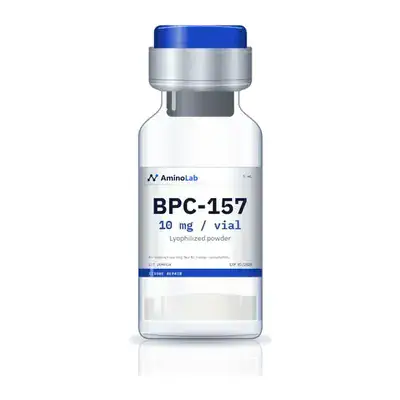
| BPC-157 | 15 residues | 1,419.5 |
| AOD-9604 | 16 residues | 1,815.1 |
| Thymosin Alpha-1 | 28 residues, acetylated | 3,108.3 |
| Sermorelin | 29, amidated | 3,357.9 |
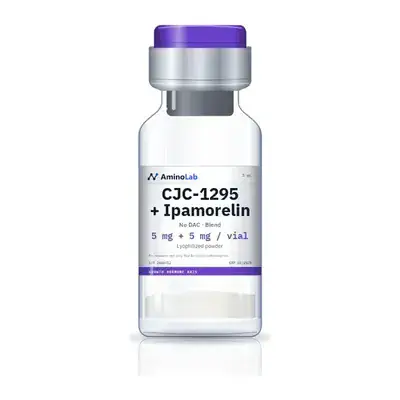
| CJC-1295 No DAC | 29, amidated | 3,367.9 |
| Tesamorelin | 44 residues, modified front end | 5,135.9 |
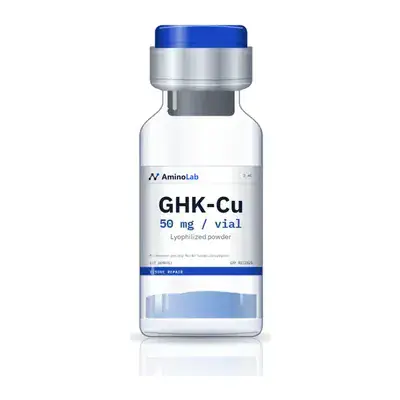
Two products need extra care. For TB-500, which is only part of thymosin beta-4, the report must spell out the tested sequence and give the weight of that piece rather than the whole protein. For GHK-Cu, the copper often falls off inside the instrument, leaving a signal for plain GHK near 340.4 rather than for the complex.
Only the batch code connects a piece of paper to the vial in front of you. Copy it from the label and look for the identical code on the report. Every AminoLab batch is sent to an outside lab for both checks, and its report carries the same code you see on the vial. You can find every report, sorted by product, in our COA library. Then glance at the test date, because a report that predates the batch by years cannot be about your stock.
We would rather see an honest 98.4% on a real report that matches the vial and shows its full trace than a spotless 99.9% that cannot be tied to any batch. Only the former says anything about your sample.
If a supplier cannot produce a report for the exact batch you are buying, treat that as a reason to wait or shop elsewhere. A genuine laboratory keeps its records, so a missing certificate usually means the testing never happened. At AminoLab the report is published before the batch is listed, which is why you can always read it first and order with confidence.
Do this reading before you pay. Missing a report for a batch already in your hands? Write to our support team with the product and its code. With the paperwork confirmed, move on to our peptide reconstitution guide. AminoLab supplies all products for bench research and nothing else.
Since the COA library is organised by batch, the report for BPC-157, retatrutide, GHK-Cu or anything else can be studied before checkout. Each one shows the identity and purity results this article has walked through. Browse the lab-tested peptides range, compare the results against the warning signs above, then order the compound you need and match the batch on your label to its report when it arrives.
Think of it as a test sheet for one production run, showing each check, its target and the outcome. As it describes that batch alone, a certificate without a batch number tells you very little.
Hope for one clear tower with minor bumps beside it. The bumps are typically synthesis by-products. If the tower is fat or forked, investigate further even when the percentage looks fine.
One is calculated from the sequence and the other is read from the machine. Minor differences inside the lab's tolerance are fine, while a large mismatch points to the wrong or a modified molecule.
A product from our peptide blends range should show one main peak for each component rather than a single peak. A GHK-Cu certificate should describe blue powder, because the copper gives it that colour.
Open any recent report in the AminoLab certificate archive and run through code, mass and purity. Doing this once before your first order makes checking your own vial later a quick job.
A common specification is 98% or more by HPLC, and plenty of batches beat 99%. Treat the number as meaningful only when the trace is shown and the code on the report matches your label. For accurate dosing of experiments, keep in mind that purity and net peptide content differ, since moisture and salts are invisible to the detector.
One answers how clean, the other answers what. HPLC gives the proportion of detectable material that is your peptide, and mass spectrometry weighs the molecule to confirm it is the compound named. You need both, since cleanliness says nothing about identity and identity says nothing about cleanliness.
Usually because of protons or rounding conventions. The instrument often reports the molecule plus one proton, a dalton heavier, or a multiply charged form that reads as a fraction of the true weight. Precise instruments may also quote the monoisotopic figure, slightly under the catalogue average. Once those are accounted for, a gap of about a dalton is ordinary.
Put the label and the report side by side and confirm the batch codes are identical in every character, then make sure the test date is believable. Our COA library groups reports by product, and if yours is not there, send us the product and code by email.
Order through the AminoLab website, where every product ships from an Australian warehouse. Look up the batch report in the COA library first, buy once you are happy with it, and check the code on the label when the parcel lands. Our peptides are sold for lab research only.
10 mg vial, 60 capsules
50 mg vial, 100 mg vial
10 mg vial
3 mL, 3 mL + 1 syringe, 10 mL, 10 mL + 1 syringe, 30 mL, 30 mL + 1 syringe
Research use onlyAminoLab supplies research compounds for laboratory and in-vitro use, not for human or animal consumption. By continuing you confirm you are 18 or older and buying for research.
Leave