KPV
10 mg vial
$59
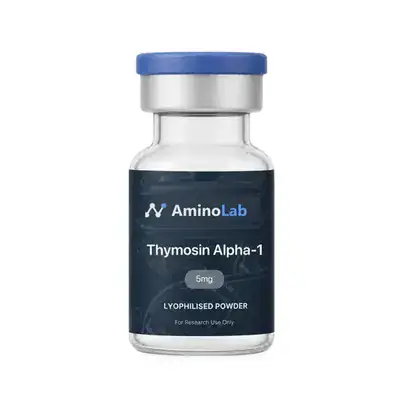
AminoLab supplies immune peptides Australia wide to research laboratories, led by Thymosin Alpha-1, offered as a 5 mg or a 10 mg vial, the calf-thymus derived Thymalin and the small anti-inflammatory tripeptide KPV, all kept on hand locally. For teams shortlisting the best peptides for immune system research, we publish the certificate of analysis for every lot ahead of checkout. An independent lab checks identity and purity on each batch, and every parcel ships from inside Australia. Buy immune peptides Australia wide here, with the paperwork already in view.
Of the three compounds in this range, two have their roots in the thymus, the gland where T cells mature, so they make the natural starting point. Thymosin Alpha-1 is a 28 amino acid chain capped with an acetyl group at the N-terminus, first isolated from calf thymus in 1977. Its research profile spans T cell differentiation, signalling through toll-like receptors and the behaviour of dendritic cells. Sold as thymalfasin, it holds medicine registration in a number of countries beyond Australia, and clinical research has looked at it in chronic hepatitis B and in vaccine response. Bench studies mostly trace thymocyte maturation into functional T cells and track dendritic cell responses to immune stimuli. Few research peptides can point to that depth of published evidence, so it is usually the opening choice for a group hunting the best peptide for immunity models.
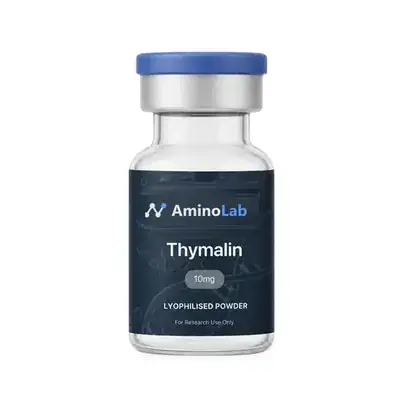
Thymalin has a separate lineage altogether. Soviet researchers produced it during the 1970s from calf thymus extracts, and most of its literature comes from Russian teams studying T cell balance and the age related drop in thymic output. It is sold as one 10 mg vial, and because of that ageing angle it also sits within our longevity peptides. Because the preparation has changed across decades, check that our certificate lines up with the material cited in your source study.
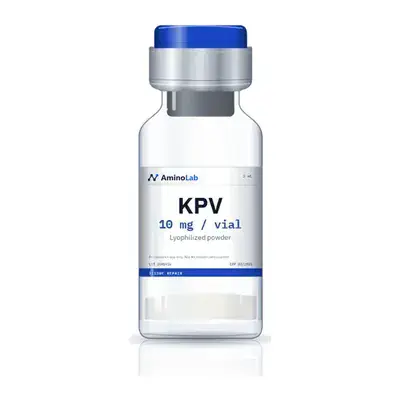
For studies built around inflammation, KPV is the vial to pick. The sequence is simply lysine, proline and valine, matching the tail end of alpha-MSH, and it retains the anti-inflammatory behaviour of that hormone while leaving out the pigmentation effect. Most of the research asks how it dampens NF-kappaB signalling inside epithelial cells. Mouse colitis models supply the bulk of the data, backed by evidence of PepT1 carrying KPV across into intestinal cells, while skin inflammation forms a smaller second line of work. It comes as a 10 mg vial, and it is also one of four peptides in the KLOW blend listed under our recovery peptides.
Similar names lead to frequent ordering errors here. Thymosin alpha-1 and thymosin beta-4 share an origin in one thymus fraction, yet the sequences are unrelated and the research questions differ. Researchers use TB-500, a fragment based on thymosin beta-4, for actin binding and cell migration work. Immune signalling is outside its scope, so a design written around thymosin alpha-1 or thymalfasin cannot swap it in. Shop by sequence, not by label, and confirm the mass shown on the certificate. Our peptide glossary sets out both names alongside other easily confused terms.
Start from the branch of immunity your model measures. Models of adaptive immunity, T cell maturation, infection or vaccine response lead to Thymosin Alpha-1. Age related thymic decline points towards Thymalin, frequently run next to Thymosin Alpha-1 in studies where age is under test. KPV is the match for gut or skin inflammation, and the same vial is the usual entry point for teams comparing the best peptides for autoimmune research models, research where designs aim to settle an immune response instead of amplifying it. These compounds do not treat any disease, and research on all three is confined to cell and animal models.
Order them as separate vials. Their pathways do not overlap, so a project spanning infection and inflammation records each compound separately. Popular combinations are Thymosin Alpha-1 plus KPV for designs that span infection and inflammation, and Thymosin Alpha-1 plus Thymalin where thymic ageing is the variable. For an untested model, open with Thymosin Alpha-1 in the 5 mg size and step up to 10 mg once the method is locked in.
Every immune peptide lot we sell has gone through analysis at an independent laboratory. Mass spectrometry verifies the sequence, and for Thymosin Alpha-1 the expected reading sits close to 3,108 Da, while HPLC records purity. The lot number printed on each vial links to its report in the COA library, and our COA reading guide explains the report line by line. Pay before 3pm on a business day and the parcel goes out that afternoon, with tracking to every state and territory.
Add bacteriostatic water to the cart as well, because all three products are lyophilised powders that dissolve in it. For the longest life, store sealed vials in a minus 20 °C freezer, while a fridge at 2 to 8 °C, out of the light, covers a few weeks. A reconstituted vial belongs in the fridge and should be used up inside 28 days. None of these products holds TGA approval, and all are sold for laboratory use only in line with our research use policy.
| Peptide | Vial sizes | Supplied as |
|---|---|---|
| Thymosin Alpha-1 | 5 mg, 10 mg | Lyophilised powder |
| Thymalin | 10 mg | Lyophilised powder |
| KPV | 10 mg | Lyophilised powder |
Thymosin Alpha-1 carries the deepest evidence, with clinical work under the name thymalfasin and many T cell and dendritic cell studies behind it. Thymalin fits immune ageing models, while KPV fits inflammation research.
They are not. The two simply share part of a name and came from the same calf thymus fraction. Immune signalling is the field for thymosin alpha-1, while TB-500, derived from thymosin beta-4, belongs to cell migration and tissue repair research. When a protocol specifies thymalfasin, only thymosin alpha-1 will do.
KPV is a tripeptide, Lys-Pro-Val, copied from the final residues of alpha-MSH. It draws interest for anti-inflammatory activity through the NF-kappaB pathway, with most data drawn from mouse models of colitis and of skin inflammation, without triggering the pigment response that alpha-MSH causes. Order it from AminoLab as a 10 mg vial.
Developed in the 1970s Soviet Union, Thymalin is a thymic peptide preparation made from calf thymus extracts. Most published work, chiefly by Russian scientists, examines T cell balance and how thymic output declines with age. Buy it from AminoLab as an independently tested 10 mg lyophilised vial, for laboratory use only.
You can order thymosin alpha-1 online at AminoLab. An external laboratory tests each lot, and its report is filed under the lot number printed on your vial. Payment by 3pm on a business day means tracked dispatch the same day.
Research use onlyAminoLab supplies research compounds for laboratory and in-vitro use, not for human or animal consumption. By continuing you confirm you are 18 or older and buying for research.
Leave