TB-500
10 mg vial
$79
$69 AUD, GST included
Minimum order before shipping, and you can mix any products to reach it.
In stock, ready to ship from Australia
Frequently ordered with
 Bacteriostatic Water
Sold to buyers aged 18 and over only.
Buy BPC-157 in Australia from AminoLab, with the 10 mg vial or 60 capsules in stock and ready to ship. Two formats make up the AminoLab range of BPC 157 Australia stock. Pick the 10 mg freeze-dried vial, or a bottle holding 60 capsules of 500 mcg apiece, and either one leaves our Australian warehouse the day it is packed. Researchers know the compound as body protection compound 157, a synthetic pentadecapeptide with the sequence GEPPPGKPADDAGLV, modelled on a fragment of a gastric juice protein and investigated in tendon, gut lining and vascular models since the early 1990s. Its formula (C62H98N16O22), its molar mass of 1419.5 g/mol and its CAS registry entry 137525-51-0 are all listed so you can verify them before paying. An outside lab runs mass spectrometry and HPLC on each lot, and you can read the result in our COA library while the item is still in your cart. Solution work calls for the vial, and the BPC-157 calculator converts whatever diluent volume you choose into mg per mL. Because the vial contains powder only, add bacteriostatic water to the order, whereas capsules arrive ready as they are. Plenty of groups also order TB-500 so they can compare growth factor signalling with actin-driven cell migration. Store unopened vials at -20 °C away from light. Order your BPC-157 online today from AminoLab's Australian stock, for laboratory research by buyers aged 18 and over.
For laboratory research use only. Not for human or veterinary use. Not TGA approved. See our research use policy.
| Compound | BPC-157 (body protection compound 157) |
|---|---|
| Amino acid order, three-letter code | Gly-Glu-Pro-Pro-Pro-Gly-Lys-Pro-Ala-Asp-Asp-Ala-Gly-Leu-Val |
| How many residues | 15 amino acids |
| Empirical formula | C62H98N16O22 |
| Molecular weight | 1419.5 g/mol |
| CAS registry number | 137525-51-0 |
| Presentation | A 3 mL glass vial of sealed freeze-dried powder, or a child-resistant bottle of solid capsules |
| How each lot is tested | Mass spectrometry for identity and HPLC for purity, with a certificate issued for every vial lot and every capsule lot |
| In the box | Vial with 10 mg of dry BPC-157 and no liquid (diluent sold separately), or a bottle of 60 capsules |
| Storage | Freezer at -20 °C and dark for the unopened vial, fridge at 2 to 8 °C once mixed, and a closed bottle somewhere dry below 25 °C for capsules |
| Can I order now | In stock |
| Sold for | Laboratory in vitro research only |
Choose the vial whenever the work happens in solution, since the concentration is then yours to set. Capsules exist for one job, delivering an identical solid unit each time. In both cases the lot certificate is online before your parcel is even packed.
Strip BPC 157 back to its chemistry and you find fifteen amino acids in a straight line, synthesised to match one segment of a protective protein that Croatian scientists extracted from human gastric juice. Few research peptides are this unadorned. It carries no metal, no ring closure, no lipid tail and no capping group at either terminus, so when a model responds, the bare sequence gets the credit.
So what does BPC 157 do once it reaches cells? That question still has no single-receptor answer. GLP-1 analogues, melanocortins and most other compounds we stock act by binding a known receptor, but no such binding partner has been documented for BPC 157. Papers on mechanism instead record the downstream changes. The finding that turns up most often involves nitric oxide made by endothelial nitric oxide synthase (eNOS), the enzyme a vessel lining uses to relax the vessel and keep blood reaching tissue. Some teams report more VEGF receptor 2, which steers capillary growth, and others see egr-1 move, a gene cells fire up within minutes of being damaged.
Weigh that last point carefully against the sheer number of publications. Rodent studies run into the hundreds, yet most come from one network of laboratories, and outside replication remains limited. Our full BPC-157 explainer takes the key papers one at a time and notes where each falls short.
A tip from our side. With no known receptor, it pays to pair any tissue outcome with a pathway measurement, whether that is eNOS activity, VEGFR2 expression or egr-1 transcription. A healing score alone shows that something changed but never explains why. For mechanistic work the vial is also the better tool, even compared with the best BPC 157 peptide capsules, since dissolved peptide lets you step through concentrations in culture without filler ending up in the wells.
BPC-157 recreates a 15-residue section of a much larger protein described in human gastric juice. The bulk of the BPC 157 peptide literature comes from Predrag Sikiric and co-workers at the University of Zagreb, publishing since the early 1990s, mostly on rat injury models of tendon, ligament, muscle and the gut lining. Cell studies add fibroblast outgrowth and VEGF receptor signalling in endothelial cells.
Go in with a tightly framed question. In a given tissue model, what does one stable and well characterised pentadecapeptide alter? A triple proline run helps the chain stay intact in acid, and that is the reason we can offer it as capsules as well as a vial. You are buying a research reagent rather than a medicine, and the TGA has approved it for no therapeutic purpose. Compounds commonly ordered alongside it are grouped in our recovery peptides range.
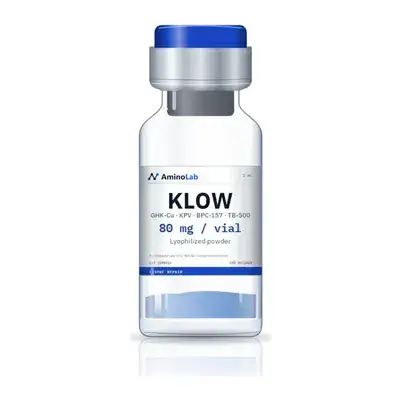
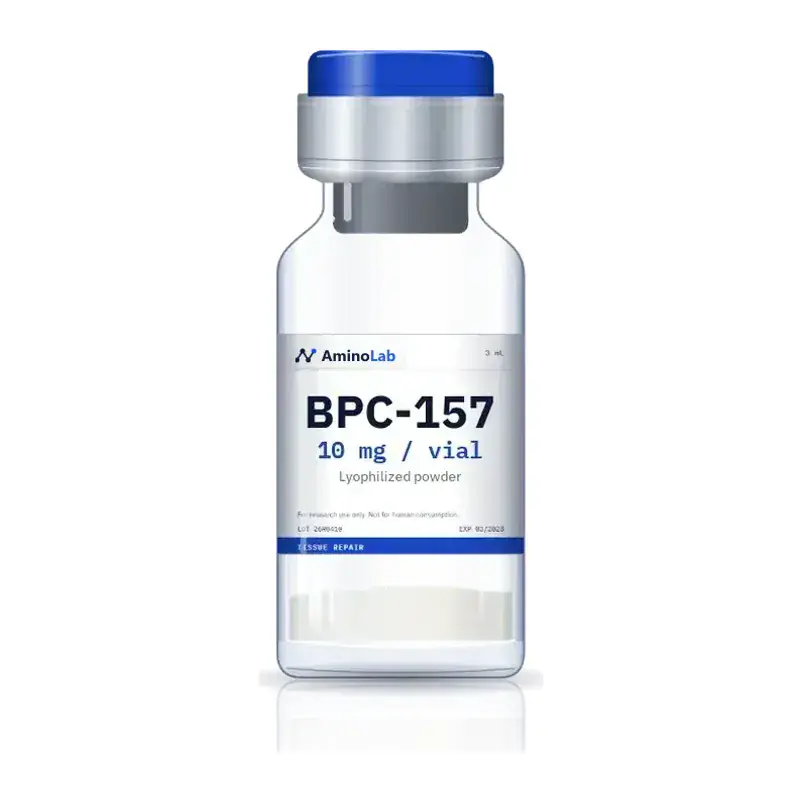
Lift the lid and the 10 mg vial shows a pale, compact cake of lyophilised peptide sitting under a rubber stopper and a blue flip-off cap, with no liquid at all. Choose capsules instead and you receive a child-resistant bottle of 60, each holding 500 mcg of the same sequence plus excipients. Both are synthetic copies of a fragment first isolated from a gastric juice protein, and the same peptide also appears in the Wolverine Blend and in the KLOW and GLOW multi-peptide vials.
Is BPC 157 legal in Australia? At October 2026 it sits in Schedule 4 of the Poisons Standard as a prescription only substance, listed from 1 June 2024 after the scheduling committee met in November 2023. No product containing it appears on the Australian Register of Therapeutic Goods, so no pharmacy has a registered BPC-157 medicine to dispense, and the TGA lists unapproved peptides among its enforcement priorities. For sport, WADA classes it under S0 (non-approved substances), the list Sport Integrity Australia enforces. Our BPC-157 legal status guide covers the scheduling history and TGA notices in more depth.
Because no registered product exists, buyers of BPC 157 Australia stock deal with research reagent suppliers and not pharmacies. AminoLab holds its vials and bottles locally as laboratory reagents, restricts sales to customers 18 and over, and will not supply them for human or veterinary use. If you are looking at BPC-157 for sale in Australia, understand that a research label states what the reagent is for and offers no exemption from scheduling, and read our research use policy before you order.
If you are undecided, start with the 10 mg vial. Most published injury model work used this format. Whenever labs draw up a list of the best peptides BPC 157 tends to rank highly for tendon and gut models, and almost all of that research started from a vial. Anyone comparing the best BPC-157 peptide capsules against the vial should also remember the capsule fill includes excipients, so breaking capsules open will not give you a clean solution.
Planning a long series? Order all the vials you need together and check the lot code on each label against its certificate, so every run in the study is documented. BPC-157 Australia orders are only accepted from adults aged 18 and over, who confirm their age and research purpose during checkout.
Look at the structure and you see a straight chain of ordinary L-amino acids with free ends, three prolines clustered near the N-terminus and a pair of aspartates next to each other later on. Analysts like that simplicity, since nothing exotic such as a lipid tail or an unnatural residue clutters the spectrum.
Open the certificate before you pay. Check that the observed mass lands close to 1419.5 g/mol, that HPLC shows a single main peak, and that a purity result accompanies the chromatogram. Find the report by typing your label's lot code into our COA library, so you can check them before ordering and once more when the parcel arrives.
Doing this also answers what is the best BPC 157 peptide for a working lab. It is whichever one you can prove, through a document tied to the very vial on your bench, and not whichever has the boldest packaging. When comparing the best BPC 157 peptides online, ask for that document first. In practice, the best brand of BPC 157 peptide is any supplier that publishes lot data before it takes your money, and AminoLab holds every lot to that rule.
Everything is ordered online, since AminoLab runs no shopfront or collection counter. Local stock supplies every state and territory, so a Darwin lab and a group ordering research peptides in Hobart draw on one shared stock through one shared page. Orders placed before 3pm on a business day are dispatched with tracking that afternoon, as explained on our delivery information page.
Put bacteriostatic water in the cart too, as the vial contains powder only. Allow the vial to come up to room temperature, let the diluent trickle down the inside wall of the glass, and swirl softly until the cake has dissolved. Add 2 mL to the 10 mg vial for 5 mg/mL, or let the BPC-157 reconstitution calculator handle a different volume.
Unopened vials last longest at -20 °C inside the carton. Once mixed, refrigerate at 2 to 8 °C and portion the solution into labelled, dated aliquots, which keeps needle trips into the stock vial to a minimum. Capsule bottles belong in a dry cupboard, lid closed, under 25 °C.
You will see this compound catalogued as BPC-157, BPC 157, BPC157 or body protection compound 157, and the swapped-letter spelling BCP-157 means the same thing. Older literature also uses the development code PL 14736 or the term pentadecapeptide BPC 157. Whatever the label, it is GEPPPGKPADDAGLV, registered as CAS 137525-51-0.
Much of the language surrounding it comes from the pathways under study, such as VEGFR2, nitric oxide, FAK and paxillin, plus the tendon fibroblast growth hormone receptor. Such terms describe mechanisms seen in cells and rodents, not applications. BPC-157 has no relationship to copper peptides like GHK-Cu, even though both often sit in the same freezer for repair studies. A listing for BPC 157 copper peptides generally refers to a combination product, for example the GLOW peptide blend, which freeze-dries both into one cake. Questions about BPC 157 vs collagen peptides compare one defined chain with a whole class of hydrolysed ingredients, and the FAQ below deals with that. Whichever name your protocol uses, order from this page to get the same 15-residue chain as a vial or capsules. At AminoLab every one of those names leads to the same tested product.
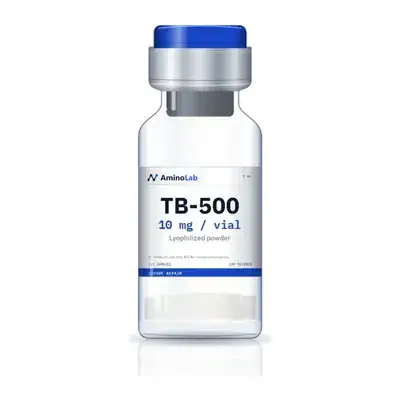
Separate vials are the right call when each compound needs its own study arm and control. The two show up in the same cart so often that people mix them up, yet chemically they are strangers. One is BPC-157, fifteen residues from a gastric protein and tied to growth factor and nitric oxide signalling, whereas TB-500 is an acetylated seven-residue fragment of thymosin beta-4 studied for actin binding and cell migration.
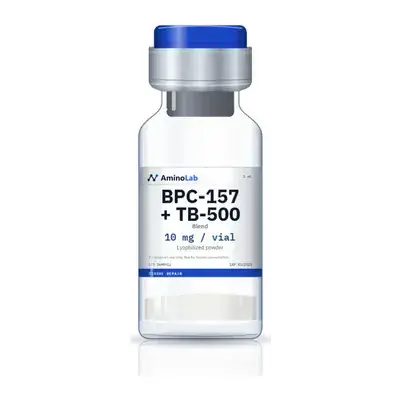
Protocols that fix both at equal amounts can use the simpler Wolverine Blend. Neither option is better in the abstract, and the experiment should decide. Our BPC-157 vs TB-500 guide lays the two mechanisms out side by side. Buy either vial here or add the Wolverine Blend to the same order, and everything ships together from Australian stock.
Fifteen amino acids, synthesised to mirror a stomach juice protein, make up BPC-157. It is a research molecule with an extensive rodent and cell culture record behind it.
The vial contains dry powder only, so order bacteriostatic water with it.
Researchers order it for rodent tendon, ligament, muscle and gut lining models, along with fibroblast and endothelial cell cultures. These are laboratory observations and carry no medical standing.
TB-500 is a shorter thymosin beta-4 fragment that acts on actin and cell movement. The two cannot stand in for each other, which explains why so many orders include both.
Sealed vials go in the freezer, reconstituted solution goes in the fridge in aliquots, and capsules go in a dry cupboard. Never refreeze a prepared solution.
Every vial and capsule lot is identity-checked by mass spectrometry and purity-checked by HPLC. The certificate is there to read before you buy.
Add the 10 mg vial or the 60 capsule bottle to your cart on this page and check out. Stock is held in Australia, orders in before 3pm on a business day leave that afternoon with tracking, and you can add bacteriostatic water for the vial to the same order. Buyers must be 18 or older.
Our online store serves all of Australia, and there is no physical shop or pickup point. Every parcel leaves from the same local stock with tracked delivery to city and regional addresses, and the certificate for your lot is already published, which matters far more than how close a supplier is.
It is. An independent laboratory checks the mass by mass spectrometry and the purity by HPLC, and files the report under the lot code on your vial or capsule bottle. Look it up in the COA library before ordering and keep a copy in your lab notebook.
Evidence tied to the lot, not the brand. Look for mass spectrometry identity data, an HPLC purity report and a certificate matched to the lot code, all visible before checkout. Every AminoLab lot meets that test, so you can judge the material rather than the marketing.
It is not. Collagen peptides are a mixed bag of hydrolysed animal collagen pieces, bought by the gram, with no one sequence. BPC-157, by contrast, is a single defined synthetic chain of 15 amino acids carrying its own CAS number and measured mass, so setting collagen peptides vs BPC 157 compares an ingredient class with a characterised research reagent.
Tissue repair groups treat this stable synthetic pentadecapeptide as a tool compound, dosing fibroblast and endothelial cultures with it and recreating published rodent models of tendon, muscle and gut injury. It is sold only for in vitro and laboratory work, never for people or animals.
10 mg vial
10 mg vial
10 mg vial
80 mg vial
Research use onlyAminoLab supplies research compounds for laboratory and in-vitro use, not for human or animal consumption. By continuing you confirm you are 18 or older and buying for research.
Leave