BPC-157
10 mg vial, 60 capsules
From $69
$69 AUD, GST included
Minimum order before shipping, and you can mix any products to reach it.
In stock, ready to ship from Australia
Frequently ordered with
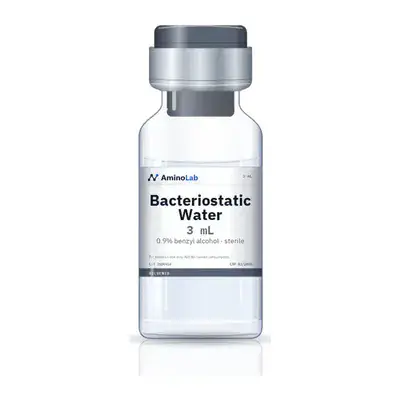 Bacteriostatic Water
Sold to buyers aged 18 and over only.
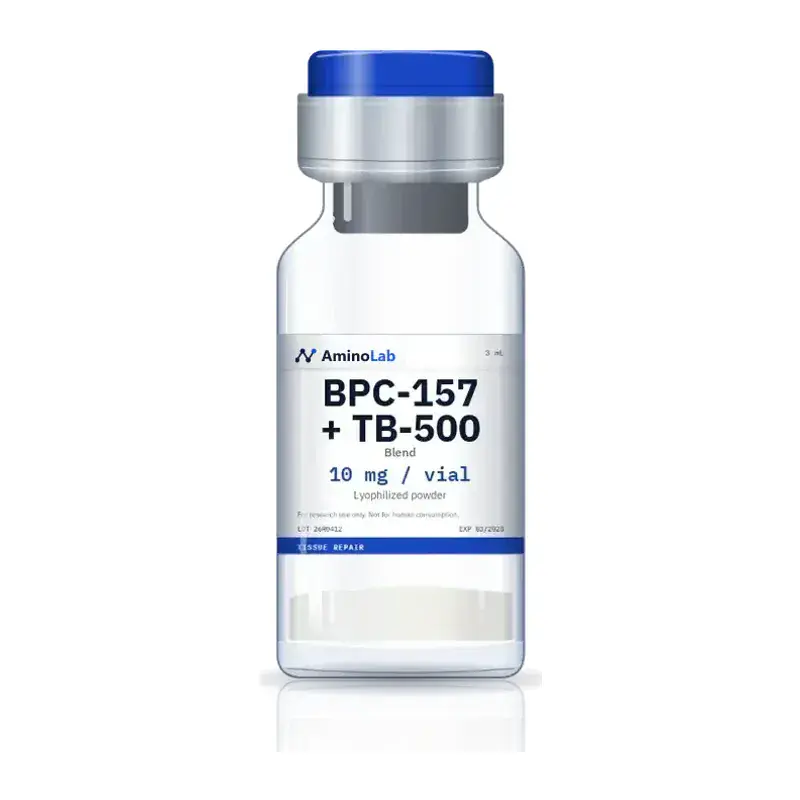
Buy the Wolverine Blend at AminoLab and get BPC-157 and TB-500 dried together in one 10 mg vial, 5 mg of each. Wolverine stack peptides Australia orders ship from our local warehouse, and the batch report confirming both peptides is online before you pay. BPC-157 is a fifteen amino acid fragment of a stomach protein, studied mainly for blood vessel and repair signals, while TB-500 is the short actin-binding piece of thymosin beta-4, studied for cell movement. The blend saves you preparing two vials when your study always uses the pair at equal weights. Use the blend calculator to work out the strength of each peptide after mixing. If your design also needs GHK-Cu and KPV, look at the KLOW blend instead. The vial holds powder only, so add bacteriostatic water to your cart, and keep it frozen and dark until use. Order the Wolverine peptide stack online today, for laboratory research by adults aged 18 and over.
For laboratory research use only. Not for human or veterinary use. Not TGA approved. See our research use policy.
| Blend | Wolverine Blend, BPC-157 and TB-500 |
|---|---|
| BPC-157 sequence | Gly-Glu-Pro-Pro-Pro-Gly-Lys-Pro-Ala-Asp-Asp-Ala-Gly-Leu-Val, 15 residues |
| TB-500 sequence | Ac-Leu-Lys-Lys-Thr-Glu-Thr-Gln, 7 residues |
| Formulas | C62H98N16O22 and C38H68N10O14 |
| Weights | 1419.5 and 889.0 |
| Registry numbers | 137525-51-0 and 885340-08-9 |
| Fill | About 5 mg of each peptide, 10 mg in total |
| Supplied as | One white freeze-dried cake in a sealed 3 mL vial |
| Batch testing | Mass check for both peptides and HPLC purity, one report per batch |
| Storage | Freezer and darkness until opened, fridge after mixing |
| Stock | Ready to ship |
| Intended use | In vitro research only |
Buy the blend when your protocol always pairs these two peptides at equal weights. You get one vial to prepare and one batch to record. If either amount ever needs to change, the single vials are on sale right beside it.
The Wolverine peptide is not a new molecule. It is a single vial in which BPC-157 and TB-500 were freeze-dried together in equal weights, so one round of mixing gives you a solution containing both. The two chains do not bond to each other, and each behaves in solution exactly as it would from its own vial. The nickname comes from comic book fiction and tells you nothing about the chemistry.
In tissue injury models, repair happens in overlapping stages. Cells first need to travel to the damaged area, the area then needs a fresh blood supply, and finally new matrix has to be laid down and organised. The two peptides are thought to act at different stages. TB-500, the actin-binding section of thymosin beta-4, is studied at the migration stage, where cells rebuild their internal scaffolding so they can move. BPC-157 is studied later in the process, in vascular and fibroblast work focused on nitric oxide and new capillaries. Combining them lets a lab ask whether acting on two stages at once changes a result that neither changes alone. For each peptide's background, see the pages for BPC-157 and TB-500.
Nearly all published research looks at each peptide on its own. We know of no peer-reviewed, controlled study that tested this exact pairing against both single compounds. That means the case for the Wolverine peptides rests on how each one works, not on a proven combined effect. It is a gap that a well-designed study could fill, and it is why single-compound arms belong in any protocol built around the blend.
The molecule count is the detail most buyers miss. Equal weights do not mean equal numbers of molecules. Because TB-500 is the lighter chain, there are about 1.6 TB-500 molecules for every BPC-157 molecule, so a one-to-one blend is one-to-one by weight only. If your hypothesis is written in molar terms, or you want to compare with papers that reported micromolar concentrations, convert your figures before the first run and note the conversion in your methods. AminoLab sells the blend for labs that already run the two peptides side by side at equal amounts.
The Wolverine name is shorthand for pairing BPC-157 and TB-500, two peptides that came from completely separate research. BPC-157 emerged from a Zagreb group studying a protein in gastric juice in the early 1990s. TB-500 traces back to thymosin beta-4, which was first isolated from calf thymus and later narrowed down to an actin-binding segment. The two meet in animal studies of tissue repair because they seem to affect different stages of the same process.
Labs buy the blend to ask one question. What happens in a model when growth factor and nitric oxide signals run at the same time as actin-driven cell movement? The vial is a laboratory reagent, not a treatment, and the TGA has approved neither peptide. You will find it in our recovery peptides range and among our other premixed peptide blends.
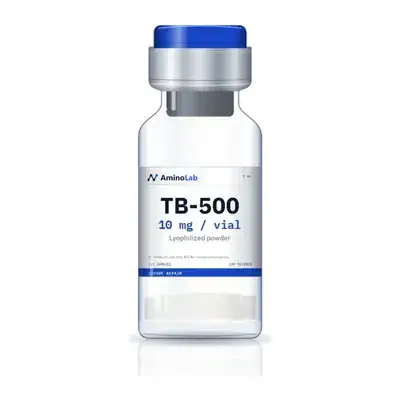
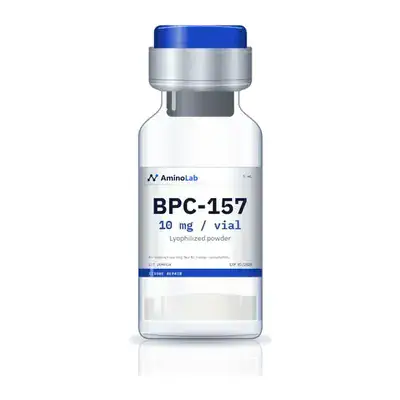
Your order is one 3 mL glass vial with a blue flip-off cap. Inside is a single white freeze-dried cake containing about 5 mg of BPC-157 and 5 mg of TB-500, mixed through the same powder so they cannot be separated after filling. There is no third ingredient and no solvent in the box. The label names both peptides, and the batch code links to the report confirming each one.
In Australia, both ingredients are scheduled. BPC-157 was added to Schedule 4 of the Poisons Standard on 1 June 2024, and thymosin beta-4, which covers the TB-500 fragment, is also a Schedule 4 prescription-only listing. Neither is an approved medicine here. Our guide is BPC-157 legal in Australia explains what that means in more detail.
For that reason the blend is sold only as a research reagent. AminoLab supplies it from Australian stock to adults aged 18 and over, for in vitro and laboratory work only, never for human or veterinary use. Check the current batch in our COA library before you order.
The blend is sold in one size, a 10 mg vial with 5 mg of each peptide. Because the ratio is fixed, every vial gives the same split, which keeps your results comparable from run to run.
For a longer study, buy all the vials you need at once and we will send them from one batch wherever stock allows, so one certificate covers the whole series. A batch change in the middle of a blend study adds two possible sources of variation instead of one, so ordering up front is worth it. Checkout asks you to confirm you are 18 or older.
If you are unsure whether the blend or the singles suit you, start with the single vials for your first experiment, then add the blend once you know what each peptide does alone. Both options can be ordered in the same checkout.
A report for a single peptide needs one mass result. A report for this blend needs two, because the vial is only what it claims if both peptides are present. Look for one mass result that matches BPC-157 at about 1419.5 and another that matches TB-500 at about 889.0, an HPLC trace with a main peak for each, and a batch code that matches your label.
Watch for TB-500 being described as the full thymosin beta-4 protein. The report should name the seven-residue fragment and give its mass, not the mass of the whole protein. All of our reports are in the COA library, and you can read them before you add the vial to your cart.
It also helps to keep the report with your experiment records. When you write up a study that used the blend, list the batch code, the two measured masses and the purity figure in your methods section. Reviewers increasingly ask for this, and having it on file from the day you buy saves a search later. Order with the report in hand and your paperwork is ready from the start.
AminoLab sells online only and ships to every state from Australian stock, so a lab ordering research peptides in Brisbane receives the same batches as one in Perth. Orders paid before 3pm on a business day leave the same afternoon, and typical transit times are on our delivery information page.
To prepare the vial, let it reach room temperature, run bacteriostatic water slowly down the side of the glass and swirl gently until clear. Adding 2 mL gives 2.5 mg per mL of each peptide, or 5 mg per mL in total. The BPC-157 and TB-500 calculator shows the strength of each peptide for any volume, which matters because you are working with two concentrations at once.
Keep the sealed vial in a -20 °C freezer, away from light. After mixing, store it at 2 to 8 °C in small portions and use it within about four weeks. Label each tube with the date, batch code and the strength of both peptides.
When designing a study around the blend, plan at least three arms if you can. One arm receives the blend, one receives BPC-157 alone and one receives TB-500 alone, each at the same weight of that peptide as the blend delivers. A fourth arm with solvent only gives you a clean baseline. This layout is the only way to show whether the pair does something neither peptide does by itself, and it is easy to set up when all three products come from the same order.
This product goes by several names. You may see Wolverine stack, Wolverine stack peptide, Wolverine peptide stack, BPC-157 TB-500 blend or BPC 157 and TB 500 combination. All describe the same 10 mg vial holding the same two peptides at equal weights. At AminoLab you can order it as the Wolverine Blend.
The ingredients have their own names too. BPC-157 is sometimes called body protection compound 157, and TB-500 is a fragment of thymosin beta-4. Each is also sold on its own if your study needs it.
Choose the Wolverine Blend when your study always uses BPC-157 and TB-500 together at equal weights. Choose the single BPC-157 and TB-500 vials when you need to change either amount or prove which peptide caused an effect. Our BPC-157 vs TB-500 guide compares the two in depth.
If your model also includes copper peptide work, the GLOW blend adds GHK-Cu to the same pair, and the KLOW blend adds both GHK-Cu and KPV. AminoLab stocks every option, so you can order exactly the combination your protocol needs.
The blend is known across research forums as the Wolverine stack peptides combination. BPC-157 and TB-500 are combined in one sealed vial at a fixed ratio, so a study that needs both compounds at the same proportion can reconstitute once instead of mixing two vials. If your protocol needs a different ratio, order BPC-157 and TB-500 as single vials instead.
BPC-157 and TB-500 freeze-dried together at 5 mg each. In stock at AminoLab.
A fixed equal split by weight. Water for mixing is sold separately.
For tissue repair models that look at blood vessel signals and cell movement together. Research use only.
Single vials let you change each amount. The blend saves preparing a second vial when the pair is fixed.
Keep the powder frozen and the solution in the fridge. Work out each peptide's strength separately with the blend calculator.
Each batch report confirms BPC-157 and TB-500 by mass, plus HPLC purity.
Add the 10 mg vial to your cart on this page and check out. We ship from Australian stock, and orders paid before 3pm on a business day leave the same afternoon. The vial holds powder only, so add bacteriostatic water if your lab needs it.
AminoLab sells online only, with no shop or pickup point. Every order comes from the same Australian stock and travels with tracking to any state or territory, and you can read the batch report before you buy.
Yes. Each batch is checked by mass spectrometry for both BPC-157 and TB-500 and by HPLC for purity, and the report is in our COA library under the batch code on the vial. Make sure both masses are listed before you begin.
Buy separate vials when you need to vary one peptide or show which one caused a result. Buy the blend when the equal-weight pair is fixed in your protocol, because it saves preparing a second vial. Many labs start with the singles and add the blend later.
No. The 10 mg is the total, about 5 mg of BPC-157 and 5 mg of TB-500. With 2 mL of water, each peptide is at 2.5 mg per mL. By number of molecules there is more TB-500, because it is the lighter chain.
Labs use it in tissue repair models to study blood vessel signals and cell movement at the same time, usually beside single-peptide arms. AminoLab sells it for in vitro and laboratory research only, to adults aged 18 and over, never for human or veterinary use.
Research use onlyAminoLab supplies research compounds for laboratory and in-vitro use, not for human or animal consumption. By continuing you confirm you are 18 or older and buying for research.
Leave