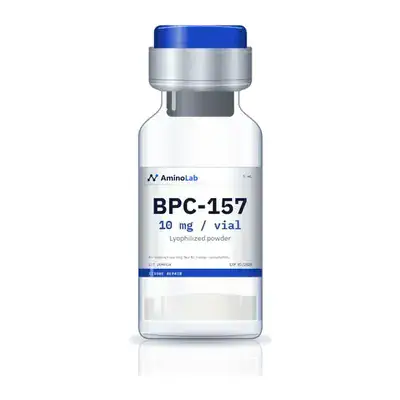
BPC-157
10 mg vial, 60 capsules
From $69
Set BPC 157 vs TB500 next to each other and you find two strangers. They were never related, they just landed in the same field of repair research. The first, BPC-157, is cut from a gastric juice protein and runs to 15 residues, with most papers looking at nitric oxide and growth factor pathways. The second, TB-500, is a seven-residue fragment of thymosin beta-4, and its papers centre on actin and on cells moving into damaged tissue.
| BPC-157 | TB-500 | |
|---|---|---|
| Source protein | Body protection compound, isolated from human gastric juice | Thymosin beta-4, a protein found in almost every cell |
| First described by | Sikiric group at the University of Zagreb, early 1990s | Goldstein group, who isolated Tβ4 from calf thymus |
| Sequence | GEPPPGKPADDAGLV | Ac-LKKTETQ (Tβ4 residues 17 to 23) |
| Residues and mass | About 1419 Da, 15 amino acids | About 889 Da, 7 amino acids |
| Leading proposed mechanism | Nitric oxide system, VEGFR2 and Akt-eNOS signalling, plus FAK-paxillin in fibroblasts | Binding of G-actin, angiogenesis and cell migration |
| Models studied | Gut, tendon, ligament and vascular endothelium | Cardiac models, wound closure and the eye surface (full Tβ4) |
| Survives gastric juice | Yes, according to published studies | Not shown |
| Evidence in humans | Three small reports, all uncontrolled | None for the fragment, while full Tβ4 has reached phase 1 to 3 |
| WADA listing | Category S0, Non-Approved Substances | Category S2, peptide hormones and growth factors |
| Formats at AminoLab | 10 mg BPC-157 vial, plus 500 mcg capsules | 10 mg TB-500 vial |
Any BPC 157 vs TB 500 discussion online treats them as a matched set, which hides how little the structures have in common. The BPC-157 story starts in a Croatian lab asking why stomach tissue is not destroyed by the acid it sits in. From ulcer models its literature spread into tendon, ligament and blood vessel work. Two papers anchor the musculoskeletal claims. One is the rat Achilles tendon study by Staresinic's team in the Journal of Orthopaedic Research (2003). The other is the tendon fibroblast work by Chang's team in the Journal of Applied Physiology (2011). Our guide to what BPC-157 is covers this history in more depth.
TB-500 arrived by a very different road. Thymosin beta-4 is a cytoskeletal protein, and its actin-binding motif was isolated and synthesised as a standalone fragment. Most of its supporting data actually belongs to the whole Tβ4 protein, the best-known example being a Nature paper from 2004 that used mouse heart cells. That gap between fragment and parent is unpacked in our TB-500 explainer.
A short way to frame it is that TB-500 research asks how cells travel to a site of damage, while BPC-157 research asks what then happens to the tissue and its blood vessels. Cells cannot crawl anywhere until their actin is rebuilt, and Tβ4 is one of the proteins that holds free G-actin in reserve. The BPC-157 papers point elsewhere. A 2017 report from Hsieh's group in the Journal of Molecular Medicine linked it to higher VEGFR2 levels, other work ties it to nitric oxide signalling, and fibroblast studies describe more outgrowth and movement through the FAK and paxillin route.
One point of overlap stands out. Both peptides promote new blood vessel growth in models, which is part of the reason they are so often paired. That same property is the common theoretical worry about long-term safety, a topic explored in our BPC-157 safety review.
At the checkout, tb500 vs bpc 157 mostly comes down to format. Because the literature reports BPC-157 holding up in gastric juice, it belongs to a small group of peptides studied orally, and that is why our shelves carry a capsule version (500 mcg) next to the 10 mg vial. Nobody has demonstrated the same for TB-500, so the only TB-500 we sell is a lyophilized 10 mg vial. Both vials are 3 mL glass with rubber stoppers, ready for bacteriostatic water. For the arithmetic, use the BPC-157 calculator or the matching TB-500 calculator for each vial.
This choice shapes the order more than any other, and our advice stays the same. Any design that pits one peptide against the other, or that might alter one without touching the other, should start from two single vials. Freeze-drying two compounds in one vial sets their proportions for good, and you lose the ability to study either alone.
Reserve the Wolverine Blend (BPC-157 + TB-500) for protocols that already call for both compounds at a set ratio. Then the blend earns its place, with half the vials to mix, half the lot numbers to log and one certificate for both peptides. The combined 10 mg fill has its own tool, the BPC-157 and TB-500 blend calculator.
| Two single vials | Wolverine blend | |
|---|---|---|
| Reconstitutions needed | Two | One |
| Peptide ratio | Your choice | Locked when manufactured |
| Certificates supplied | A separate one for each compound | A single one for both |
| Suits | Dose-response and comparison designs | Protocols that already use the two together |
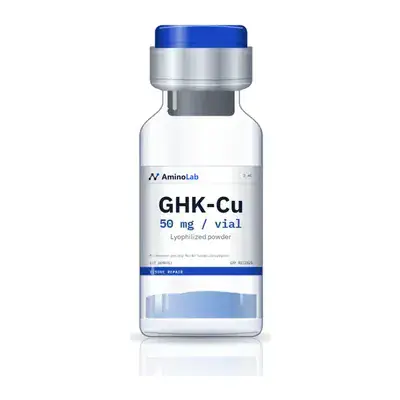
Two bigger blends start from these same two peptides. GLOW comes in a 70 mg vial, pairing 50 mg of GHK-Cu with BPC-157 and TB-500 at 10 mg apiece, which means the copper peptide accounts for most of the contents. KLOW is an 80 mg vial that takes those three and adds KPV, the lysine-proline-valine tripeptide. The GHK-Cu gives both a blue colour.
The reasoning used for the Wolverine blend holds even more strongly here, because four compounds sharing a vial means four fixed ratios. KLOW and GLOW are a good fit for research that is already built on those precise combinations. When only the two tissue repair peptides are needed, separate vials or the Wolverine blend keep things simpler. A full comparison of the larger blends is in the GLOW vs KLOW guide.
The comparison above points straight to the right purchase. We ship all three from Australian shelves to laboratories that order online. Type the lot number from any vial into the COA library and the independent identity and purity report appears. Compare them side by side in the recovery peptide range, then put bacteriostatic water in the cart with them.
No product containing either peptide is an approved medicine in Australia, and neither appears on the ARTG. BPC-157 moved into Schedule 4 of the Poisons Standard on 1 June 2024, with the detail set out in our BPC-157 legal status guide. AminoLab sells these peptides to labs for research alone. They are not for people or animals, and staff will not answer questions about dosing or stacking.
Almost everything. Their parent proteins are unrelated and no part of the sequence matches. BPC-157 has 15 residues and comes from gastric juice, and gut and tendon models test it against VEGFR2, nitric oxide and fibroblast pathways. TB-500 has seven residues taken from thymosin beta-4 and is tested for actin binding and how cells move.
There is no overall winner since the two answer different mechanistic questions. More papers study BPC-157 directly, and it tolerates gastric juice. TB-500 leans heavily on data from the complete thymosin beta-4 molecule. Choose by the pathway under investigation.
Single vials whenever one peptide is compared with the other or could be adjusted alone, because nothing in a blend can be rebalanced. The Wolverine blend makes sense once a protocol fixes both at its ratio, and it cuts out a vial and a mixing step.
Wolverine is the two-peptide option, with only BPC-157 plus TB-500 sharing a 10 mg fill. KLOW goes to four compounds by bringing in GHK-Cu and KPV, packed in 80 mg. GLOW sits between, with GHK-Cu, BPC-157 and TB-500 in 70 mg and KPV left out.
Straight from the AminoLab online store. Our Australian warehouse holds the Wolverine blend, TB-500 as a 10 mg vial, and BPC-157 as either a 10 mg vial or a pack of 60 capsules. An independent lab analyses each lot and the label's lot number links to its report. Supply is limited to laboratory research, with no use in humans or animals.
10 mg vial, 60 capsules
50 mg vial, 100 mg vial
10 mg vial
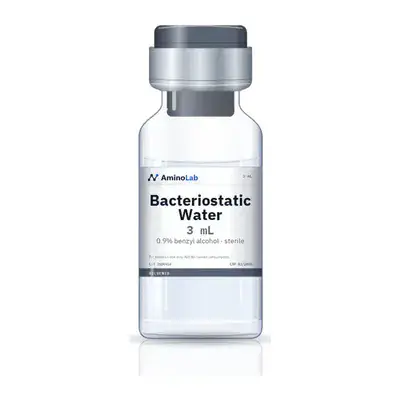
3 mL, 3 mL + 1 syringe, 10 mL, 10 mL + 1 syringe, 30 mL, 30 mL + 1 syringe
Research use onlyAminoLab supplies research compounds for laboratory and in-vitro use, not for human or animal consumption. By continuing you confirm you are 18 or older and buying for research.
Leave