BPC-157
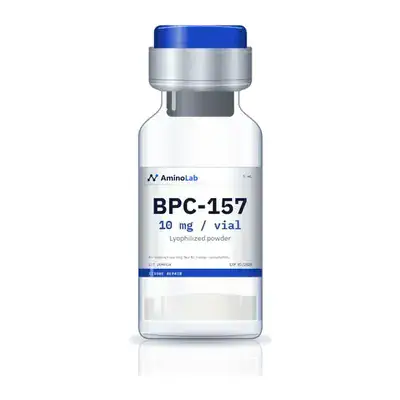
10 mg vial, 60 capsules
From $69
Is BPC 157 legal in Australia? Not as an over-the-counter product. As of September 2026, when we last reviewed this page, BPC-157 has been listed in Schedule 4 of the Poisons Standard, the prescription only schedule, since 1 June 2024. It is also absent from the ARTG, so no approved medicine containing it exists here. Everything below comes from TGA sources we were able to confirm, and none of it should be read as legal advice.
Each point below was verified on 30 September 2026 using the TGA's own published material.
Rules move, and every state and territory adds its own poisons legislation over the top of the federal Poisons Standard. So before acting on this summary, check the TGA website and the latest version of the Poisons Standard, which is published on the Federal Register of Legislation.
BPC-157 sat entirely outside the Poisons Standard until 2024. In November 2023 the Advisory Committee on Medicines Scheduling, at meeting ACMS #43, looked at a proposal for a brand new Schedule 4 entry covering the peptide. The TGA's interim decision explained that the proposal followed 48 importation referrals for BPC-157 lodged since 1 July 2022, and that the aim was to treat it in the same way as other performance and image enhancing substances.
On 22 May 2024 the final decision was published, confirming the Schedule 4 entry and fixing 1 June 2024 as the start date. The delegate found no reason to hold it back, because BPC-157 was an unapproved medicine and the change touched no registered product.
A Schedule 4 listing allows a substance to be supplied on prescription by an authorised prescriber. It does not create a product for pharmacy shelves. Because the ARTG lists no BPC-157 medicine, lawful clinical supply would have to travel through the TGA's unapproved goods pathways, and each pathway brings conditions of its own for doctors and pharmacists. In April 2026 the TGA also spelled out, in a published notice, the duties that fall on importers, compounders and suppliers of unapproved peptide products, which shows how closely this channel is being watched.
Healthy Male, a national men's health body, puts it bluntly. Possession of BPC-157 is illegal unless you hold a valid prescription. Whether an individual practitioner can prescribe it, and how, is something to raise with that practitioner and, where needed, a lawyer.
A very common question is whether BPC 157 Chemist Warehouse stock exists, and the two facts already set out answer it. Pharmacy chains like Chemist Warehouse can only stock medicines with registered or listed status. BPC-157 has neither status, and a Schedule 4 substance can never be an off-the-shelf retail line in any case. Since the ARTG holds no BPC-157 product, there is nothing for a pharmacy chain to put on its shelves.
Take care with websites and social media pages that lean on pharmacy names or pharmacy-style wording. Seeing "warehouse" in a web address says nothing about the business behind it or about what the vial contains.
Labels are dealt with head on in the TGA guidance that defines a therapeutic good. A line reading "for research purposes only" does not alter the legal position once the goods actually end up with people, and the guidance states clearly that disclaimers about intended use leave the law untouched.
AminoLab sells BPC-157 to laboratories and researchers for in vitro and laboratory research and for nothing else. Human and veterinary use are excluded, no dosing advice is given and no therapeutic claim is made, all of which is set out in our research use only statement. A research-use label states the purpose a product is sold for. It gives nobody permission to use it on themselves, a point the TGA has made as well.
If BPC-157 is part of a project, sort out your obligations first. Talk to the compliance office at your institution, then read both the latest Poisons Standard and your own state or territory poisons law. Quality is the part we handle. Every AminoLab lot goes to an independent laboratory for mass spectrometry, which proves identity, and HPLC, which measures purity, and the results sit in our certificate lookup by lot number.
TGA rules aside, WADA places BPC-157 on its Prohibited List in class S0, Non-Approved Substances, so it is banned in competition and out of competition alike, and that list binds Australian athletes through Sport Integrity Australia. For TB-500 the relevant class is S2. To read about the evidence on the compound itself, turn to our review of BPC-157 safety evidence, and our BPC-157 background guide explains where it came from.
For in-vitro and laboratory projects, the paperwork and the label count for far more than a polished storefront. AminoLab ships BPC-157 as a 10 mg vial or a 60-capsule bottle from Australian stock, and every sale falls under our research use only policy, which is worth reading next to the scheduling notes on this page. An outside laboratory analyses every batch, and you can pull up its certificate in the COA library with the label's lot number. Tissue repair projects often add KPV at the same checkout. Sales are made to adults 18 and over, strictly for research purposes, with no personal use and no dosing or treatment advice.
Browse related compounds in our tissue repair research peptides range, or go straight to the TB-500 10 mg research vial. The information here reflects the position when it was written, should not be treated as legal advice, and applies to products sold for research use only.
It is a Schedule 4 substance, which means prescription only, and has been since 1 June 2024, while no BPC-157 product is on the ARTG. In the TGA's words, importing, advertising, manufacturing or supplying unapproved peptide products is unlawful. Read the current Poisons Standard and take legal advice that fits your own situation.
Yes, because every Schedule 4 substance is prescription only. Clinical supply would also need one of the TGA's unapproved goods pathways, because the ARTG contains no approved BPC-157 medicine. Healthy Male notes that holding it without a valid prescription is illegal.
No. No Australian pharmacy, Chemist Warehouse included, has a registered BPC-157 product it could stock. Being off the ARTG and in Schedule 4 rules it out as an over-the-counter item, and a listing that borrows a pharmacy-like name is still not a pharmacy product.
The listing applied from 1 June 2024. The process ran through an ACMS meeting in November 2023, then an interim decision, then the final decision of 22 May 2024, and the TGA cited 48 BPC-157 import referrals received from July 2022 onward.
No. The TGA is clear that printing "for research purposes only" changes nothing legally if a product actually goes to people. Research supply is for the laboratory, and personal use stays off limits.
Shop BPC 157 online from AminoLab for laboratory research only, in a 10 mg vial or a 60-capsule bottle dispatched from Australian stock, each batch carrying an outside laboratory certificate. The research use only label neither makes it a medicine nor permits personal use, human and veterinary sales are refused, and current TGA scheduling should be checked before anything beyond lab work.
10 mg vial, 60 capsules
50 mg vial, 100 mg vial
10 mg vial
3 mL, 3 mL + 1 syringe, 10 mL, 10 mL + 1 syringe, 30 mL, 30 mL + 1 syringe
Research use onlyAminoLab supplies research compounds for laboratory and in-vitro use, not for human or animal consumption. By continuing you confirm you are 18 or older and buying for research.
Leave