BPC-157
10 mg vial, 60 capsules
From $69
Our peptide glossary is the decoder ring for AminoLab. Every word you meet on a vial label, a lot certificate or a product page is defined here in plain English, so nothing on the order screen is a mystery. Ranked from largest to smallest, the order is protein, peptide, amino acid.
Picture a necklace. Every bead is an amino acid and every clasp between beads is a peptide bond. Peptide vs polypeptide vs protein is then a question of how long the necklace is and whether it has been coiled into a fixed, useful shape. A peptide is a short necklace, from 2 to roughly 50 beads. Polypeptide covers any longer unbranched necklace, and writers commonly switch to it at about 20 beads. A protein is one or several of those long necklaces wound into an exact 3D form with a job to do, normally 50 beads or more and in some cases thousands.
Smallest first, then, the scale goes amino acid, peptide, polypeptide, protein. Insulin is the classic awkward case. It has 51 residues split over two chains, and you will find it called a peptide hormone in one book and a protein in the next, proof that the dividing lines are soft.
| Amino acid | Peptide | Polypeptide | Protein | |
|---|---|---|---|---|
| In short | The single unit | Brief chain | Lengthy unbranched chain | Folded chain or chains |
| Residue count | 1 residue | 2 to about 50 residues | About 20 to several hundred residues | About 50 to many thousands of residues |
| Bonds in the backbone | None | 1 to about 49 | Many | Many, in every chain |
| Fixed 3D shape | No | Rarely | Sometimes | Yes, and function depends on it |
| Known examples | Glycine, lysine | GHK (3), BPC-157 (15) | Thymosin beta-4 (43) | Growth hormone (191), serum albumin (585) |
Keep the necklace in mind and the table reads itself. One bead, a short strand, a long strand, and finally a long strand coiled into a working tool.
People ask what is the difference between a protein and a peptide all the time, and the one-line answer goes like this. Proteins are large polypeptides locked into a defined shape, and peptides are short chains that mostly lack the length to hold a shape of their own. Whether you frame it as peptide vs protein, peptides vs proteins or peptide versus protein, four factors decide it.
Length. Peptides top out around 50 amino acids. Proteins usually go past that and frequently run into the hundreds, which is the main peptide protein distinction.
Architecture. Beyond length, the difference between peptide and protein shows in structure. A protein stacks helices and sheets (secondary structure) into a compact fold (tertiary structure) and sometimes teams several chains together (quaternary structure). A typical short peptide flops around in water with no fixed form beyond its sequence.
Origin. In living cells ribosomes make both, though many small bioactive peptides are carved from larger precursor proteins after translation. In industry the routes split. Peptides come from solid-phase peptide synthesis, one residue at a time on resin, and big proteins come from engineered cell lines.
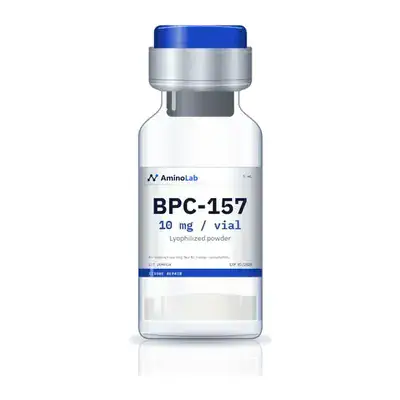
Toughness. Short chains take freeze-drying and redissolving in their stride, which is why we can sell compounds like BPC-157 as lyophilised powder. A protein's fold, and the activity tied to it, is far easier to lose.
Strip it back to chemistry and the difference between protein and peptide is degree, not kind, since the same bond joins the same units in both. The practical difference between a protein and a peptide is simply chain length and whether folding happens.
There is no official cut-off. Fifty residues is the figure most people quote, yet biochemists care just as much about folding. A well-folded 40-residue chain can earn the label small protein, and a floppy 60-residue chain may still be filed under peptides. Anything in the 40 to 100 range is a grey zone where the author's habits decide the name.
Teaching labs have a neat way to show the step from amino acid to peptide to protein. Add copper(II) in alkaline solution. If the sample has two or more peptide bonds the mixture goes violet, so proteins and most peptides change colour while free amino acids and dipeptides do not. Ninhydrin works on a different principle, reacting with free amino groups, so it lights up amino acids as well.
Size decides how a molecule is produced, tested and kept. A small peptide can be synthesised to a high standard and identified in one mass spectrometry run. A big protein generally needs peptide mapping, in which an enzyme chops it into pieces that are analysed one by one until the whole sequence is accounted for.
Storage follows the same logic. A short synthetic chain sealed as dry powder tolerates the freezer, a courier van and months on a shelf at minus 20 °C with little change, then dissolves in a minute or two once diluent goes in. Many proteins need cold chain handling from start to finish, special buffers and gentle mixing, because their value lies in a fold that can be lost to a single rough shake. That difference is a big part of why a specialist peptide shop can keep a wide catalogue in stock, test every lot and post it across Australia, while protein reagents usually come from very different suppliers with very different logistics.
Generally not. Only a chain that is long enough and folded enough crosses over. GHK-Cu with three residues and ipamorelin with five are clearly peptides, and calling either one a protein would raise eyebrows in any lab. So is peptide a protein? Same chemical family, wrong size. And are peptides proteins? The same answer applies, shared chemistry at a very different scale.
You will often read that a peptide is a protein in miniature. It is a handy image but not quite accurate. Peptides are made of the same units joined by the same bond, so describing them as protein-like or as protein fragments is reasonable. Calling one a full protein misses the folded architecture that proteins require.
Nutrition labels muddy this further, because hydrolysed collagen and whey get sold as peptides. Here the peptides really are pieces of protein, chopped short by enzymes, and they are added to the protein figure on the panel.
Is there peptide content in protein powder? A small amount is usual, and some powders are designed around it. Hydrolysed whey, sold as whey protein hydrolysate or whey peptides, has been part-digested by enzymes, while standard whey is left whole. You get the same amino acids either way. The hydrolysate is pre-chopped, more bitter and pricier. On a nutrition label there is no stand-alone peptide category, as those peptides are protein that was cut early.
No. Peptides and proteins share amino acids and peptide bonds yet differ in length, shape and how they behave. Put precisely, any protein is a long polypeptide in a folded state, while the typical peptide is short and unstructured.
Collagen is a handy example. The collagen in tissue is a protein, and the collagen peptides in supplement tubs are fragments of it. For how those compare with synthetic research peptides, see our collagen peptides comparison.
Ask it the other way round and the answer shifts. Proteins consist of polypeptide chains, and polypeptides are long peptides, so is protein a peptide in strict chemistry? Yes, a protein is a giant, folded peptide. Working biochemists rarely talk like that, though, keeping peptide for short chains and protein for big folded ones. So the honest answer to are proteins peptides is yes in chemistry and no in normal usage.
Do cells build proteins by joining peptides together? They do not. The ribosome adds single amino acids to a growing chain and never assembles prefabricated short pieces. A protein is one long polypeptide or a few of them. Going the other way works, however, because enzymes can cut any protein into a soup of peptides and free amino acids.
Are all proteins peptides? In chemistry, yes. Are all peptides proteins? No, because most peptides, from natural hormones to synthetic research compounds, never fold like a protein does. And is a protein a peptide in everyday lab talk? Usually not.
Each amino acid has a central carbon carrying four groups, an amino group, a carboxyl group, a hydrogen and a variable side chain, and the genetic code calls for 20 standard ones. Bond two together and you hold a dipeptide, three and you have a tripeptide. Textbooks teach these levels as a single topic because every rung is built from the one beneath, and the whole ladder is really just a measure of chain length.
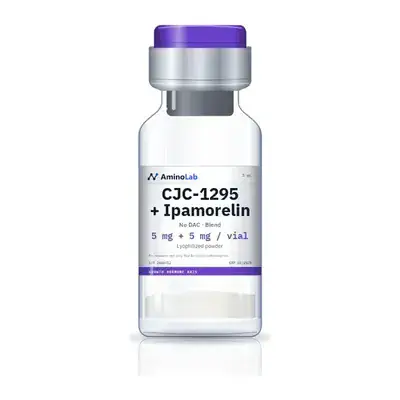
Two. From there it is dipeptide (2), tripeptide (3) and oligopeptide (up to around 10 to 20). Our research catalogue spans this and more, from GHK-Cu (3) and ipamorelin (5) through BPC-157 (15) and CJC-1295 (29) to tesamorelin (44).
Climb down the ladder and you are describing digestion, or acid hydrolysis in a lab, where the protein peptides amino acids progression turns a folded whole into fragments and then into single units. Supplement marketing often prints the steps the other way up, but it is the same chain getting shorter. For a lab buyer the useful takeaway is that every product in our range sits on the peptide rung of this ladder, short enough to make by synthesis and check by mass, rather than on the protein rung where expression systems take over.
Chemically, a peptide bond is an amide formed between a carboxyl group and the next amino group, and water is released as it forms, so chemists class it as a condensation reaction. Some older texts call it the peptide linkage. Along a protein backbone the peptide bonds join residue to residue, and an unbranched chain with n amino acids always has n minus 1 bonds.
Translation on the ribosome forms every peptide bond in a cell. Messenger RNA dictates the order, transfer RNAs ferry in the matching amino acids, and the peptidyl transferase centre in the large subunit, itself made of RNA, fuses each newcomer to the chain. The chain lengthens from its N-terminus towards its C-terminus. Solid-phase synthesis, the route used for research peptides, forms the identical bond on a resin but builds from the C end towards the N end.
Electrons spread across the peptide bond give it some double-bond character, so six atoms around it lie flat and rigid, and the bond nearly always takes the trans form. The cis form appears mostly in front of proline. Those rigid planes limit how the backbone can twist, steering it into helices and sheets. Viewed level by level, the bonded sequence is the primary structure, backbone hydrogen bonding builds secondary structure, and side chain contacts such as disulfide bridges fix tertiary and quaternary structure.
Denaturing a protein proves the point. Heat or urea undoes the fold in moments, but cutting the backbone requires strong acid or an enzyme, so an unfolded protein keeps its full set of peptide bonds.
Left in neutral water, peptide bonds barely break, so organisms use proteases, also called peptidases, to snip proteins into peptides and finally into free amino acids. Pepsin opens proceedings in the stomach, then trypsin and chymotrypsin from the pancreas take over. Analytical labs put these very enzymes to work in peptide mapping, producing predictable fragments for mass spectrometry.
Plenty of glossary visitors really want to know about skincare, and whether peptides are good for skin, safe on skin or right for younger skin. Definitions we can give, product verdicts we cannot. Cosmetic peptides are short sequences such as palmitoyl tripeptide-1 and acetyl hexapeptide-8 used at low concentration, and polypeptide skin ingredients on a label are typically longer sh-polypeptide sequences. Whether a particular formula suits dry, oily, sensitive or young skin, or the fine skin around the eyes, depends on everything else in the bottle, and a dermatologist or pharmacist is the right person to ask.
Comparing the two is apples and oranges. Ceramides are fats that fill much of the space between cells in the outer skin layer, the barrier itself. Peptides are amino acid chains. Many barrier products carry both. Free amino acids versus peptides is a similar mix-up, as free amino acids mainly hold moisture in a formula while a named peptide is chosen for a specific signalling or carrier role. Our guide to peptides for skin splits cosmetic peptides into four families, and the GHK-Cu explainer covers the most heavily studied one.
Peptide and protein hormones are messengers manufactured through translation like any protein, usually as an oversized precursor, the preprohormone, that is cut down to size and parked in secretory vesicles until the cell releases it. These hormones are water-loving, so they cannot slip through the fatty cell membrane. Instead they bind receptors on the outside of the cell, and second messengers or kinase cascades carry the signal in. Steroid and thyroid hormones take the opposite approach, crossing the membrane easily and acting mostly on receptors within the cell.
Size again draws the line, and the difference between peptide and protein hormone groups mirrors every other chain. Short ones count as peptide hormones, for instance oxytocin and vasopressin at 9 amino acids, ghrelin at 28 and GHRH at 44. Long, stably folded ones count as protein hormones, such as growth hormone at 191 amino acids and prolactin at 199. FSH, LH and TSH are glycoproteins, each two chains decorated with sugars.
Are peptide hormones proteins? They are the same type of molecule, which is why physiology courses teach them together. A text that splits protein from peptide hormones is sorting by length, not by mechanism, because both signal through cell-surface receptors. Most dissolve straight into plasma and circulate unbound, although some ride on carriers such as growth hormone binding protein or the IGF binding proteins.
So where does HGH sit? At 191 residues it is a protein hormone, despite often appearing on lists of peptide hormones. The products in our growth hormone peptides range, by contrast, are true peptides between 5 and 44 amino acids long that target the pituitary receptors controlling its release.
What are protein peptides? The term normally means short chains released from a bigger protein, collagen and whey peptides made with enzymes being the familiar examples, or short stretches embedded within a protein's sequence. On a supplement tub it nearly always means hydrolysed protein, a blend of short chains. Many research peptides started life the same way. BPC-157 is a 15-residue stretch from a gastric juice protein, and TB-500 comes from thymosin beta-4. A sequence buried in its parent protein usually has to be cut free before it can act alone.
Flip the relationship and you get the peptide binding protein, a protein shaped to grip a certain peptide. MHC molecules showing peptide fragments to immune cells are one kind, hormone receptors another, and membrane transporters for short peptides a third. Protein peptide binding is the non-covalent fit of a peptide into a cleft on the larger partner, and binding assays measure its strength and selectivity. Interactions like this are everywhere in biology, which is why researchers so often study both molecule types at once and why a journal like Current Topics in Peptide and Protein Research exists.
Everything defined in this peptide glossary will eventually appear on a product page or certificate you read. When it comes to buying, three entries count most, namely a mass spectrometry identity check, an HPLC purity result and a lot number printed on the vial. Our lab tested peptides page shows how each looks on an AminoLab certificate. To watch the vocabulary at work on actual compounds, from tiny GHK-Cu to the much longer tesamorelin, browse the research peptides for sale in Australia.
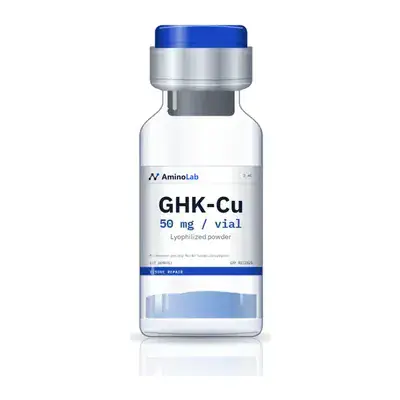
Those three entries also make a simple buying checklist. Does the residue count on the listing match the sequence you expect? Is purity backed by an HPLC figure rather than a vague grade? Does the mass spectrometry result agree with the weight the sequence should have? Run through it as you shop the complete AminoLab catalogue online, and drop bacteriostatic water or 0.6% acetic acid into the cart if a compound needs a solvent. For a first reconstitution with everything in one box, the GHK-Cu Starter Kit gives you a 50 mg vial, 3 mL of water and a U-100 syringe. Every product we ship is for in-vitro laboratory research only.
Lysine, one of the essential amino acids, carries a positive charge on its side chain and turns up in many research sequences. It is the K in KPV and in GHK-Cu. The lysine tablets sold by chemists are the free amino acid taken as a supplement, not a peptide, and we do not carry them. Pharmacies are the place for lysine tablets. Labs wanting a lysine-bearing peptide can order KPV or GHK-Cu from our stock.
Proline is the odd one out, the only amino acid whose side chain loops round to bond with its own backbone nitrogen. The result is a bend in the chain. BPC-157 owes its compact form partly to three prolines in a row, and collagen gets much of its structure from proline and hydroxyproline.
Protein peptides and amino acids are three steps on the same ladder. An amino acid is a single building block. A peptide is a short chain of amino acids joined by peptide bonds, usually fewer than 50. A protein is a long chain, often folded into a complex shape. Every research peptide in our range is defined by its sequence of amino acids, which is why the sequence appears on each product page and certificate.
Freeze-drying, or lyophilisation, starts by freezing the peptide solution. A vacuum then draws the ice away, and it sublimes without ever melting. The vial ends up holding a fluffy, dry cake. Almost no water means almost no chemical breakdown, which is the reason a sealed vial can sit for long periods at minus 20 °C.
Dissolving that cake is called reconstitution, and the amount of liquid you add decides the final strength. A 10 mg vial given 2 mL ends up at 5 mg per mL. From then on it belongs in a fridge at 2 to 8 °C, to be used within 28 days. The full procedure is laid out in our reconstitution guide.
An HPLC run separates the sample and plots each component as a peak. The purity figure is the share of total peak area that belongs to the target peptide, so at 99% the leftover 1% is related impurities, for instance chains missing a residue. Salts and water do not show up in that figure, so HPLC purity is not the same thing as how much peptide by weight the vial contains.
Purity is one question and identity is another. Mass spectrometry measures the mass of what is present and sets it against the value calculated from the sequence. If the two agree to within about one dalton, the vial holds the peptide named on the label, and if they do not, the chain is wrong or incomplete. Our walkthrough on reading a COA points out where each result appears.
Containers filled together from one production run share a lot number. The code is printed on each vial, bottle, spray and pen, and it also heads the certificate for that run. Enter it into the COA library to read the results for the exact item you are holding.
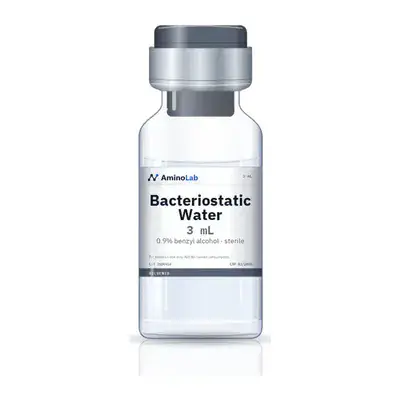
Most of our peptides are made up with bacteriostatic water, which is sterile water carrying 0.9% benzyl alcohol. That small amount of alcohol keeps bacteria in check, so the vial tolerates repeat punctures across several weeks in a way plain sterile water cannot. Bacteriostatic water is sold in 3 mL, 10 mL and 30 mL sizes. A few compounds, IGF-1 LR3 for one, prefer 0.6% acetic acid.
Count and fold. Up to about 50 amino acids strung together by peptide bonds is a peptide. A longer string, or several, folded into a stable 3D form that performs a cellular task is a protein. Same units, same bond, different size and shape.
In strict chemistry they are, because a protein is built from polypeptide chains and a polypeptide is a long peptide. Everyday biochemistry keeps the word peptide for chains of roughly 50 residues or fewer, so proteins are usually described as polypeptides instead.
Every protein does, since peptide bonds are what link one amino acid to the next along the backbone. A 100-residue chain has 99 of them. Hydrogen bonds and disulfide bridges also appear, but those hold the fold together rather than forming the chain.
Technically zero. Cells never build proteins out of smaller peptides, because the ribosome extends a single continuous chain one amino acid at a time. You can count chains and bonds instead, with n minus 1 bonds for each chain of n amino acids. Break a protein down with enzymes, though, and many peptides result.
A protease, also called a peptidase or proteolytic enzyme. Pepsin starts digestion in the stomach, and pancreatic trypsin and chymotrypsin continue in the small intestine. All of them hydrolyse peptide bonds, usually next to particular residues, turning proteins first into peptides and then into free amino acids.
Yes, through AminoLab, which ships from local stock. Our products are short synthetic chains such as BPC-157 and GHK-Cu, made by solid-phase synthesis and supplied freeze-dried, not large expressed proteins. Pick a research area, open the lot certificate in the COA library, then check out with the vial and diluent together. Sale is for laboratory research use only.
10 mg vial, 60 capsules
50 mg vial, 100 mg vial
10 mg vial
3 mL, 3 mL + 1 syringe, 10 mL, 10 mL + 1 syringe, 30 mL, 30 mL + 1 syringe
Research use onlyAminoLab supplies research compounds for laboratory and in-vitro use, not for human or animal consumption. By continuing you confirm you are 18 or older and buying for research.
Leave