KLOW
80 mg vial
$139
Skin and hair peptides Australia researchers can trust start with a certificate for every lot, and that is how AminoLab runs this range. Choose GHK-Cu copper peptide in a 50 mg or 100 mg vial, the GLOW and KLOW blends, glutathione, Melanotan II and Melanotan 1, or go for the GHK-Cu Starter Kit or the Radiance Bundle. Each item is the research grade form of a compound studied in work on peptides for hair growth and in the wider field of peptides in skincare. An independent laboratory tests every lot, and the result is published as a certificate you can look up by lot number.
80 mg vial
50 mg vial, 100 mg vial
Bundle
70 mg vial
1,500 mg vial
10 mg vial
10 mg vial, Nasal spray, 10 mL
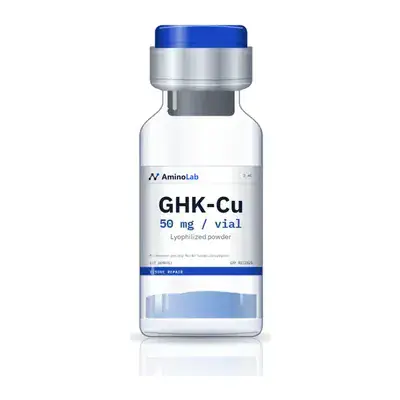
Order GHK-Cu in a 50 mg vial, or step up to the 100 mg vial, which costs around 20 percent less per milligram and suits a longer run of assays. The molecule is the tripeptide glycyl-L-histidyl-L-lysine, known as GHK, held in a complex with copper(II). Researchers found it in human plasma back in 1973, and later reports of plasma levels falling with age pulled it into skin and ageing research. Fibroblast work tracks the synthesis of collagen, elastin and glycosaminoglycans, while hair models rely on the rodent hair cycle, dermal papilla cells and follicles grown in isolation. Expect a blue powder, since the bound copper colours it, and treat a white cake as a sign the copper is not there.
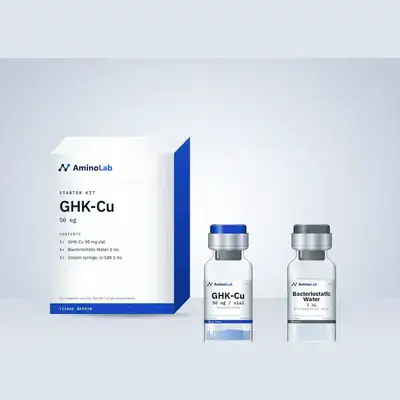
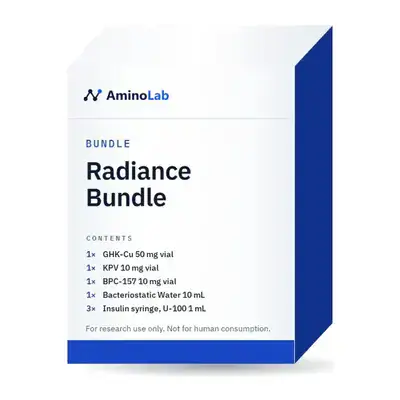
Labs starting from scratch can pick up the GHK-Cu Starter Kit. Alongside the 50 mg vial it includes one insulin syringe and a 3 mL diluent vial. For a broader setup, the Radiance Bundle contains GHK-Cu at 50 mg, KPV at 10 mg and BPC-157 at 10 mg. Three syringes and 10 mL of water round it out, letting you prepare and measure every compound on its own.
For follicle studies, GHK-Cu is the obvious starting point. Work on copper peptides for hair growth measures how big follicles get, the duration of the anagen growth phase and the signals exchanged around the dermal papilla. Separately, mouse studies of thymosin beta-4, the full length protein that TB-500 is derived from, have tracked how follicle stem cells move, and that partly explains why some groups reach for a blend of copper and repair peptides in combined designs. Everything here rests on cells, organ culture and animals, and nothing in it shows any result in humans.
That caution matters, because interest in peptides to grow hair has run well ahead of the data. Copper peptides hair growth papers mostly come from follicle organ culture and mouse skin, and the same is true of the smaller body of work on copper peptides for hair loss. A lab planning a copper peptide for hair growth study usually orders the 50 mg vial for a pilot and moves to the 100 mg vial once the model is settled. If the plan compares a copper peptide for hair follicle work against a repair peptide, KLOW or the Radiance Bundle saves setting up two separate orders. Peptide hair regrowth claims made for retail products are a different matter, and AminoLab makes none, since every vial here is a reagent for laboratory research only.
Among the compounds we stock, it has the deepest preclinical record, which is why labs comparing the best peptides for hair growth models tend to start with it. It is also the usual answer when a group asks which of the best copper peptides for hair growth work comes with a clean identity and purity certificate, since a single compound is easier to verify than a blend.
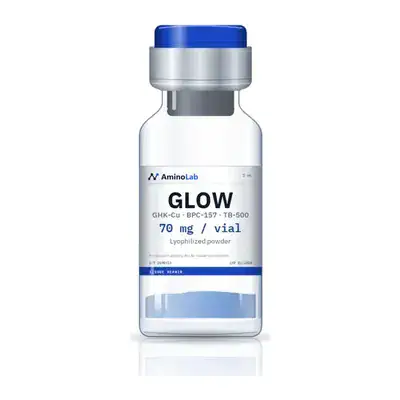
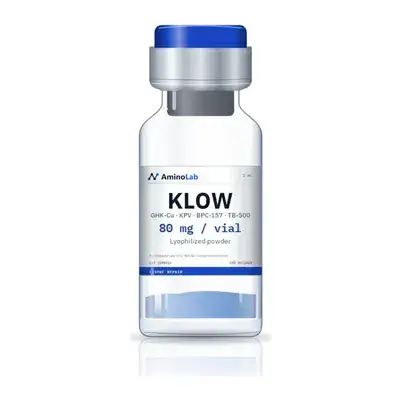
A blend makes sense when your protocol wants the copper peptide and the repair peptides together in a single lyophilised cake. GLOW is a 70 mg vial combining GHK-Cu, which makes up the biggest portion, with the repair peptides BPC-157 and TB-500. KLOW takes those three and adds KPV, a Lys-Pro-Val tripeptide valued in anti-inflammatory research, in an 80 mg vial. Both cakes look blue, for the same copper related reason as GHK-Cu, and our GLOW vs KLOW guide breaks down the component maths.
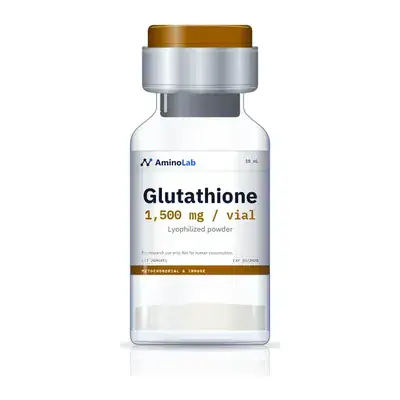
Shop glutathione as a 1,500 mg fill. This tripeptide, gamma-Glu-Cys-Gly, is the chief internal antioxidant found in almost every cell. In skin research it acts as a benchmark for oxidative stress, and groups also look at what it does during melanin production. Read its certificate carefully, since the purity figure also tells you how much of it is still in the reduced form.
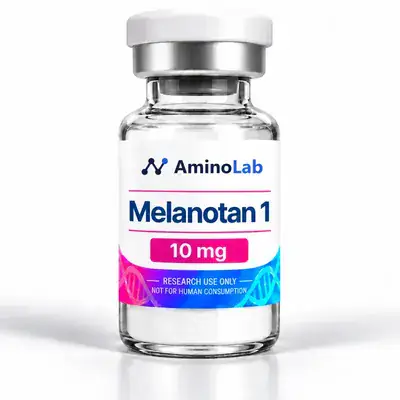
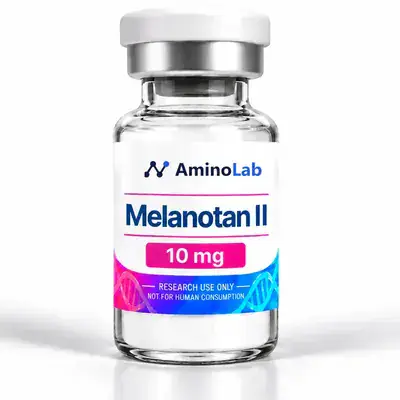
Pigmentation research leans on synthetic copies of alpha-MSH, the hormone that talks to melanocytes through the MC1R receptor, and the Melanotan pair fills that role. Melanotan 1 is a straight chain analogue of 13 residues and is the more MC1R selective of the two. Melanotan II is cyclic, just seven residues long, and acts across several melanocortin receptors. See our Melanotan 1 vs 2 comparison for how their receptor profiles differ.
Start with the question your model asks. A collagen, elastin, wound or follicle design that revolves around one molecule is best served by plain GHK-Cu, because you set the concentration yourself. Protocols that call for copper and repair peptides in a locked ratio belong with GLOW, and KLOW takes over once an inflammation arm joins the plan. Where every compound in that mix has to be measured independently, buy the Radiance Bundle instead. Oxidative stress and melanin synthesis readouts call for glutathione, while pigment receptor experiments call for one of the Melanotans. For fibroblast work, GHK-Cu is where most labs begin when lining up the best anti aging peptides to test.
Studies on the best peptides for skin tightening measure collagen and elastin output, so GHK-Cu or GLOW fits those designs. Groups ranking the best peptides for anti aging research add glutathione as an antioxidant reference arm. Among the research peptides Australia skin labs reorder most, GHK-Cu leads, and it heads most lists of the best skin peptides for a simple reason, a single well characterised compound with a visible blue check. So what is the best peptides for skin bundle we carry? For breadth it is the Radiance Bundle, while the best peptide for skin work on one mechanism is still a standalone GHK-Cu vial. Order the best peptides for skin Australia wide from local stock and every vial arrives with its lot certificate.
Retail peptides skin care serums are cosmetics, and researchers weighing lab powder against peptides in skincare products should know the two are very different things. The peptides for skin guide walks through how a serum compares with a lyophilised reagent.
An independent laboratory confirms each single peptide with mass spectrometry and HPLC, and tests every blend for each compound listed on its label. Enter the lot number printed on your label in the COA library and the certificate for that exact batch comes up. Pay before 3pm on a business day and your order leaves the same day by tracked post to anywhere in Australia. Nothing in this range is a cosmetic. These are laboratory research compounds, sold only to adults 18+, and none carry TGA approval of any kind. Every order of skin and hair peptides Australia wide ships from our local stock.
| Item | Fill or contents | Format |
|---|---|---|
| GHK-Cu | 50 mg, 100 mg | Lyophilised powder, glass vial |
| GHK-Cu Starter Kit | 50 mg vial, 3 mL water, 1 syringe | Kit carton |
| Radiance Bundle | 10 mg BPC-157, 10 mg KPV, 50 mg GHK-Cu, 3 syringes, 10 mL water | Bundle carton |
| GLOW | 70 mg | Lyophilised blend, glass vial |
| KLOW | 80 mg | Lyophilised blend, glass vial |
| Glutathione | 1,500 mg | Lyophilised powder, glass vial |
| Melanotan 1 | 10 mg | Lyophilised powder, glass vial |
| Melanotan II | 10 mg vial, 10 mL nasal spray | Lyophilised powder or nasal spray |
Peptides skin care research has moved well beyond creams on a shop shelf. Laboratories now study how short signalling peptides such as GHK-Cu switch collagen, elastin and glycosaminoglycan genes on in fibroblast cultures, and how the same copper peptide changes keratinocyte behaviour. If your group is weighing up the best peptide for skin studies, GHK-Cu is the reference compound, with GLOW and glutathione as the usual companions for pigmentation and antioxidant work.
Hair is the other half of this category. Copper peptide hair growth research looks at how GHK-Cu affects dermal papilla cells, follicle size and the hair cycle, and copper peptides for hair loss models compare it with minoxidil-style controls. Groups asking which are the best peptides for hair growth and thickness usually start with GHK-Cu peptide for hair studies and add TB-500, the synthetic thymosin beta-4, where wound and follicle regeneration overlap. Peptide hair regrowth work needs clean, well-characterised material, which is why every lot here ships with its certificate.
Researchers looking for the best peptides for anti aging studies tend to group them by mechanism. Matrix signalling peptides such as GHK-Cu, antioxidant support such as glutathione, and telomere and pineal research compounds such as epitalon. The best peptides for skin tightening research are the ones that change collagen output in a measurable way, so pick by the readout you plan to use. Every product in this category ships from Australian stock and is sold for laboratory research only.
When a lab asks us what are the best peptides for skin research, our answer starts with the readout. Collagen and elastin output points to GHK-Cu, pigmentation points to glutathione and the melanocortins, and barrier repair points to the regeneration peptides. For follicle work the copper peptide for hair studies is again GHK-Cu, and copper peptides hair growth research is one of the most cited areas in the whole field. Peptides to grow hair in cell and animal models are always ordered here as research reagents, with the lot certificate attached, never as a hair treatment.
Think of it as a copper carrying version of Gly-His-Lys, a tripeptide that scientists first pulled from human plasma in 1973. Today labs use it in follicle and fibroblast models to look at collagen, elastin and how tissue remodels.
Yes, that colour is exactly what you should see. Copper(II) bound into the peptide is what gives GHK-Cu its blue tint, and GLOW and KLOW share it because both contain GHK-Cu. If the powder is white or colourless, the copper may be missing. Your lot certificate shows identity confirmed by mass spectrometry plus the purity measured by HPLC.
Because of that KPV, KLOW can support an inflammation arm, and per milligram it comes in slightly under GLOW.
No. Our skin and hair peptides are lyophilised reagents intended for laboratory and in vitro research. They are not cosmetics, are not made up for application, and the TGA has not approved them for any therapeutic or cosmetic use. When GHK-Cu turns up in a finished cosmetic, its label name is copper tripeptide-1 and it sits within a formulated base.
For targeted melanocyte studies, Melanotan 1 is usually the pick, since this linear analogue of alpha-MSH binds the MC1R pigment receptor more selectively. Melanotan II is cyclic and acts on a wider set of melanocortin receptors, which suits broader receptor work.
Research use onlyAminoLab supplies research compounds for laboratory and in-vitro use, not for human or animal consumption. By continuing you confirm you are 18 or older and buying for research.
Leave