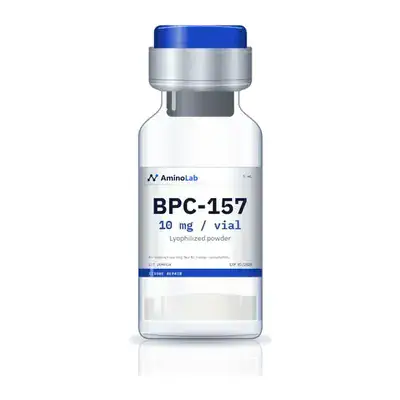
BPC-157
10 mg vial, 60 capsules
From $69
Melanotan 1 vs 2 is really a story about two choices, how many receptors a peptide hits and what regulators did with it. Melanotan 1, sold as a medicine under its generic name afamelanotide, is an unbranched chain that prefers MC1R, and Clinuvel turned it into Scenesse, now on the Australian register for one uncommon photosensitivity condition. Its sibling, Melanotan II, is a compact ring that binds almost any melanocortin receptor it meets. It has never been approved in any country, and the TGA keeps issuing warnings about tanning products that contain it.
The three peptides share a parent. Each is modelled on alpha-melanocyte stimulating hormone (alpha-MSH), a 13-residue hormone that signals melanocytes through MC1R to produce eumelanin. All three came out of the University of Arizona during the 1980s and 1990s, and from there their paths split completely.
| Melanotan 1, also called afamelanotide | Melanotan II | PT-141, also called bremelanotide | |
|---|---|---|---|
| Molecular build | Linear peptide of 13 residues, [Nle4, D-Phe7]-alpha-MSH | Lactam-bridged ring of seven residues, written Ac-Nle-cyclo[Asp-His-D-Phe-Arg-Trp-Lys]-NH2 | Cyclic heptapeptide, a near relative of Melanotan II that differs at the C-terminus |
| Receptors engaged | Chiefly MC1R (pigmentation) | MC1R, MC3R, MC4R and MC5R, all at once | Central MC4R activity is the research focus |
| Registered medicine | Scenesse, a 16 mg implant (EU 2014, US 2019, TGA 2020), for erythropoietic protoporphyria | Never approved | Vyleesi (US FDA, 2019), an injection for low sexual desire in premenopausal women |
| Typical research setting | Models of pigmentation and photoprotection | Pharmacology across many melanocortin receptors | Signalling through central melanocortin pathways |
For a lab, the deciding factor is how many receptors light up. A project centred on pigment output at MC1R gets a tidier answer from Melanotan 1. Melanotan II fires several subtypes in one go, which is both why it is so strong and why so many unwanted effects follow it.
A Melbourne firm, Clinuvel Pharmaceuticals, chose to deliver afamelanotide through a controlled-release implant rather than by injection. Its case rested on a pair of randomised trials against placebo, written up by Langendonk's group for the New England Journal of Medicine in 2015. The European arm had 74 patients and the US arm 94, every one living with erythropoietic protoporphyria (EPP), a genetic disease where sun exposure brings intense pain. Over six months in the US study, the median time spent pain-free in direct sun reached 69.4 hours on the implant against 40.8 hours for placebo. Side effects were largely mild, and investigators did not attribute the serious events to the drug.
Australian registration followed in October 2020, when the TGA cleared Scenesse for preventing phototoxicity in adults who have EPP. Nothing else for EPP had been registered here before, and only a trained health professional may insert it. Note what that approval does and does not cover. It applies to Clinuvel's implant for EPP. It gives research-grade Melanotan 1 no status as a registered medicine, and it has nothing to do with tanning.
The designers wanted something stronger and longer-lasting than Melanotan 1, so they closed the molecule into a seven-residue ring. The sole early human data is a small phase I pilot. Dorr's team published it in Life Sciences in 1996, giving healthy male volunteers low subcutaneous doses over a fortnight. Five doses were enough for pigment to appear on the face, upper body and buttocks. So did the problems that sank it as a tanning drug. Most dose levels caused mild nausea, volunteers showed a stretching and yawning complex, erections arose spontaneously and lasted between one and five hours, and at the highest dose one subject had grade II somnolence and fatigue.
Those erections are why PT-141 exists at all. That side effect pointed scientists at MC4R in the brain, and bremelanotide was spun out of Melanotan II to chase it. Melanotan II never gained approval for anything, anywhere.
Trials tell us little here. What the field knows of melanotan ii side effects was mostly gathered by dermatologists writing up patients who had used unlicensed tanning products. A BMJ report by Langan's group in 2009 linked the so-called "sun tan jab" to moles that were changing, and the biopsies spanned everything from harmless lesions to severely dysplastic naevi. Two years later, Paurobally's group set out cases of melanotan-associated melanoma in the British Journal of Dermatology. Further authors document sudden eruptive or atypical naevi appearing a few weeks after users started, while still other single-patient reports cover priapism, rhabdomyolysis and acute kidney injury.
Two limits apply. Single cases never prove that one thing caused another, and UNSW's 2023 commentary on the TGA warning stresses that no firm melanoma link has been shown. On top of that, whatever was in those vials was never verified, so strength and purity were guesswork. Still, neither caveat makes the pattern comforting. Moles that change quickly are the very sign dermatologists screen for in early melanoma, and Melanotan II muddies that picture.
Australia's regulator has repeated its warning many times. The position on tga.gov.au is plain. Melanotan is prescription-only, has no approval as a tanning agent, and it is illegal to supply a melanotan tanning product without a prescription, no matter if it comes as an injection, nasal spray, tablet or cream. Nobody has assessed such products for quality, safety or how well they work.
Its own laboratory has also analysed seized stock. A safety alert covered five spray bottles printed with "30 mg" that turned out to contain anything from 22 mg to 54 mg of Melanotan II, and 27 infringement notices went to the individual selling them. The same problem runs through melanotan ii injections and melanotan ii nasal spray products sold for tanning, where what is printed and what is inside rarely agree.
Social feeds full of melanotan ii before and after photos are simply that trade's shop window. They show a tan, and nothing about safety, dose or the state of the person's moles. We see such images as a red flag about the seller, and no melanocortin peptide we stock is for tanning or for any human use.
Bremelanotide reached the US market in June 2019 as Vyleesi, an autoinjector the FDA approved for premenopausal women with acquired, generalised hypoactive sexual desire disorder. The prescribing information shows its melanocortin roots. In trials, 40 percent of patients had nausea, and roughly 1 percent saw darkened patches on the face, gums or breasts, which might not fade once treatment ends. Even a molecule tuned away from pigment still reaches MC1R.
Researchers focused on central melanocortin signalling will find the PT-141 research peptide the most targeted choice, with the PT-141 reconstitution calculator covering the solution arithmetic. Studies of hypothalamic reproductive signalling by another route often set it beside kisspeptin, which works through the KISS1 receptor and not through any melanocortin receptor.
Pigmentation and photoprotection models are best served by Melanotan 1, which offers a single main receptor, human data and an approved relative. Melanotan II earns a place only when activating many melanocortin receptors at once is the aim. PT-141 occupies the middle ground for MC4R work. Our melanocortin peptide collection lists the trio, and each lot's certificate can be pulled up through the COA lookup.
Every compound on this page is held in Australian stock and sold online. Experiments needing wide melanocortin receptor activation can use Melanotan II. MC4R projects suit PT-141 (bremelanotide). An independent certificate of identity and purity sits behind every lot, filed under the number on the vial. Pick a vial when you want to choose the concentration yourself, and put bacteriostatic water in the cart alongside it.
Every product here is for laboratory research and nothing else. None may be used in people or animals or for tanning, and this guide offers no dosing advice. Keep the freeze-dried vials chilled and dark. Our peptide storage guide explains why the tryptophan in melanocortin peptides makes them prone to damage from light and oxidation.
Per milligram, yes. The cyclic shape keeps it stable, and it acts on four receptors (MC1R, MC3R, MC4R, MC5R) while Melanotan 1 stays mostly with MC1R. That wider reach also explains the nausea, yawning and erections seen with Melanotan II, which are seldom linked to afamelanotide.
They share a molecule but not a status. Scenesse is a 16 mg slow-release implant of afamelanotide, the compound also called Melanotan 1, registered by the TGA for a single use, preventing phototoxicity in adults who have erythropoietic protoporphyria, and placed by a trained health professional. Research-grade Melanotan 1 is neither Scenesse nor a registered medicine.
Not legally. Melanotan is prescription-only according to the TGA and is not an approved tanning agent. Selling melanotan tanning products without a script breaks the law in any format, sprays and injections alike. It has fined suppliers through infringement notices.
In the 1996 pilot, volunteers had nausea, bouts of stretching and yawning, spontaneous erections and tiredness. Users of unlicensed tanning products have since appeared in case reports with fresh or rapidly changing moles, dysplastic naevi and melanoma, plus the odd case of priapism or kidney injury. Causation is not proven, yet dermatologists regard the pattern as concerning.
No. Any tanning product containing melanotan is unlawful to supply without a prescription, whatever its form. When the TGA tested sprays labelled 30 mg, it found anywhere from 22 to 54 mg per bottle, showing how far unregulated products can stray from their labels.
Through the AminoLab store, which ships both from within Australia for lab research only. Melanotan 1 comes as a 10 mg vial, while Melanotan II is offered as a 10 mg vial or a 10 mL spray, and every lot links to an outside certificate. We do not sell either for tanning or advise on personal use or dosing, and the TGA has not approved Melanotan II.
10 mg vial, 60 capsules
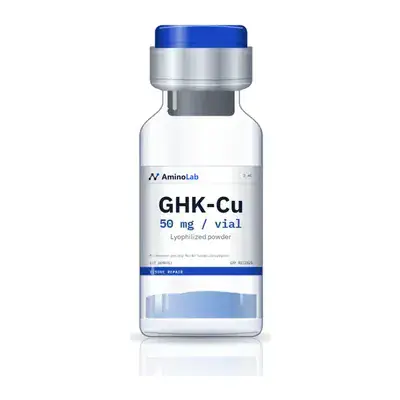
50 mg vial, 100 mg vial
10 mg vial
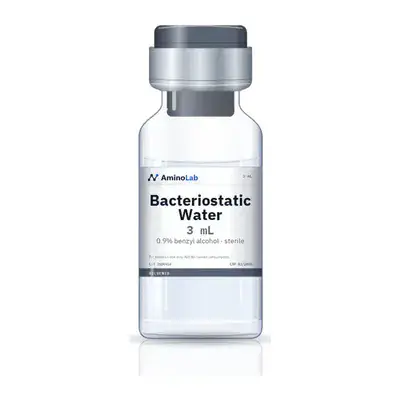
3 mL, 3 mL + 1 syringe, 10 mL, 10 mL + 1 syringe, 30 mL, 30 mL + 1 syringe
Research use onlyAminoLab supplies research compounds for laboratory and in-vitro use, not for human or animal consumption. By continuing you confirm you are 18 or older and buying for research.
Leave