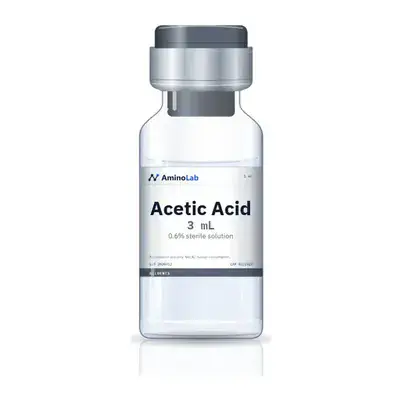
Acetic Acid 0.6%
3 mL
$9
$9 AUD, GST included
Minimum order before shipping, and you can mix any products to reach it.
In stock, ready to ship from Australia
Sold to buyers aged 18 and over only.
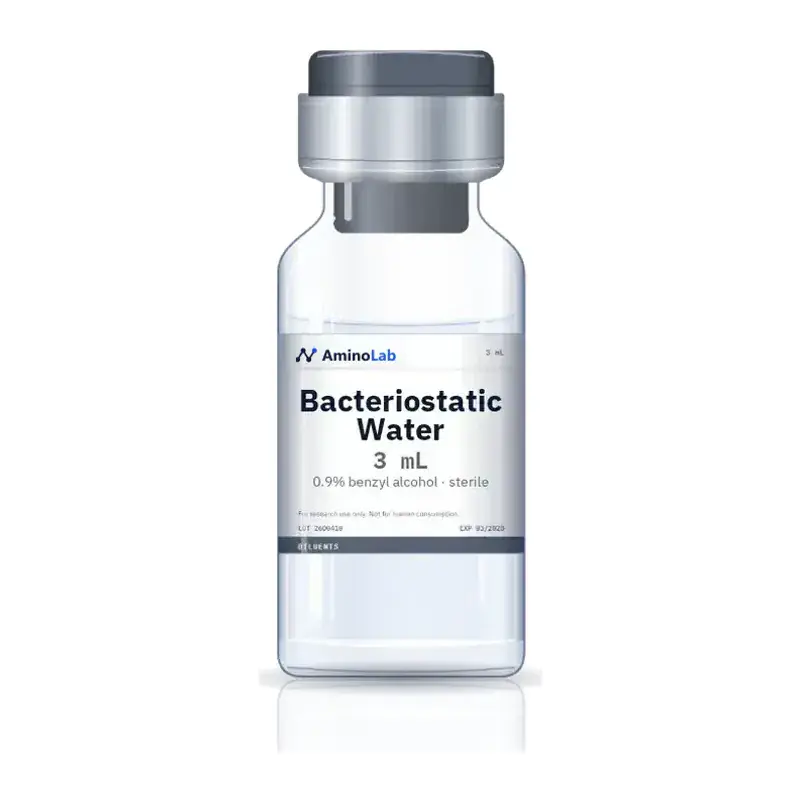
Order Bacteriostatic Water online in Australia at AminoLab, where the 3 mL, 10 mL or 30 mL vial, with or without a syringe is held in local stock. Every peptide in our catalogue leaves the warehouse as a dry cake, so the bacteriostatic water Australia labs pair with it is usually the first thing added to the cart. The liquid is sterile water preserved with benzyl alcohol at 0.9%, close to 9 mg per mL (C7H8O, 108.14 g/mol, CAS 100-51-6). Once the stopper has been pierced, that preservative keeps bacteria from multiplying, which is what lets one vial serve draw after draw. Labels show a lot number and an expiry date. Our peptide calculator converts any water volume into a concentration, a box of insulin syringes handles measured draws, and the peptides you dissolve each have an HPLC report waiting in the COA library. Unopened vials sit happily at room temperature away from light, and opened ones go in the fridge. This is the best bac water for peptides we know how to supply, sold as a lab consumable to adults 18+. Secure your Bacteriostatic Water from AminoLab now, available to researchers aged 18 and over for in vitro use.
For laboratory research use only. Not for human or veterinary use. Not TGA approved. See our research use policy.
| Item | Bacteriostatic water |
|---|---|
| Formula | Benzyl alcohol 0.9%, roughly 9 mg per mL, in sterile water |
| Preservative identity | CAS 100-51-6, benzyl alcohol, formula C7H8O, molar mass 108.14 g/mol |
| Presentation | Multi-draw glass vial of clear liquid, sealed by a rubber stopper under a grey flip-off cap |
| Printed on the label | Lot number, expiry date, contents and volume |
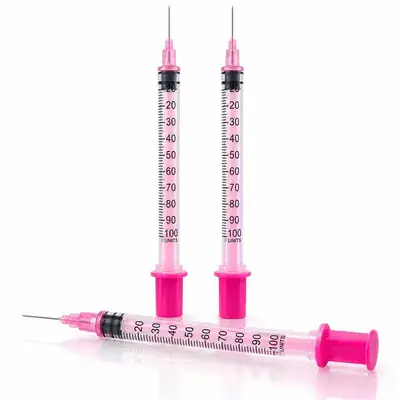
| Shipped items | The vial in your chosen size, and on syringe options a single sterile 29G U-100 1 mL insulin syringe as well |
| Storage rules | Unopened, 15 to 25 °C, out of light, never frozen. Once punctured, 2 to 8 °C and discarded at 28 days |
| Stock | In stock |
| Purpose | For laboratory reconstitution of research peptides only |
Without a diluent, a lyophilised peptide stays a powder and the experiment waits. Buying the water in the same order avoids that, and the right size is simply the one your bench will finish before day 28. That is why AminoLab offers it on every peptide page as a simple add-on.
The idea is simple. Sterile, purified water is spiked with a small amount of benzyl alcohol, and any microbe that gets into the liquid later finds it cannot grow. That makes it the standard liquid for bringing a freeze-dried peptide back into solution when the vial is going to be pierced repeatedly over days or weeks.
Note the word bacteriostatic. At 0.9% the alcohol halts multiplication but is not strong enough to kill, so it buys time between draws rather than sterilising anything. A solution that was contaminated before the preservative could act stays contaminated, and careful technique at every draw still matters. Unpreserved water, by contrast, is a one-draw liquid. This diluent handles nearly every water-soluble compound we stock, from three-residue peptides to long metabolic sequences, and the blue GHK Cu peptide is a good example, since copper tripeptide dissolves in it within seconds. Syringes and acid diluent live beside it in the lab supplies range.
Chemically, benzyl alcohol is a benzene ring carrying one CH2OH group, the plainest aromatic alcohol there is. Its solubility limit in water is near 4 per cent, so at the 0.9 per cent used here none of it separates out and the liquid looks like ordinary water. Its antimicrobial effect comes largely from slipping into the fatty outer membranes of fungi and bacteria, which then leak and stop dividing. At this low strength, organisms are held back between punctures and short peptide chains are left alone.
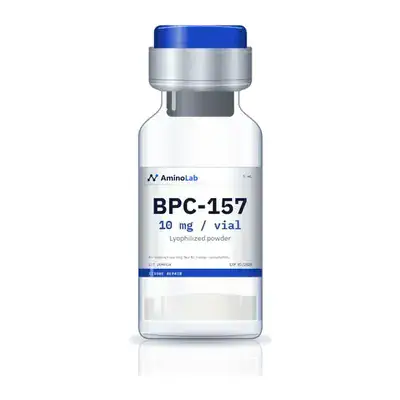
The gentle treatment of short chains is not universal, and that is the real story behind picking the best bacteriostatic water for peptides. Around the mid-2000s, a University of Colorado formulation group reported that reconstituting a lyophilised recombinant protein, interleukin 1 receptor antagonist, in water containing 0.9 per cent benzyl alcohol produced more aggregates than plain water. The alcohol associates weakly with hydrophobic patches on the protein surface, loosens its folding and allows partly unravelled molecules to clump. Linear peptides such as BPC-157 or Selank lack a folded core, so the effect does not apply to them, but larger, folded chains deserve caution. For those, make up a small trial vial first and look for cloudiness or a lower than expected recovered concentration before committing a full lot. Smell is a useful check as well. Over time benzyl alcohol oxidises into benzaldehyde, which has the scent of bitter almonds, and a vial that smells that way has had its day. The full guide comparing bac water with sterile water covers shelf life and switching diluents.
For short chains, then, any correctly labelled, sterile product at 0.9 per cent works. The details that set vials apart are a stopper that reseals well, a clear expiry date and a fill size you will actually finish.
Walk into a retail chemist and you will most likely be offered Water for Injections instead. It is preservative-free, entered on the Australian Register of Therapeutic Goods and supplied in single-use ampoules, which suits one draw rather than a vial you return to for a month. We checked the October 2026 instrument and found benzyl alcohol is not scheduled in the Poisons Standard as of October 2026, so the preserved diluent sits outside scheduling altogether. Pharmaceutical versions sold overseas as bacteriostatic water for injection use the same 0.9% strength, and their labels typically say prescription only and warn against use in neonates. More on the pharmacy angle is in our guide on whether Australian chemists stock bac water.
The practical result is that labs buy it online from their peptide supplier. AminoLab holds the 3 mL, 10 mL and 30 mL vials in Australian stock purely as a laboratory diluent for research peptide reconstitution, for adults 18+ and never for human or veterinary use. The vials are glass with a rubber stopper and grey flip-off cap, the contents should be indistinguishable from tap-clear water, and the three sizes share one formula. Picking a "+ 1 syringe" option puts one sterile U-100 1 mL syringe in the box and changes nothing about the liquid. For compounds that need an acidic start, swap to a 3 mL vial of 0.6% acetic acid.
Since the formula never changes, volume is the only decision. Think about how much your lab will draw in the 28 days after first puncture. On a per millilitre basis the 30 mL bottle works out cheapest, followed by the 10 mL and then the 3 mL vial.
Orders are accepted from adults 18 and over only. Buy the 3 mL, 10 mL or 30 mL vial online to match that rate, and add a syringe if your bench needs one. AminoLab sells all three volumes from the same Australian stock as its peptides.
Water is a consumable, not an analyte, so there is no mass spectrometry or HPLC run on it. Its job is to be sterile, to contain the 0.9% benzyl alcohol stated on the label and to be traceable. The stopper and flip-off cap seal every vial, and with the lot and expiry printed on it you can log exactly which diluent batch went into each reconstitution, right beside the peptide lot.
Analytical testing is reserved for the peptides, which each get a mass spectrometry identity check, an HPLC purity result and a certificate per lot. If those reports are new to you, our guide to reading a certificate of analysis walks through them. Before you mix, give the vial a quick look. The water must be clear and free of particles and the cap should be intact, and any cloudy vial or one with a damaged stopper should be discarded. Every vial we sell carries a lot and expiry you can log, so you order with the same traceability you expect from your peptides.
Because pharmacies lean towards single-use sterile water, the simplest move is to buy the best bac water for peptides together with the peptides. We ship bacteriostatic water Australia wide from local stock, anything paid for before 3pm on a business day is dispatched that afternoon, and expected transit times are listed on the delivery information page.
Here is how far a vial goes. Put 2 mL into a 10 mg peptide vial and the result is 5 mg per mL, so a 10 mL bottle of water supports five reconstitutions of that kind. Swab the stopper, let the water slide gently down the inside of the glass, then swirl rather than shake, as the reconstitution guide explains step by step.
Freezing is the main thing to avoid, since ice can crack glass or unseat the stopper, so keep unopened vials between 15 and 25 °C in the dark. On first puncture, date the label, move the vial to a fridge at 2 to 8 °C and discard it 28 days later. If a peptide solution will be used across many sessions, splitting it into aliquots is the better habit.
Common shorthand includes bac water, BAC water and BW, and some catalogues prefer preserved sterile water or benzyl alcohol water. On chemical data sheets the preservative may appear as phenylmethanol or phenylcarbinol, and both are just benzyl alcohol.
Watch for two near neighbours. Bacteriostatic sodium chloride uses an identical preservative but a 0.9% saline base, and plain sterile water has no preservative in it at all. Whatever the packaging calls it, you are looking for three things, sterile water, benzyl alcohol at 0.9% and a stoppered vial built for multiple draws. Whatever your catalogue calls it, this is the product to buy for multi-draw peptide reconstitution. At AminoLab it is listed simply as bacteriostatic water.
Sterile water belongs to one-off jobs. With nothing to stop microbial growth, it should be used as soon as the seal is broken, so it suits a single reconstitution consumed the same day. As soon as a vial will be drawn from twice or more, bacteriostatic water is the better buy, and the two are compared in depth in the bacteriostatic water vs sterile water guide.
Two further cases need something else entirely. Cell cultures that are sensitive to benzyl alcohol generally call for a sterile buffer without preservative, and the handful of peptides that will not dissolve at neutral pH do better in acetic acid 0.6%, with IGF-1 LR3 as the usual example. When it comes to measuring water into a vial, our U-100 insulin syringes line up directly with the units the calculator gives you. AminoLab carries the acetic acid diluent too, so a mixed order arrives in one parcel.
Sterile water preserved with 0.9% benzyl alcohol, used to bring freeze-dried peptides into solution. The preservative is what allows repeated draws from one vial.
Pick a 3 mL, 10 mL or 30 mL vial, and add a U-100 syringe to any of them at checkout.
Labs buy it to reconstitute lyophilised research peptides into a measurable solution for in vitro studies. It is a lab consumable and is never for human or veterinary use.
Plain sterile water has no preservative, so it is good for a single draw. Vials that will be opened again and again need the bacteriostatic version.
Unopened vials stay at 15 to 25 °C and must not freeze. After the first puncture, keep the vial cold and discard it at 28 days.
Lot and expiry are printed on every vial you order, so the diluent batch can be logged next to each peptide lot and that lot's certificate.
Add the 3 mL, 10 mL or 30 mL vial, with or without a syringe, to the cart that holds your peptides. Everything ships from Australian stock, and payment before 3pm on a business day means dispatch that day, with order tracking to all states and territories.
For short peptides, the liquid itself is standard, sterile water with 0.9% benzyl alcohol. The differences are practical, a stopper that reseals on a multi-draw vial, a printed lot and expiry, and a size you will use up. Our 3 mL, 10 mL and 30 mL vials tick those boxes, and ordering them with your peptides means one delivery.
Go by what you can use inside 28 days of the first puncture. Weekly mixers usually take the 30 mL vial. The 10 mL size gives four or five makes at 2 mL, and 3 mL is enough for one or two peptide vials.
No. The water is a sterile diluent, not an analysed compound, so it does not undergo HPLC or mass spectrometry. Traceability comes from the sealed vial and the lot number and expiry printed on it. The peptides you mix with it each carry a lot certificate in the COA library.
Ask how many times the vial will be drawn from. Once, and used the same day, sterile water is fine. More than once, and you need the 0.9% benzyl alcohol in bacteriostatic water to stop bacteria multiplying between draws.
Twenty-eight days from the first puncture, after which it should be thrown away. Unopened, the vial lives at 15 to 25 °C away from light and must never freeze. After opening, refrigerate it at 2 to 8 °C and write the opening date on the label.
3 mL
30 pack, 1 mL, 29G 12.7mm, 1 mL, 31G 6mm, 0.5 mL, 31G 6mm, 0.3 mL, 31G 6mm
10 mg vial, 60 capsules
10 mg vial
Research use onlyAminoLab supplies research compounds for laboratory and in-vitro use, not for human or animal consumption. By continuing you confirm you are 18 or older and buying for research.
Leave