BPC-157
10 mg vial, 60 capsules
From $69
10 mg vial, 60 capsules
5 mg vial, 60 capsules
10 mg vial
10 mg vial
10 mg vial
50 mg vial, 100 mg vial
Peptide capsules Australia researchers can order from AminoLab come in exactly two lines. Each bottle carries 60 capsules and leaves from local stock, with BPC-157 dosed into each shell at 500 mcg and SLU-PP-332 at 250 mcg. Every capsule lot passes through an independent laboratory before release. Below, you will also get a straight answer on where swallowing makes scientific sense and where a vial is the wiser purchase.
| Capsule line | Strength per capsule | What the bottle holds | Other format |
|---|---|---|---|
| BPC-157 capsules | 500 mcg | Bottle of 60, child-resistant lid | Lyophilized vial, 10 mg |
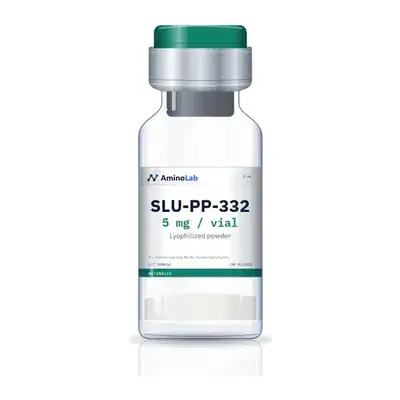
| SLU-PP-332 capsules | 250 mcg | Bottle of 60, child-resistant lid | Lyophilized vial, 5 mg |
A lot number and an expiry date are printed on each label. Moisture is the main threat to any dry solid, so keep the cap tight and store the bottle under 25 °C in a dark, dry cupboard.
Swallowed peptides are usually chopped up by digestive enzymes long before they could do anything, and that is the reason the peptide trade is dominated by injectable vials. BPC-157 breaks the pattern. Its 15 residues (GEPPPGKPADDAGLV) were taken from a protein that lives in human gastric juice, and the Zagreb team led by Professor Predrag Sikiric labels it a "stable gastric pentadecapeptide". By their account it survives intact for upwards of 24 hours sitting in human gastric juice, and their rodent experiments have used both injections and doses mixed into drinking water.
Gastric stability is what makes BPC 157 capsules a serious research format instead of a gimmick, and it is the only reason we offer a capsule version at all.
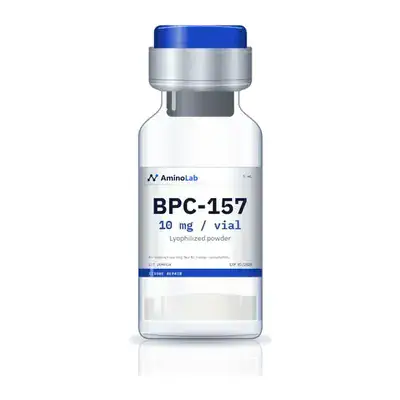
Open a bottle and you will find 60 capsules, each holding 500 mcg of BPC-157, under a white child-resistant lid. There is nothing to dissolve and no diluent to buy, which fits studies that require a set, pre-measured oral unit. Solution-based work, where the strength is yours to choose, calls for the 10 mg BPC-157 vial instead.
Know the regulatory picture before ordering. On 1 June 2024 BPC-157 was moved into Schedule 4 of the Poisons Standard. In April 2026 it also featured in a TGA safety alert. For the background research story, read our guide on what BPC-157 is.
Strictly, SLU-PP-332 is a small molecule rather than a peptide, acting as an agonist at the estrogen-related receptors, with ERR alpha, beta and gamma all switched on. As a dry solid it keeps well, which is why a capsule is possible, but shelf stability tells you nothing about absorption. Its own inventors have said as much. In a 2026 Journal of Pharmacology and Experimental Therapeutics article, Billon, Appourchaux, Côté and Burris state that SLU-PP-332 lacks oral bioavailability, and they put forward SLU-PP-915 as a successor that does work by mouth.
What we suggest. Most projects are better served by the 5 mg SLU-PP-332 vial, and the capsules make sense only when the oral route itself is under study. The two formats are compared in SLU-PP-332 capsules vs vial, and the molecule is profiled in what is SLU-PP-332.
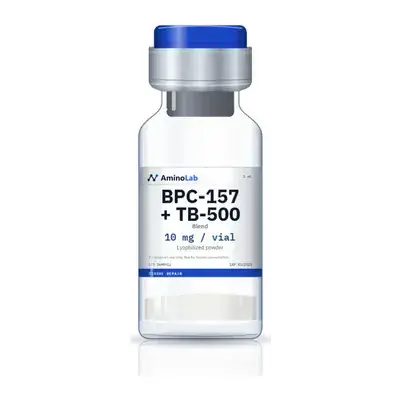
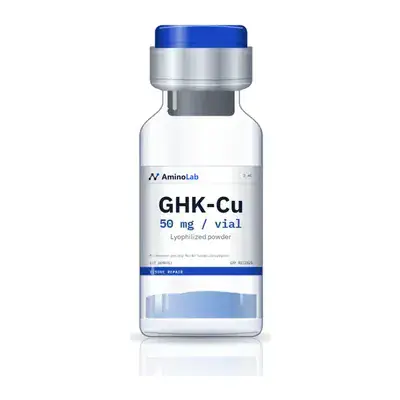
BPC-157 and TB-500 capsules are not part of our range, because TB-500 has no stomach-survival evidence comparable to BPC-157's. Researchers wanting the pair can take the Wolverine Blend vial, or buy BPC-157 and TB-500 as two vials. KPV and GHK-Cu are likewise vial-only. For inflammation pathway work KPV comes as a 10 mg vial, its three residues easy to track analytically, while copper peptide projects can pick GHK-Cu at 50 mg or 100 mg. Both live in our tissue repair and skin collections.
| Capsule bottle | Freeze-dried vial | |
|---|---|---|
| Physical form | Solid, already measured out | Powder, freeze-dried |
| Prep needed | Nothing | Dissolve in bacteriostatic water |
| How the amount is set | Each capsule is fixed | The diluent volume sets the concentration |
| Keeping it | Dry, dark, under 25 °C | Minus 20 °C for the long term, refrigerated once mixed |
| Best suited to | Oral-route studies of BPC-157 | All other research |
No capsule batch reaches the shop until an independent lab has run mass spectrometry for identity and HPLC for purity. Enter the code printed on your bottle in the certificate search to bring up that batch's report, and read quality and testing to see how we release lots. Larger orders go through wholesale, while the lab tested peptides page shows the small differences between capsule and vial reports.
Chemists and health food shops simply do not stock research-grade BPC-157 or SLU-PP-332, so tracking down peptide capsules near me in person is a dead end. Both bottles sit in our Australian warehouse and ship to researchers in every state and territory, with the same lots and certificates whatever the postcode. When a project needs solution work too, order the companion vial and some bacteriostatic water in the same checkout as the capsules.
The capsules are laboratory reagents and nothing more. No bottle is meant for consumption by people or animals, and dosing questions will not be answered.
Online roundups of the best oral peptides for weight loss mix molecules with almost nothing in common, and most ignore that gut enzymes dismantle the majority of peptides on arrival. That is the real reason oral peptide products are rare. Our two capsule lines illustrate the point from opposite sides, SLU-PP-332 being a small molecule used in exercise and metabolic models and BPC-157 being a peptide that happens to tolerate stomach conditions. We market neither as a weight loss product. Both are laboratory reagents.
Our answer fits in one line. If an oral study needs a peptide with proof of stomach survival, BPC-157 is the only candidate we carry. The SLU-PP-332 bottle is our second oral product, but as a small molecule with reportedly poor oral bioavailability they are for testing the oral route, not a first choice. Any best peptide capsules roundup listing dozens of compounds has usually skipped the digestion question entirely, and so has any claim about the best oral peptide for weight loss that ignores it.
Tirzepatide and retatrutide, the incretin compounds behind most fat loss models in our catalogue, are supplied as vials or pens. There has never been a retatrutide pill in a trial, a point our retatrutide pill guide covers, and the single oral GLP-1 peptide used clinically is a prescription product outside our range. In short, we cannot sell the best oral peptide for fat loss research as a capsule. Muscle work runs into the same wall, since ipamorelin, CJC-1295 and similar secretagogues would be digested long before absorption, so the best oral peptide for muscle growth research is in practice an injectable vial. Those projects belong with the vials in our growth hormone peptides range.
Look closely at anything sold as oral peptides for skin, peptide capsules for skin or peptides for skin tablets and you will almost always find hydrolysed collagen, a food supplement, not an individual research compound. That market is explained in our guide to collagen peptides, while serum ingredients are unpacked in the peptides for skin guide. Our main skin research compound, GHK-Cu, ships in vials only.
Over the counter oral peptides for weight loss belong to the supplement aisle. Customer write-ups and lists of the best oral peptides for weight loss for females or for women describe how individuals felt, not anything measured under control. Supplements are outside what we sell or judge. If you want another format that skips reconstitution, look at the peptide nasal sprays, or browse everything we stock via peptides for sale in Australia. Pairing a capsule line with a vial is covered on the peptide stacks page, and when you are ready you can shop the full range online.
Because each capsule holds an identical amount, the sums are quick. Sixty BPC-157 capsules at 500 mcg add up to 30 mg, triple what the 10 mg vial contains. On the SLU-PP-332 side, 60 times 250 mcg is 15 mg, three times the 5 mg vial fill.
A vial leaves the strength to you, because the volume of bacteriostatic water added determines every later draw. Capsules lock it in. Each carries its stated 500 mcg or 250 mcg, and splitting one accurately is impossible. Fixed units suit designs built around set oral units and rules capsules out wherever a range of concentrations is needed. The BPC-157 listing and the SLU-PP-332 listing each show both formats together.
An oral format is only worth investigating when the molecule can survive digestion. BPC-157 has rodent studies with drinking water delivery and gastric juice stability data behind it. SLU-PP-332 is the opposite case, with its developers reporting a lack of oral bioavailability, so its capsules suit only studies designed to test that route.
Both bottles contain a dry solid, and humidity harms it more than warmth. Close the child-resistant cap after each use, keep the bottle below 25 °C in the dark, and avoid shuttling it in and out of a fridge, which invites condensation inside. No mixing is required, so there is no 28 day clock either.
Find the lot code beside the expiry on the label and look it up in the COA library. The report should name the right compound at the right strength, 500 mcg or 250 mcg, and show both an identity check by mass spectrometry and a purity result by HPLC for that very capsule batch.
Yes. AminoLab stocks BPC-157 capsules in Australia, 500 mcg each and 60 per bottle, sold through our website. Every capsule lot has a certificate in the COA library, so identity and purity can be checked before you buy. Labs that also want a solution can add the 10 mg BPC-157 vial from that same listing.
Stomach stability. The sequence originates in a gastric juice protein, and Sikiric's team has published evidence of it lasting beyond 24 hours in human gastric juice, an environment that rapidly degrades nearly every other peptide.
Its developers say they do not. A 2026 paper from the Burris group says SLU-PP-332 lacks oral bioavailability. That makes the 5 mg vial the better option for most projects, with the capsules reserved for studies of the oral route itself.
No. For the two together, choose the 10 mg Wolverine Blend vial or buy each peptide in its own vial. Only BPC-157 on its own comes in capsule form.
Within our range, BPC-157 capsules have the strongest case, since published work shows BPC-157 surviving more than 24 hours in gastric juice. Each capsule contains 500 mcg and each bottle 60. SLU-PP-332 capsules are only suitable for studying the oral route, because the developers report poor oral bioavailability.
No. We make capsules only of BPC-157 and SLU-PP-332. For skin work, GHK-Cu comes in freeze-dried vials of 50 mg and 100 mg, and the GLOW and KLOW blends containing it are vials too. Skin capsules and tablets in shops are usually collagen supplements, which are foods rather than research reagents.
Research use onlyAminoLab supplies research compounds for laboratory and in-vitro use, not for human or animal consumption. By continuing you confirm you are 18 or older and buying for research.
Leave