BPC-157
10 mg vial, 60 capsules
From $69
In a single sentence, what is BPC 157? A fifteen residue peptide made in the lab, patterned on a protein found in human stomach juice, and first reported at the start of the 1990s by Professor Predrag Sikiric's research team in Zagreb. Hundreds of papers have followed, and almost every one of them involves animals, with tendons, the digestive tract and blood vessel repair as the main themes.
Body protection compound is what the letters BPC mean. Scientists at the University of Zagreb medical school pulled a protective protein fraction out of human gastric juice and later built a 15 amino acid piece of it synthetically, giving that piece the number 157. Nature never produces this pentadecapeptide as a standalone molecule. It exists only as a manufactured fragment, hence the label synthetic.
A few aliases have stuck to it over time. While Croatian drug maker Pliva was developing it, the compound went by PL 14736, PL-10 and PLD-116, and some papers call it bepecin. In the research supply market it is simply sold as BPC-157 or BPC 157.
Spelled out with single-letter amino acid codes, BPC-157 is GEPPPGKPADDAGLV, fifteen residues weighing in around 1419 Da. Three prolines sit back to back near the front of the chain, stiffening it noticeably. The Zagreb authors lean on that rigidity when they call BPC-157 a "stable gastric pentadecapeptide", since it survives in gastric juice much longer than a typical peptide would.
In practical terms, stability is the trait that makes BPC-157 different. Very few peptides have been examined in oral form alongside solution work, and BPC-157 is one of them, which is the only reason a capsule version makes sense.
Nobody has pinned down how BPC-157 acts in humans. The fair way to handle the question of what does BPC 157 do is to describe what it has done in experiments, and four research strands keep coming up.
Our BPC-157 citation library gathers the original papers with links through to PubMed.
Every one of the BPC 157 benefits reported so far comes from rodent work. Tendons tested stronger, ulcers and fistulas closed sooner and blood vessel linings were protected. Vasireddi and colleagues put this in context in a 2025 HSS Journal systematic review. They saw promise in the preclinical data on muscle, tendon, ligament and bone injury, yet graded it as level IV and V evidence and found no clinical safety data.
Human data consists of three small reports, all by one clinician. There is a 2021 chart review covering 16 knee pain patients, a 2024 series of 12 interstitial cystitis patients and a 2025 intravenous safety pilot with two healthy adults, and none used a placebo group. Here is our honest take. The animal results are so consistent that BPC-157 stands out as one of the most compelling compounds in tissue repair research, and for the same reason it is one of the most oversold, since nobody has put that consistency through a proper trial. For the safety picture, see our BPC-157 side effects evidence review.
So, does BPC 157 work? Across many rat models, and on the endpoints those researchers picked, the answer has repeatedly been yes. For humans there is no answer yet, because the trial capable of giving one has not happened.
Timing has the same gap. Animal studies typically measure results over days or a few weeks after an injury is induced, a schedule that matches rat healing and not human healing. The 2021 knee review checked patients six to twelve months after treatment, but without a control group that reveals nothing trustworthy about when any effect might begin. Put simply, the evidence cannot say how long BPC-157 takes to work in people.
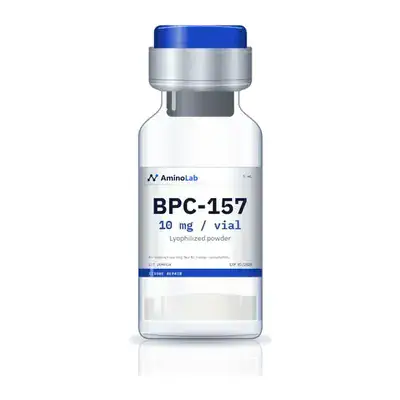
AminoLab stocks two BPC-157 formats, and your study design decides which one fits.
| 10 mg vial | 500 mcg capsules | |
|---|---|---|
| Format | Freeze-dried powder, reconstituted before use | Pre-measured solid, 60 in each bottle |
| Strength | You decide it | Fixed in each capsule |
| Keeping it | Minus 20 °C for the long term, or 2 to 8 °C after reconstitution | Sealed bottle under 25 °C, dry and out of the light |
| Ideal for | Solution-based work | Oral-format study designs |
Reconstitute the vial using bacteriostatic water for peptide vials, then enter your volume into the BPC-157 concentration calculator to get the strength per mL. TB-500 is a frequent partner compound, and our BPC-157 and TB-500 comparison sets out how the two differ.
The BPC-157 10 mg vial is our most ordered format, since powder gives you full control over the working concentration. Order the 60-capsule bottle when the study uses an oral format. Projects that combine it with TB-500 are best served by one vial of each, so each compound can be tracked separately. The Wolverine Blend is the right pick only for designs that always test both together, and it works out cheaper than buying the same amounts as single vials. Shop from Australian stock online, add bacteriostatic water if you choose the vial, and review the lot certificate before you check out.
BPC-157 has no approval as a medicine in Australia and does not appear on the ARTG. AminoLab sells it to adults 18+ and to laboratories for research purposes alone. It is not for use in humans or animals, and we do not provide dosing advice. Our research use only terms apply to every order, and the guide on where BPC-157 stands under Australian law explains the regulatory side. TB-500, the Wolverine blend and KLOW are all listed in the complete tissue repair research catalogue.
It is a lab-made 15 amino acid peptide (GEPPPGKPADDAGLV) based on a protein in human gastric juice, and BPC stands for body protection compound. Professor Predrag Sikiric's group at the University of Zagreb developed it and has worked on it since the early 1990s, mostly in rats with induced tendon and gut injuries.
Animal and cell experiments have tied it to quicker tendon healing, protection of the stomach and intestinal lining, nitric oxide signalling and blood vessel growth driven by VEGFR2. How it acts in humans remains unknown, and it holds no approval as a treatment for any condition.
All of them are preclinical, including stronger tendon repair in rats, quicker ulcer and fistula healing and protection of the endothelium. Human data amounts to three small reports with no controls, and a 2025 HSS Journal systematic review described the preclinical work as promising while noting no clinical safety data exists.
Rat studies of tendon, gut and vascular injury report consistent positive results, mostly from the Zagreb group, with effects measured over days to a few weeks. No randomised, placebo-controlled human trial has been published, so neither whether it works in people nor how quickly is known, and independent replication of the animal work is still limited.
AminoLab holds BPC-157 in Australian stock as a 10 mg freeze-dried vial or a 60-capsule bottle. Each lot is independently tested for identity, with the certificate posted in our COA library. Order the vial for solution work or the capsules for oral-format designs, and remember both are sold strictly for lab work, never for human or veterinary use.
10 mg vial, 60 capsules
50 mg vial, 100 mg vial
10 mg vial
3 mL, 3 mL + 1 syringe, 10 mL, 10 mL + 1 syringe, 30 mL, 30 mL + 1 syringe
Research use onlyAminoLab supplies research compounds for laboratory and in-vitro use, not for human or animal consumption. By continuing you confirm you are 18 or older and buying for research.
Leave