Bacteriostatic Water
3 mL, 3 mL + 1 syringe, 10 mL, 10 mL + 1 syringe, 30 mL, 30 mL + 1 syringe
From $9
Shop lab supplies Australia wide from AminoLab, with everything a bench needs to turn a freeze-dried vial into a usable solution. Our bacteriostatic water is bottled at 3 mL, 10 mL or 30 mL, and every one can be ordered on its own or bundled with a single syringe. Next to it you will find a 0.6% acetic acid diluent, useful when a sequence will not go into solution in plain water, and U-100 insulin syringes offered in a choice of barrel sizes, either individually or as a pack of 30.
3 mL, 3 mL + 1 syringe, 10 mL, 10 mL + 1 syringe, 30 mL, 30 mL + 1 syringe
3 mL
30 pack, 1 mL, 29G 12.7mm, 1 mL, 31G 6mm, 0.5 mL, 31G 6mm, 0.3 mL, 31G 6mm
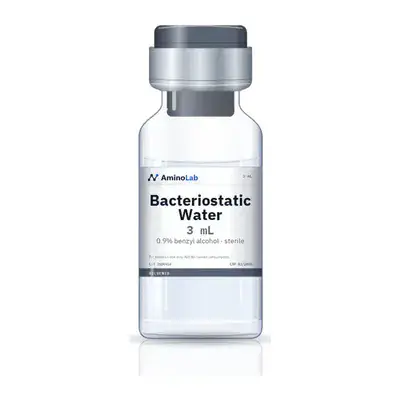
Order bacteriostatic water first, because it is what most freeze-dried research peptides are mixed with. Each bottle holds sterile water preserved with 0.9% benzyl alcohol. That small amount of preservative holds back bacterial growth, which means a single bottle can take repeated needle punctures over its working life. Plain sterile water carries no preservative and is meant to be used once, a distinction covered fully in our bacteriostatic water vs sterile water guide. Because it copes with many draws from the one bottle, it is the best bac water for peptides in the majority of labs.
Choose from three volumes. The vial holds 3 mL, which suits a bench mixing only one or two peptide vials. Pick a volume you will actually use up, since most labs retire a bottle once 28 days have passed since its first puncture.
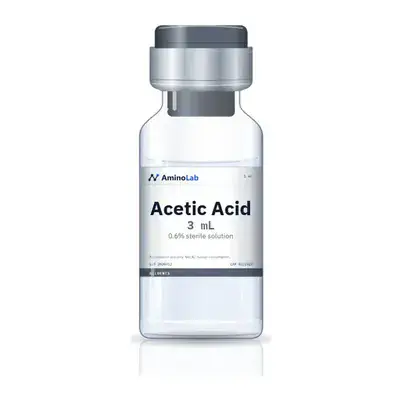
Buy acetic acid for the occasional sequence that stays cloudy or forms clumps in neutral water. Our acetic acid 0.6% is a mild acid solution sitting at around pH 3, and it dissolves most of these awkward powders. Many protocols then dilute that acidic stock further with bacteriostatic water. The best known case is IGF-1 LR3. Keep it as a backup, not a first choice. Start with bac water, and reach for the acid only if the powder will not go clear or the written method calls for an acidic diluent. It comes in a 3 mL vial.
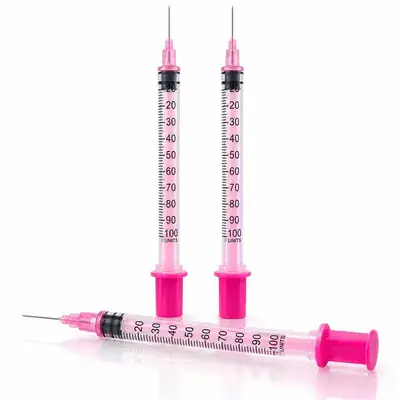
Buy U-100 insulin syringes to move diluent into vials and to draw off measured amounts. Graduations run in units, so 1 mL equals 100 units and 0.1 mL equals 10 units. Most benches add water to a vial with the 1 mL barrel and its 29G 12.7 mm needle. The other three options all use a finer 31G 6 mm needle, mounted on barrels of 1 mL, 0.5 mL and 0.3 mL. On the two smaller barrels the graduations are spread wider, so tiny volumes are simpler to read. Each needle is fixed in place, so almost no liquid is left trapped between the hub and the needle, a real advantage when working with small amounts.
Every barrel is compared side by side in our insulin syringes guide.
Shop according to the number of vials you reconstitute in a month. A bench making up a single 10 mg peptide vial needs nothing more than the bundle of a 3 mL water vial and one syringe. Benches mixing three or more vials a month get better value from the 10 mL bottle plus the 30 pack of syringes. High fill products like NAD+ at 500 mg or glutathione at 1,500 mg need a larger volume of diluent for each vial, which is why the bigger 10 mL or 30 mL bottle pays off on a one-off order too. Only add acetic acid if you are handling a sequence with a known resistance to water.
Settle on a concentration first, then add liquid. As an example, a 10 mg vial taking 2 mL ends up at 5 mg per mL, and for any other fill weight the peptide calculator does the maths. If you would prefer not to pick parts individually, order one of the peptide kits and bundles, which pair a peptide with suitable water and a syringe. Our guide on how to reconstitute peptides walks through the whole bench process.
Sealed bacteriostatic water and acetic acid need no fridge, just a room temperature shelf clear of strong heat and direct sun. Mark the date on each water vial the first time its stopper is pierced, so the end of the 28 day window is never a guess. Syringes are sterile and made for one use only, so take a new one for every draw and throw it away afterwards. After a peptide has been mixed, keep it refrigerated at 2 to 8 °C, and our peptide storage guide covers everything else.
Order lab supplies Australia wide together with your peptides and the whole bench setup arrives in one box, so the bacteriostatic water Australia labs rely on for reconstitution lands together with the vials it will be used on. Every peptide in the shipment has a lot number, and that number opens the matching identity and purity report in the COA library. Orders paid before 3pm on a business day leave the same day, tracked, to all Australian states. Everything here is sold to help labs prepare research peptides, and never for giving anything to people or animals.
| Item | Options | Format |
|---|---|---|
| Bacteriostatic Water | 3 mL, 10 mL, 30 mL, each with or without 1 syringe | Glass vial, sterile water with preservative |
| Insulin Syringes | 1 mL 29G, 1 mL 31G, 0.5 mL 31G, 0.3 mL 31G, 30 pack | Sterile, single use, fixed needle |
| Acetic Acid 0.6% | One 3 mL vial | Glass vial of weak acid solution |
AminoLab stocks it in three volumes, a 3 mL vial, a 10 mL bottle and a 30 mL bottle. Everything ships from Australian shelves, and payment cleared before 3pm on a weekday means a tracked parcel leaves that same afternoon.
A diluent, normally bacteriostatic water, a U-100 insulin syringe for the transfer, and alcohol swabs for cleaning each stopper. For one 10 mg vial, the bundle of 3 mL water and a syringe is enough. The peptide calculator then gives you the final concentration.
Yes, but only for a peptide that will not dissolve properly at neutral pH, or where the method names an acidic diluent. IGF-1 LR3 is the typical case. At roughly pH 3 the 0.6% solution normally dissolves the powder, and plenty of labs top it up with bacteriostatic water afterwards.
The 1 mL 29G syringe is the everyday option for adding diluent to a vial. For tiny measured volumes, the 31G needle on a 0.5 mL or 0.3 mL barrel is better, since its markings sit further apart.
The common practice is to throw a vial away 28 days from the first time the stopper is pierced, even though benzyl alcohol slows bacterial growth. Before opening, vials are fine at room temperature if kept out of heat and sunlight. To avoid waste, pick a size your bench will finish inside that period.
Research use onlyAminoLab supplies research compounds for laboratory and in-vitro use, not for human or animal consumption. By continuing you confirm you are 18 or older and buying for research.
Leave