MOTS-C
10 mg vial, 20 mg vial, 40 mg vial
From $69
Shop mitochondrial peptides Australia wide from AminoLab, a focused range built for laboratories that study how cells make and manage energy. Choose MOTS-C as a 10, 20 or 40 mg vial, SS-31 (also called elamipretide), the 500 mg NAD+ fill, or SLU-PP-332 in vial and capsule formats. Whichever compound your group picks as the best peptide for energy studies inside the cell, each lot has passed independent testing, carries a matching certificate of analysis and leaves our shelves in Australia.
10 mg vial, 20 mg vial, 40 mg vial
10 mg vial
500 mg vial
5 mg vial, 60 capsules
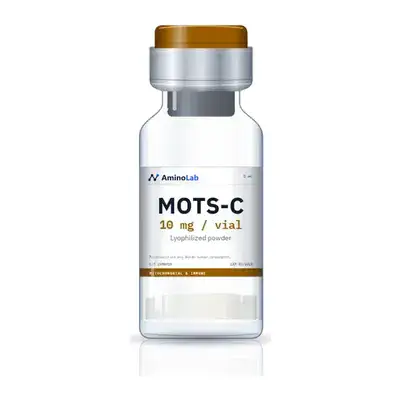
Only two items on this page are genuine peptides, and they work on the organelle from different ends, so labs often buy both and run them side by side. MOTS-C is a 16 residue sequence written into the mitochondrial genome itself. First reported in 2015, it has been examined for AMPK activation, skeletal muscle glucose uptake and treadmill performance in mice. Think of it as a courier that relays messages outward from the mitochondrion to the nucleus and the wider cell, and in published experiments aged mice treated with it showed better physical capacity. Read our MOTS-C research overview for a summary of that literature.
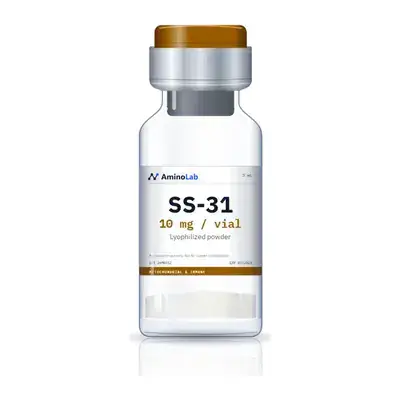
SS-31 goes by elamipretide in clinical settings. It is a four residue chain, D-Arg-Dmt-Lys-Phe-NH2, able to pass through membranes and lock onto cardiolipin, the lipid that holds the respiratory complexes together inside the inner membrane. Human trials have tested it in Barth syndrome and in primary mitochondrial myopathy. Put simply, MOTS-C signals while SS-31 holds structure together, and that contrast is the reason so many protocols use the two in parallel. SS-31 is sold as a 10 mg vial.
Reconstituted material should be finished inside 28 days, so pick the fill that matches what you plan to run in that period. After you decide on a diluent volume, the MOTS-C calculator works out the resulting concentration.
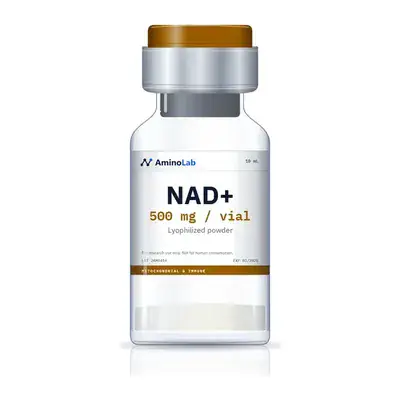
Neither of these is a peptide, yet energy metabolism groups add them to so many orders that they sit naturally in this collection. NAD+, or nicotinamide adenine dinucleotide, is the coenzyme that moves electrons through metabolic pathways and is used up by sirtuins and PARP enzymes. Studies in rodents describe tissue concentrations declining with age, which is why it also turns up in ageing research and is listed with our longevity peptides. AminoLab sells it as a 500 mg fill. A fill that large needs more diluent than a standard vial, so pair it with the 10 mL or 30 mL bottle of bacteriostatic water.
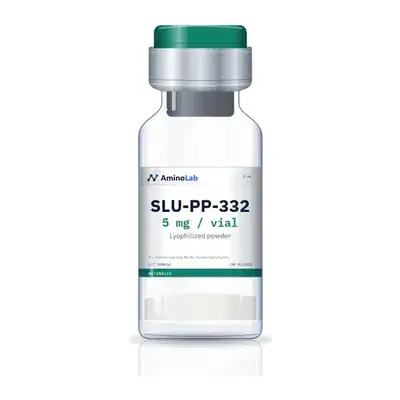
SLU-PP-332 is a synthetic agonist of the estrogen-related receptors, ERR alpha above all, and those receptors switch on the genetic programme for building fresh mitochondria. Mouse work labels it an exercise mimetic because treated animals covered more distance and ran for longer on the treadmill. Although it is a small molecule rather than a peptide, endurance researchers reach for it often. Our SLU-PP-332 capsules vs vial guide sets the two formats against each other.
A useful way to choose is to start from the part of the cell you care about. Signalling that begins in the mitochondrial genome points to MOTS-C. Questions about the inner membrane, cardiolipin and reactive oxygen species point to SS-31. The cofactor pool that feeds oxidative phosphorylation is the territory of NAD+, while the gene network behind mitochondrial biogenesis is where SLU-PP-332 acts. Ask most labs to name the best peptide for energy metabolism projects and MOTS-C tends to come first, since its body of cell and mouse data is the widest of the four, often with NAD+ alongside as a cofactor reference.
For anything longer than a pilot, the 40 mg MOTS-C fill gives the best value per milligram, and SS-31 can follow as a structural comparison to sit beside the signalling results. Groups assembling the best peptides for mitochondrial health models commonly open with that same two compound combination. You will find several of these items again in our metabolic peptides range next to the incretin agonists.
Mass confirmation matters most for SS-31, because half of its four residues, D-arginine and dimethyltyrosine, fall outside the standard amino acid set. AminoLab sends every lot in this collection to an independent lab, where mass spectrometry confirms identity and HPLC measures purity, and the lot code printed on each label leads to its report in the COA library. Orders paid before 3pm on a business day are packed and sent that same day, with tracking, from our Australian warehouse to any address nationwide.
Unopened vials keep longest frozen at minus 20 °C, or for a few weeks at 2 to 8 °C, shielded from light, and any mixed solution belongs in the fridge. SLU-PP-332 capsules are a dry format and are not bound by the 28 day limit. Everything here is sold strictly for in vitro research, carries no TGA approval and is never supplied for human or animal use.
| Compound | Available sizes | Format |
|---|---|---|
| MOTS-C | 10 mg, 20 mg, 40 mg | Lyophilised powder |
| SS-31 | 10 mg | Lyophilised powder |
| NAD+ | 500 mg | Lyophilised powder |
| SLU-PP-332 | 5 mg vial or 60 capsules | Vial or capsules |
Groups looking for the best peptides for energy research usually start with the mitochondria. MOTS-c is a peptide encoded in mitochondrial DNA that has been studied for exercise capacity and metabolic flexibility, and SS-31 targets the inner mitochondrial membrane. NAD+ rounds out the range as the cofactor behind cellular energy production.
Endurance and focus studies often combine a mitochondrial peptide with a cognitive compound from the nootropic range to measure energy and attention in the same model. Every product is sold for laboratory research use only.
Most groups start with MOTS-C, since published cell and mouse work links it to AMPK activation, glucose uptake in muscle and exercise capacity. SS-31 fits projects centred on the inner mitochondrial membrane, and NAD+ often serves as the cofactor reference. AminoLab sells MOTS-C as 10, 20 and 40 mg vials, for laboratory research only.
It depends on the question. MOTS-C suits metabolic signalling projects, as it comes from mitochondrial DNA and is studied through AMPK. SS-31 suits structural work, because it binds cardiolipin and is used to probe respiratory chain function and reactive oxygen species. Plenty of protocols run them as separate vials together.
It does not. NAD+ is nicotinamide adenine dinucleotide, a coenzyme that carries electrons through energy metabolism and is consumed by sirtuins and PARP enzymes. That role is why it is ordered so often with MOTS-C and SS-31.
Match the fill to the length of your work. Mixed material should be used inside 28 days, so avoid buying more than one window needs.
AminoLab keeps 10 mg, 20 mg and 40 mg MOTS-C vials in stock in Australia. Every lot is checked by an independent lab using mass spectrometry and HPLC, and the certificate lines up with the lot number on the vial. Pay before 3pm on a business day and your order is dispatched the same afternoon.
Research use onlyAminoLab supplies research compounds for laboratory and in-vitro use, not for human or animal consumption. By continuing you confirm you are 18 or older and buying for research.
Leave