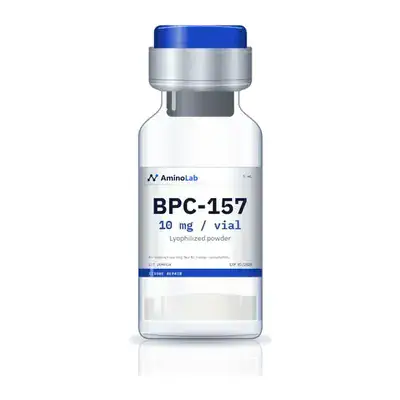
BPC-157
10 mg vial, 60 capsules
From $69
Our BPC-157 dosage calculator turns a BPC-157 amount, entered in mcg or mg, into a volume in millilitres and a reading in units on a U-100 insulin syringe. It works for any vial size and any water volume, and it opens preset to the AminoLab BPC-157 10mg vial.
Most BPC-157 research figures are quoted in micrograms, and that is exactly where slips creep in. Remember that 250 mcg equals 0.25 mg, never 2.5 mg. The calculator handles the mcg to mg step itself before it solves for volume. The BPC-157 10mg vial we stock arrives as a lyophilized cake that goes into solution easily with bacteriostatic water, and the table further down also lists the 5mg fills that plenty of published protocols use.
There is a capsule format too, at 500 mcg per capsule, and it needs no maths at all since every capsule carries a set amount. Working with a combined vial instead? The combined BPC-157 and TB-500 calculator is built for that mix.
Each row shows the strength you end up with for a given fill and diluent volume. As a reference point, 10 units on a U-100 syringe is 0.1 mL, and the full 100 units is 1 mL.
| Water added | Vial fill | In 1 unit | In 10 units (0.1 mL) | Resulting strength |
|---|---|---|---|---|
| 1 mL | 10 mg | 100 mcg | 1 mg (1000 mcg) | 10 mg/mL |
| 2 mL | 10 mg | 50 mcg | 0.5 mg (500 mcg) | 5 mg/mL |
| 3 mL | 10 mg | 33.333 mcg | 0.333 mg (333.333 mcg) | 3.333 mg/mL |
| 1 mL | 5 mg | 50 mcg | 0.5 mg (500 mcg) | 5 mg/mL |
| 2 mL | 5 mg | 25 mcg | 0.25 mg (250 mcg) | 2.5 mg/mL |
| 3 mL | 5 mg | 16.667 mcg | 0.167 mg (166.667 mcg) | 1.667 mg/mL |
Strength in mg/mL is the milligrams of BPC-157 in the vial ÷ the millilitres of water you added.
Syringe units on a U-100 barrel are the target in mg ÷ that strength in mg/mL, then × 100.
Anything entered in micrograms gets divided by 1,000 before those two steps run. The tool is purely arithmetic and never suggests an amount. AminoLab supplies its BPC-157 strictly for laboratory research use only, to adults 18 and over.
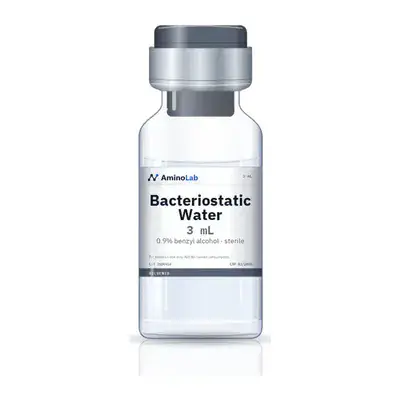
Once your concentration is locked in, pick up the vial that matches it. The BPC-157 10mg vial is the fill these figures assume, and anyone weighing up an oral format can find the 500 mcg capsules listed on that same product page. Running low on diluent? Put bacteriostatic water in the same cart. Every order ships from stock held here in Australia, and the certificate for each lot can be read before you check out, which is the simplest way to source lab-grade BPC-157 online.
The top result tells you the strength of the reconstituted vial in milligrams per millilitre. Next comes mcg per 0.1 mL, which is simply that strength times 100 and matches the liquid sitting between zero and the 10 unit line on a U-100 barrel. The final pair of results shows the volume that carries your chosen microgram figure, once in millilitres and once in syringe units, with 100 units making up 1 mL.
At 1 mL of diluent a 250 mcg aliquot sits at 2.5 units, right between two marks and awkward to judge visually. Bring the same 10mg cake up to 3 mL and that mass now spans 7.5 units, three times the distance along the barrel, so any half-unit reading error matters far less. For very short draws like this, a 0.3 mL U-100 syringe spreads the graduations out further still.
With a molecular weight near 1,419.5 g/mol, a 5 mg/mL BPC-157 stock made up with 2 mL of water works out at about 3.5 mM. Each micromolar is close to 1.42 mcg per mL, so a molar working concentration lifted from a cell culture paper can be turned into a microgram figure for the calculator. Check that figure against the mass listed for your lot in the COA library, because counter-ions in the dry powder contribute weight that is not peptide.
A standard vial takes anywhere from 1 to 3 mL. Many labs settle on 2 mL since it produces 5 mg per mL, which places 500 mcg in each 10 unit span of a U-100 syringe and keeps later sums easy.
With 1 mL of water the strength is 5 mg per mL, and with 2 mL it drops to 2.5 mg per mL. At that second strength, a single unit on a U-100 syringe carries 25 mcg.
That answer changes with concentration. A 5 mg per mL solution puts 250 mcg in 0.05 mL, or 5 units, while a 2.5 mg per mL solution needs 0.1 mL, or 10 units. Plug your own figures into the calculator to confirm.
It does not. It simply converts a mass into a volume. Our BPC-157 is sold for laboratory research use only, and we offer no dosing guidance of any kind.
10 mg vial, 60 capsules
3 mL, 3 mL + 1 syringe, 10 mL, 10 mL + 1 syringe, 30 mL, 30 mL + 1 syringe
Research use onlyAminoLab supplies research compounds for laboratory and in-vitro use, not for human or animal consumption. By continuing you confirm you are 18 or older and buying for research.
Leave