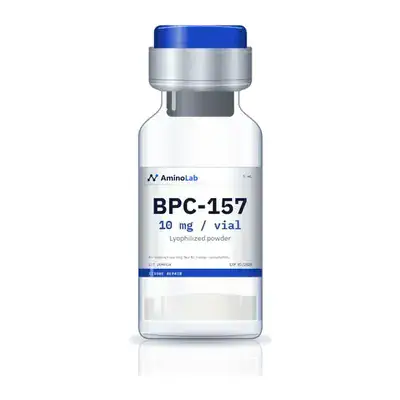
BPC-157
10 mg vial, 60 capsules
From $69
When it comes to GHK-Cu peptide side effects, only one use of the compound has a properly mapped safety profile, and that is the low-strength topical cream. In that setting, cosmetic ingredient reviews and a handful of small clinical trials found the copper peptide well tolerated. Injected GHK-Cu is a different story. Nobody has run controlled human safety studies, and both the TGA in Australia and the US FDA have pointed to that gap. On top of the pharmacology sits the product itself, because a vial with missing copper or contaminants can be a bigger risk than the molecule.
The honest answer depends entirely on how the compound is used, since each route has a completely different body of evidence behind it.
| How it is used | Evidence available | What that evidence tells us |
|---|---|---|
| Topical cosmetics | Several small clinical trials, backed by an official cosmetic ingredient review | Rated safe for cosmetic use, given the low strengths reported |
| Injected | Online anecdotes and regulator warnings, but no controlled human safety trial that we could locate | Not established. Regulators flag sparse human data and a possible immune response |
| Laboratory (in vitro) | Many years of cell culture papers | Whether the reagent is pure and correctly identified, not whether people tolerate it |
That is why any discussion of GHK-Cu peptide side effects, or of GHK peptide side effects in general, has to start with two questions. Which kind of use, and which product? The benefit side matters too. Anyone weighing GHK-Cu peptide benefits and side effects together can read what the controlled cream trials actually measured in our summary of GHK-Cu before and after studies.
In the United States, the Cosmetic Ingredient Review Expert Panel reviewed tripeptide-1 together with its metal salts, which cover copper tripeptide-1. Its 2018 conclusion, published in the International Journal of Toxicology, was that these ingredients are safe in cosmetics under current practices of use and concentration. The panel pointed out that concentrations in products were low and the safety test results it examined were negative.
Clinical cream work lines up with that finding. Pickart's 2015 review gathers the Leyden (2002) trials, which ran 12 weeks in groups of 71 and 41 women, and the Finkley (2005) trial in 67 women across the same 12 weeks, and says no problems have surfaced from its use on skin or in wound healing work in people. Two caveats apply. Those reviews were written by the scientist who discovered the peptide, and a tidy cosmetic record at low strength tells you nothing about injecting milligram amounts.
Any skin product can still cause irritation or an allergy in a given person, and that is something for a dermatologist to judge, not a peptide supplier. When users describe reactions to a copper peptide serum, they are usually reacting to the full formula. The label checks set out in our copper peptide serum guide are a sensible first step toward finding what else the bottle held.
We found no research on GHK-Cu or copper peptide cosmetics during pregnancy, and the cosmetic ingredient review did not assess pregnancy at all. Having no data does not prove harm, yet it does not prove safety either. Anyone pregnant or breastfeeding should take the question of a copper peptide product to their doctor or pharmacist.
Most online accounts of GHK-Cu injection side effects come from forums, where people mention redness, stinging, itching or lumps at the site, plus flushing or tiredness. These are personal stories. They reveal nothing about how common a reaction is, which amount was used, or if a contaminant rather than the peptide caused it.
Regulator statements carry far more weight.
Immunogenicity is the immune system responding to a product, and it becomes more likely when a peptide clumps or carries leftover synthesis impurities. That makes it as much a manufacturing issue as a pharmacological one, which is where the next sections pick up.
Every GHK-Cu molecule holds a single copper ion, which means the compound doubles as a copper source. The body needs copper in trace amounts, but too much is toxic, with the liver taking most of the damage, and people with the inherited condition Wilson disease build up copper abnormally. Cosmetic creams contain very little. Research vials hold tens of milligrams of peptide each, which is a different scale. No controlled study has tracked copper balance after repeated GHK-Cu injections, so injected use sits outside the evidence base. That is also why questions about the liver, or about long term effects, have no published human answer. Every trial was topical and none lasted beyond twelve weeks.
There is a chemical angle to copper as well. A badly made batch can hold free copper that never bound to the peptide, or peptide that is short on copper. A lab can only trust the label once a certificate of analysis shows the correct GHK-Cu mass, measured by mass spectrometry.
With grey-market peptides, a lot of reported trouble starts in manufacturing, not in the chemistry of the compound. With GHK-Cu, these are the points worth checking.
We treat a COA as the starting point, and it is worthless unless its lot code agrees with the label on your own vial. Each AminoLab lot passes through an independent laboratory first, and the result can be pulled up on the COA lookup page ahead of checkout. Our walkthrough on how to read a COA explains what a passing result looks like, and the quality testing process page covers the methods.
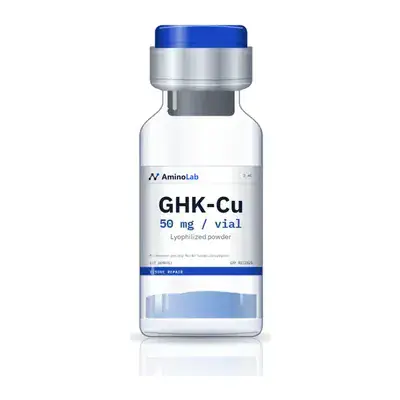
In the lab, GHK-Cu is reconstituted with bacteriostatic water, stored in the fridge between 2 and 8 °C, shielded from light, and finished within 28 days. To work out the concentration of a 50 mg or 100 mg fill, use the GHK-Cu calculator. What is GHK-Cu covers the compound's origins and the research behind it.
AminoLab GHK-Cu is sold to adults 18 and over strictly as a lab reagent. It is not intended for human or veterinary use, and nothing on this page is medical advice.
On skincare forums, copper peptide uglies describes a stretch of dull, rough or dry skin that some people notice after switching to a potent copper peptide product. Nobody has studied it as a defined effect. Reasonable explanations include irritation from other ingredients, plain overuse, or acids in the same routine shifting the pH, and the ingredient list is where to begin. Photos of copper peptides uglies posted online share the usual flaws of skin pictures, with uncontrolled lighting and no record of the rest of the routine.
Talk of copper peptides side effects on hair loss runs along the same lines. Some people using copper peptide hair serums mention extra shedding in the first few weeks, but we found no controlled study measuring it. Hair research on GHK-Cu so far is limited to cell cultures and mouse hair cycle models, which cannot speak to shedding from a scalp serum.
A typical post saying copper peptides ruined my skin talks about breakouts, redness or a dull look that began with a new cosmetic serum. Stories like these are not studies, and the serum rarely holds copper tripeptide-1 alone, so pH, other actives and how often it was applied all matter. When weighing GHK-Cu peptides side effects reported for cosmetic products, compare them with the controlled safety data covered earlier. Threads and before and after photos like these are a cue to book a dermatologist, since only an in-person exam can connect the skin to the products used. Laboratory buyers have their own safeguard in lot-by-lot testing, which our lab tested peptides page explains, and our guide to peptides for skin gives the broader cosmetic context.
Many of the issues above, from a white cake to absent copper to unknown by-products, come back to the source of the vial. So before paying, insist on a certificate for the precise lot. Our GHK-Cu comes as 50 mg and 100 mg freeze-dried vials that ship from stock in Australia, and each lot stays off the shelf until a third-party lab has checked its mass by spectrometry and its purity by HPLC. Match the number on your label to the report in our COA library. New to the compound? The GHK-Cu starter kit bundles the diluent and a syringe, while the KLOW blend suits projects that add KPV alongside the copper peptide. Shop AminoLab online now, and note that every product is for laboratory research only.
Researchers often ask whether GHK-Cu peptide is safe to handle and what side effect of copper peptides has been reported. In published studies the most common observations are local irritation at high concentrations and the copper load itself, which is why concentration and exposure time matter in any model. Handle the freeze-dried powder with standard laboratory precautions, store it cold and dry, and read the lot certificate before use. The GHK-Cu vial is sold for laboratory research only.
In skin creams the record is clean, with the 2018 Cosmetic Ingredient Review rating copper tripeptide-1 safe as used and small trials reporting good tolerance. For injection there is no controlled human safety work at all. Stories of redness, itching or lumps are anecdotal, and the FDA warns of sparse human data and possible immunogenicity.
Reviewers rated it safe as a low-strength cosmetic ingredient. No controlled human safety trial has examined injection, and a TGA alert includes GHK-Cu in a group of unapproved peptides whose safety, quality and effectiveness were never assessed. Any given vial is also only as safe as its purity and freedom from contamination.
Look for lot numbers on the vial that link to third-party certificates you can read before paying. You can order AminoLab GHK-Cu in 50 mg or 100 mg fills, shipped within Australia, and each batch has independent mass spec and HPLC data on record. The powder should look blue. This product is a research reagent and is not for personal use.
Look at the colour before anything else. The cake should be blue, and white usually means the copper is absent. Then confirm the lot code against a certificate reporting mass spectrometry identity and an HPLC purity trace. Once reconstituted, a solution that clouds over or loses its blue tint has degraded and belongs in the bin.
Pregnancy has not been studied for GHK-Cu or for copper peptide skin care, so there is no evidence in either direction. The 2018 review dealt with everyday low-strength cosmetic use and did not address pregnancy. A doctor or pharmacist is the right person to ask during pregnancy or breastfeeding. Our GHK-Cu is supplied only as a research reagent.
The phrase comes from skincare forums, where people use it for a temporary rough, dry or dull patch after introducing a copper peptide serum. Researchers have never looked at it. The likely culprits are other ingredients in the formula, a pH clash with acids or retinoids, and using too much. If the reaction lingers, see a GP or dermatologist.
10 mg vial, 60 capsules
50 mg vial, 100 mg vial
10 mg vial
3 mL, 3 mL + 1 syringe, 10 mL, 10 mL + 1 syringe, 30 mL, 30 mL + 1 syringe
Research use onlyAminoLab supplies research compounds for laboratory and in-vitro use, not for human or animal consumption. By continuing you confirm you are 18 or older and buying for research.
Leave