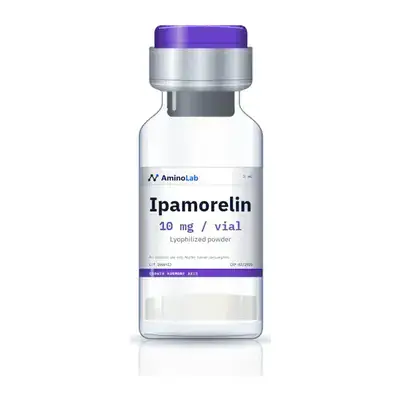
Ipamorelin
10 mg vial
$59
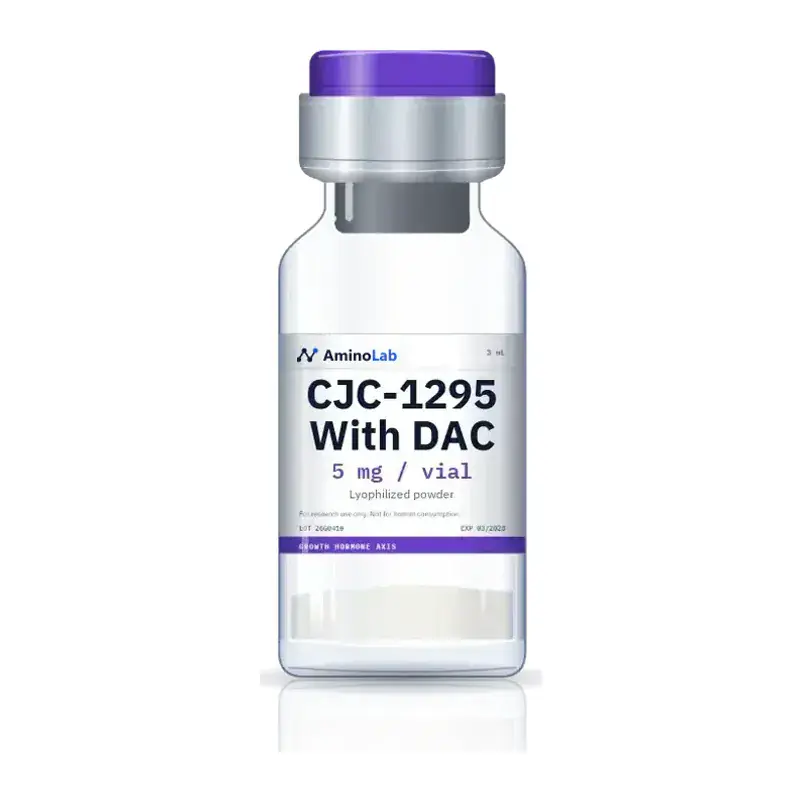
$79 AUD, GST included
Minimum order before shipping, and you can mix any products to reach it.
In stock, ready to ship from Australia
Frequently ordered with
 Bacteriostatic Water
Sold to buyers aged 18 and over only.
Buy CJC-1295 With DAC in Australia from AminoLab, with the 5 mg vial in stock and ready to ship. One 5 mg lyophilised vial, dispatched the same business day on payments cleared before 3pm. That is how CJC 1295 with DAC Australia supply works at AminoLab. Chemically this is a GHRH analogue designed to last. Take the Mod GRF (1-29) core, keep its four protective substitutions, then cap the chain with a lysine bearing maleimidopropionic acid. That cap is the drug affinity complex, and it is what ties the peptide to serum albumin. Check any lot against C165H269N47O46, 3647.2 g/mol and CAS 863288-34-0. HPLC gives the purity number and mass spectrometry confirms identity, lot by lot, with reports waiting in the COA library at any time before checkout. Our peptide calculator converts a diluent volume into a working concentration in seconds. Studies setting a brief pulse against a sustained signal usually add CJC-1295 No DAC to the cart. The glass contains dry powder only, so order bacteriostatic water too, and keep unopened vials frozen at -20 °C in the dark. Shop CJC-1295 With DAC at AminoLab today with the batch report already in hand, for lab research by adult buyers only.
For laboratory research use only. Not for human or veterinary use. Not TGA approved. See our research use policy.
| Listed as | CJC-1295 With DAC (CJC-1295 DAC) |
|---|---|
| Stock | In stock |
| Permitted use | In vitro laboratory research only |
| Design of the molecule | GHRH (1-29) analogue substituted at D-Ala2, Gln8, Ala15 and Leu27, carrying maleimidopropionic acid on a C-terminal lysine as the drug affinity complex |
| Residue count | 29-residue GHRH core, plus the lysine that holds the DAC |
| Empirical formula | C165H269N47O46 |
| Mass | 3647.2 g/mol |
| CAS registry | 863288-34-0 |
| How it ships | Powder, freeze-dried into a sealed 3 mL glass vial with a purple flip-off cap |
| Included | A single vial holding 5 mg of CJC-1295 With DAC, with diluent such as bacteriostatic water bought separately |
| Keep it at | -20 °C while sealed, dry and dark, then 2 to 8 °C after mixing |
| Testing per lot | HPLC purity plus mass spectrometry identity, with a certificate issued |
This is the vial to pick when a protocol asks for receptor stimulation measured in days. Each 5 mg fill is packed here in Australia with its own HPLC report, and if you are still weighing the DAC form against the plain one, the comparison section near the end of this page settles it quickly. Order it online here and the vial leaves our Australian stock ready for your bench.
Strip the name back and you have two parts. The first is a toughened piece of growth hormone releasing hormone. The second is a small reactive cap, known as the drug affinity complex or DAC, which fastens the peptide onto albumin, the protein found in greatest quantity in plasma. Latched on like that, the molecule keeps signalling for days where the bare peptide would be gone in minutes. Remove the cap and nothing else changes, which is precisely the compound we list as the No DAC form.
A maleimide ring sits at the reactive tip. Maleimide chemistry is fast and fussy in a useful way, reacting with thiol groups, those sulphur-hydrogen pairs on cysteine residues, to leave a stable thioether bond behind. Count the cysteines in human serum albumin and you reach 35, but disulfide bridges account for 34 of them, so the lone free thiol at position 34 is the obvious docking point. Two further facts make albumin an excellent carrier. It is abundant, somewhere between 35 and 50 grams per litre of plasma, and a recycling receptor keeps pulling it back from degradation, which hands it a half-life of about three weeks. Bolt a peptide to that and the peptide effectively borrows albumin's lifespan.
Evidence for the approach came from the bench first. Jetté and colleagues, publishing in Endocrinology in 2005, joined maleimide derivatives of GRF 1-29 onto human albumin outside the body. Those conjugates shrugged off DPP-4 and still prompted cultured rat pituitary cells to release growth hormone, and from that series CJC-1295 was picked out as the long-lasting candidate. The following year, Alba and colleagues turned to GHRH knockout mice, testing across weeks whether the conjugate could fill in for a hormone the animals could not make.
None of this alters which receptor is engaged. Somatotrophs present the GHRH receptor, and the DAC version binds it just as the short form does. Exposure is the variable that shifts. Rather than brief spikes, the receptor now sees a continuous presence, lifting the floor of growth hormone output while natural pulsing carries on above that floor.
Here is where protocols go wrong. Persistence belongs to plasma, not to the vial. Remove albumin, as in serum-free medium, and the conjugate performs much like any short GHRH analogue. Work in medium containing fetal bovine serum and the maleimide simply attaches to bovine albumin, which offers its own free cysteine. The genuine hazard is reducing agents. DTT, 2-mercaptoethanol and surplus free cysteine all consume a maleimide long before it reaches a protein, so buffers used in preparation must be free of them. Sampling schedules for each format are laid out in our full half-life comparison of both CJC-1295 forms. Buy the DAC form when your design depends on that albumin-bound persistence. AminoLab lists both forms so that choice stays simple.
Every lot we sell of this compound is documented, and the compound itself has a clear origin. A Montreal biotechnology firm, ConjuChem, devised the drug affinity complex early in the 2000s with one goal, keeping short peptides in circulation for longer. Attach it to a stabilised GHRH fragment and the result is CJC-1295 With DAC. In the body, once the maleimide meets albumin, a covalent bond forms at the free cysteine in position 34 and the peptide travels on its carrier from then on. Pharmacokinetic reports across 2005 and 2006, the Teichman paper among them, put the half-life at roughly six to eight days, where native GHRH lasts only minutes.
For a research group that creates one clean question. The GHRH receptor on pituitary somatotrophs is Gs-coupled and signals through cAMP, so what happens to it under constant rather than pulsatile stimulation? We stock the vial as a research reagent, never as a medicine, alongside the rest of the secretagogues in our growth hormone peptides range.
A failed clinical programme sits behind this molecule. ConjuChem ran a placebo-controlled phase 2 study in 192 participants who had HIV-associated visceral obesity, and stopped it in July 2006 following a participant's death at a site in Argentina. The attending physician put that death down to coronary artery disease rather than the drug. Even so, the trial never resumed, and no product was ever launched.
Regulators responded with a precise listing. The Poisons Standard entry reads "CJC-1295 (CAS No. 863288-34-0)", the very CAS number our certificates carry. Under the June 2026 instrument, and still the case in October 2026, that entry is a Schedule 4 prescription-only medicine and also appears in Appendix D, clause 5, so possessing it without authority breaks the law. Its origin lies in the TGA's review of growth hormone releasing peptides and related compounds across 2014 and 2015. Since the ARTG lists no registered product a prescriber could choose, almost every encounter with CJC-1295 DAC in Australia is as a research chemical.
Athletes face a separate rule. The 2026 WADA Prohibited List puts CJC-1295 among the GHRH analogues in class S2, testing in this country runs through Sport Integrity Australia, and the ban holds both in and out of competition.
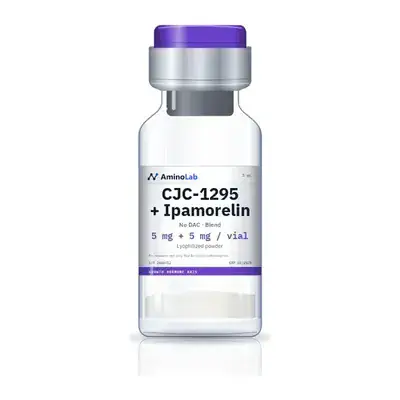
Our stock is held in Australia as a laboratory reagent, sold to adults aged 18 and over for in vitro research and never for use in humans or animals. If a design also needs the No DAC core, the CJC-1295 and ipamorelin blend is the usual companion purchase. AminoLab sells it strictly as a laboratory reagent to buyers aged 18 and over.
Two things explain the smaller fill. A compound that stays tethered to albumin for days simply goes further through a series than something short-acting, so 5 mg covers comparable work. And synthesis costs more, because the maleimide linker has to be coupled on and then purified.
Need more material? Put several vials through a single checkout and, where stock allows, they will be drawn from one lot, giving the entire series a single certificate number. Long projects benefit most from that, since a change of lot partway through quietly introduces a variable nobody designed for. Checkout is open to buyers aged 18 and over, who confirm their age and agree to the research use policy before paying.
The core is Mod GRF (1-29), meaning human GHRH residues 1 to 29 carrying four enzyme-resistant swaps. Those swaps are D-alanine in position 2, glutamine in 8, alanine in 15 and leucine in 27. On the C-terminal lysine sits the maleimidopropionyl group, which pushes the finished conjugate up to 3647.2 g/mol. Compare that with the No DAC peptide at 3367.9 g/mol and you have a difference of roughly 280 g/mol, which is the quickest way to tell apart two white powders that look identical in the vial.
Three checks are worth making every time. Does the measured mass correspond to the DAC molecule, does the CAS read 863288-34-0, and is there an HPLC purity figure recorded against the lot number printed on your label? Reports are filed in the COA library, and each line is explained in our guide to reading a certificate of analysis. Check that data, then order the same lot again or move to the next one with confidence.
We hold no shopfront and offer no counter collection. One Australian stockholding serves every state and territory online, so a team buying research peptides in Canberra uses this same page as everyone else. Clear payment before 3pm on a business day and the parcel goes out that afternoon, with the vial, the lot and the certificate identical regardless of your postcode.
Maleimide groups hydrolyse slowly in water, faster as pH climbs, which is the reason to reconstitute only when work is about to begin. Let the vial warm to room temperature, trickle bacteriostatic water down the glass wall and swirl it, never shake. Put 2 mL into the 5 mg vial and you have 2.5 mg/mL. Other volumes come from the peptide calculator, and aseptic technique is covered in the reconstitution guide.
Sealed powder does best at -20 °C, kept in its carton away from light and moisture. Once dissolved, keep the solution between 2 and 8 °C, finish it inside 28 days and split it into single-use aliquots so the stock is not warmed over and over.
Across catalogues you will see CJC-1295 DAC, long-acting CJC-1295 and sometimes just DAC CJC. In older literature the description runs longer, either a GRF (1-29) analogue conjugated to a drug affinity complex or an albumin-binding GHRH analogue. All of them mean one thing, the 29-residue core with a lysine-linked maleimide, CAS 863288-34-0.
A little receptor vocabulary also helps when reading papers. Growth hormone releasing hormone is GHRH, written in some sources as GRF or somatocrinin, and GHRHR denotes its receptor. The downstream marker most studies follow is IGF-1, insulin-like growth factor 1, produced by the liver in response to growth hormone. Whatever name a paper uses, this listing is where to buy the albumin-binding conjugate in a 5 mg vial. At AminoLab it appears as CJC-1295 With DAC.
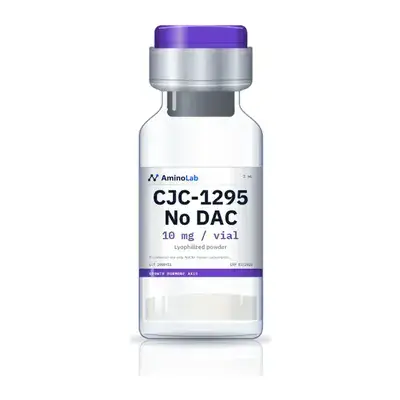
Both products share the Mod GRF core, and the linker is the single point of difference. Keep the DAC and the molecule persists for days, which is what sustained-elevation designs need. Drop it and CJC-1295 No DAC clears in around 30 minutes, closer to natural pulsing, sold as a 10 mg vial. Buying one of each isolates the contribution of albumin binding while the receptor-binding sequence stays fixed.
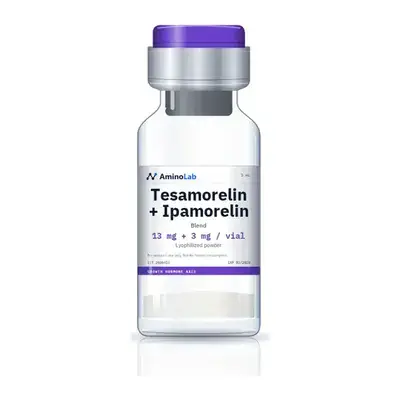
Two neighbouring compounds change more than the linker. Tesamorelin keeps the whole 44-residue GHRH chain, and ipamorelin targets the ghrelin receptor rather than GHRHR at all. For a fuller side-by-side of the two CJC-1295 formats, covering half-life, fill size and the study designs each one fits, see our DAC versus No DAC comparison. AminoLab stocks both, so a comparison study can be ordered in a single checkout.
Take a stabilised 29-residue GHRH fragment, add a maleimide group to a terminal lysine, and the molecule binds serum albumin. The reported half-life then runs to six to eight days, and it is in stock now.
Freeze-dried powder in one sealed vial, shipped from Australian stock. Diluent is separate, so add bacteriostatic water at checkout.
Labs buy it for in vitro work on long-duration GHRH receptor activation and the pharmacokinetics of albumin conjugates.
Identical core, no linker, cleared in roughly 30 minutes. Reach for No DAC on pulse designs and the DAC form when elevation must be sustained.
Sealed vials belong at -20 °C. Water degrades the maleimide group over time, so mix as work starts and hold aliquots at 2 to 8 °C.
Mass spectrometry for the 3647.2 g/mol conjugate and an HPLC purity figure, both readable in the COA library before you buy.
Put the 5 mg vial into your cart on this page and complete checkout. We ship from Australian stock, and anything paid before 3pm on a business day leaves that afternoon under tracking. Because only powder is supplied, add bacteriostatic water as well, and open the lot certificate before paying.
There is no physical store to visit. Orders go out online to every Australian state and territory from one local stockholding, meaning a city institute and a regional laboratory receive the same 5 mg vial from the same tested lots. Timeframes appear on our delivery information page.
Identity comes from mass spectrometry, which has to show the 3647.2 g/mol conjugate, and purity comes from HPLC. The certificate is then filed under the lot number printed on your vial. Review it in the COA library first, which matters here because the DAC and No DAC powders are visually identical.
Where GHRH receptor stimulation must hold steady across days, the DAC version fits, thanks to albumin binding and a reported half-life of six to eight days. For short pulses, or for work paired with ipamorelin, choose No DAC as the 10 mg Mod GRF (1-29) vial. Many labs simply buy both and compare.
A long half-life means a study series gets through much less material than one using a short-acting analogue, so 5 mg stretches across comparable work. Coupling and purifying the maleimide linker also pushes up production cost. For larger projects, order several vials together and, stock permitting, they will come from one lot.
Laboratories use it to look at prolonged GHRH receptor activation, at the GH and IGF-1 axis, and at how albumin conjugation changes what happens to a peptide. It carries no TGA approval, is not a medicine, and is sold for in vitro laboratory work only, to buyers aged 18 and over.
10 mg vial
10 mg vial
10 mg vial
13 mg + 3 mg vial
Research use onlyAminoLab supplies research compounds for laboratory and in-vitro use, not for human or animal consumption. By continuing you confirm you are 18 or older and buying for research.
Leave